x AQA Geography Paper 2: The Changing Economic World Revision
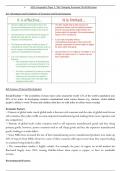
L1: Advantages and Limitations of Economic and Social measures
L2: Causes of Uneven Development
Social Factors → The availability of clean water varies around the world: 12% of the world’s population uses
85% of its water. In developing countries contaminated water causes disease (e.g. cholera), which inhibits
people’s ability to work. Women and children often have to walk miles to collect water everyday
Economic Factors:
→ Patterns of global trade: much global trade is between rich countries and the rules of global trade favour
rich countries (they place tariffs on some imported manufactured goods making them more expensive and
less competitive)
→ Patterns of global trade: richer countries tend to sell expensive manufactured goods and buy cheap
primary goods, however, poorer countries tend to sell cheap goods and buy the expensive manufactured
goods, leading to a trade deficit.
→ Some NEEs have increased the size of their manufacturing sector: manufactured products now make up
80% of exports from NEEs. However, some of these countries still import more than they export leading
to countries being locked in debt.
→ The commodities market is highly volatile. For example, the price of copper on world markets has
fluctuated hugely since 2000, causing Zambia-whose main export is copper- to have an unreliable
income.
Environmental Factors:
,→ Natural hazards, such as earthquakes, volcanic eruptions, hurricanes and floods. These damage housing, and
infrastructure and have huge social and economic costs. Poor countries are affected more because they can’t
afford to prepare.
→ The physical geography of some countries does not favour development; these include mountains,
swamps, deserts etc. Africa has the most landlocked countries in the world and this makes trade less easy
without ports.
→ The climate of some countries limits development. There is too little water in some countries causing
drought. In others, tropical climates allow diseases such as malaria to flourish.
Political Factors:
→ Mismanagement of resources- in Zimbabwe the Government took productive farmland from white farmers
and gave it to inexperienced government officials and war veterans. They did not know how to farm, the
economy failed and the country relied on food aid.
→ From 1400 the European powers took control of valuable resources (e.g. gold in Ghana) in developing
countries. Between 1600-1900 10 million slaves were taken from Africa by Europeans and sold in North
America. By 1900 most European powers had empires in Asia, Africa and South America and it was not
until the mid-1900s that these countries became independent.
→ Corrupt government control resources- the distribution of land of money. This can limit economic
growth and certainly cause inequalities in the country.
Consequences of Uneven Development:
Disparities in Wealth:
→ Environmental degradation happens when people are at risk of starvation; for example, farmers cut
down TRF to find more land or graze too many cattle than the land can support. Deforestation and
desertification as a consequence reduce economic opportunities creating more poverty.
→ The existence of an uneducated workforce or one weakened by disease and malnutrition is not
attractive to investors. Investment is needed for an economy to grow.
→ The richer countries have the largest share of global wealth but for a smaller proportion of the world’s
population. While the NEEs have rapid economic growth, they have growing populations as well and the
wealth is not distributed evenly.
→ Education cannot be provided for all children to a good level. This limits opportunities for people: there
is little social mobility.
Disparities in Health:
→ Infant mortality is high when clean water is unavailable. Water aid estimates a child dies every 15 seconds in
a developing country due to waterborne diseases.
→ In developing countries, the most common cause of death is infectious disease e.g HIV/AIDS, lung
infections, malaria, and tuberculosis. Many of these diseases are preventable if doctors and medicines are
available. In developed countries, people die mainly from chronic illnesses such as heart disease or cancer.
→ 4/10 deaths in developing countries are in children under 15 years, and only 2/10 over 70 years. In
developed countries, 7/10 deaths are in the over 70s and only 1/100 deaths in a child under 15.
, → Half a million people died from malaria in Africa in 2013: 80% of world deaths. Yet richer African
nations with tropical climates experience few deaths because of vaccination programmes and mosquito
nets.
International Migration:
→ Refugees are people forced to move from their country of origin as a result of civil war, natural disaster
or famine. The governments in the countries they are fleeing are unwilling or unable to help, often due to
poverty
→ Economic migrants are people who move voluntarily from one country to another to seek a better
standard of living (e.g. better-paid job) or quality of life (e.g. better healthcare or education).
L3: The Demographic Transition Model
Stage: 1 2 3 4 5
Example Indigenous tribes Afghanista Nigeria, India, USA, France, Germany, Japan
n, DRC Mexico UK
BR High High Falls Low Very low
DR High Falls Falls slowly Low Low
rapidly
Natural Slow increase Rapid Increase slows Slow increase Slow decrease
Increase increase down
Structure
L1: Advantages and Limitations of Economic and Social measures
L2: Causes of Uneven Development
Social Factors → The availability of clean water varies around the world: 12% of the world’s population uses
85% of its water. In developing countries contaminated water causes disease (e.g. cholera), which inhibits
people’s ability to work. Women and children often have to walk miles to collect water everyday
Economic Factors:
→ Patterns of global trade: much global trade is between rich countries and the rules of global trade favour
rich countries (they place tariffs on some imported manufactured goods making them more expensive and
less competitive)
→ Patterns of global trade: richer countries tend to sell expensive manufactured goods and buy cheap
primary goods, however, poorer countries tend to sell cheap goods and buy the expensive manufactured
goods, leading to a trade deficit.
→ Some NEEs have increased the size of their manufacturing sector: manufactured products now make up
80% of exports from NEEs. However, some of these countries still import more than they export leading
to countries being locked in debt.
→ The commodities market is highly volatile. For example, the price of copper on world markets has
fluctuated hugely since 2000, causing Zambia-whose main export is copper- to have an unreliable
income.
Environmental Factors:
,→ Natural hazards, such as earthquakes, volcanic eruptions, hurricanes and floods. These damage housing, and
infrastructure and have huge social and economic costs. Poor countries are affected more because they can’t
afford to prepare.
→ The physical geography of some countries does not favour development; these include mountains,
swamps, deserts etc. Africa has the most landlocked countries in the world and this makes trade less easy
without ports.
→ The climate of some countries limits development. There is too little water in some countries causing
drought. In others, tropical climates allow diseases such as malaria to flourish.
Political Factors:
→ Mismanagement of resources- in Zimbabwe the Government took productive farmland from white farmers
and gave it to inexperienced government officials and war veterans. They did not know how to farm, the
economy failed and the country relied on food aid.
→ From 1400 the European powers took control of valuable resources (e.g. gold in Ghana) in developing
countries. Between 1600-1900 10 million slaves were taken from Africa by Europeans and sold in North
America. By 1900 most European powers had empires in Asia, Africa and South America and it was not
until the mid-1900s that these countries became independent.
→ Corrupt government control resources- the distribution of land of money. This can limit economic
growth and certainly cause inequalities in the country.
Consequences of Uneven Development:
Disparities in Wealth:
→ Environmental degradation happens when people are at risk of starvation; for example, farmers cut
down TRF to find more land or graze too many cattle than the land can support. Deforestation and
desertification as a consequence reduce economic opportunities creating more poverty.
→ The existence of an uneducated workforce or one weakened by disease and malnutrition is not
attractive to investors. Investment is needed for an economy to grow.
→ The richer countries have the largest share of global wealth but for a smaller proportion of the world’s
population. While the NEEs have rapid economic growth, they have growing populations as well and the
wealth is not distributed evenly.
→ Education cannot be provided for all children to a good level. This limits opportunities for people: there
is little social mobility.
Disparities in Health:
→ Infant mortality is high when clean water is unavailable. Water aid estimates a child dies every 15 seconds in
a developing country due to waterborne diseases.
→ In developing countries, the most common cause of death is infectious disease e.g HIV/AIDS, lung
infections, malaria, and tuberculosis. Many of these diseases are preventable if doctors and medicines are
available. In developed countries, people die mainly from chronic illnesses such as heart disease or cancer.
→ 4/10 deaths in developing countries are in children under 15 years, and only 2/10 over 70 years. In
developed countries, 7/10 deaths are in the over 70s and only 1/100 deaths in a child under 15.
, → Half a million people died from malaria in Africa in 2013: 80% of world deaths. Yet richer African
nations with tropical climates experience few deaths because of vaccination programmes and mosquito
nets.
International Migration:
→ Refugees are people forced to move from their country of origin as a result of civil war, natural disaster
or famine. The governments in the countries they are fleeing are unwilling or unable to help, often due to
poverty
→ Economic migrants are people who move voluntarily from one country to another to seek a better
standard of living (e.g. better-paid job) or quality of life (e.g. better healthcare or education).
L3: The Demographic Transition Model
Stage: 1 2 3 4 5
Example Indigenous tribes Afghanista Nigeria, India, USA, France, Germany, Japan
n, DRC Mexico UK
BR High High Falls Low Very low
DR High Falls Falls slowly Low Low
rapidly
Natural Slow increase Rapid Increase slows Slow increase Slow decrease
Increase increase down
Structure