

1
Problem 1
Sulsky
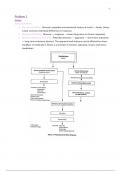
Stress Definitions
1. Stimulus Definition: Stressors (negative environmental factors at work) → threat. Stress
is bad, oversees individual differences in response.
2. Response Definition: Stressor → response → strain (long-term or chronic response).
3. Stimulus-Response Definition: Potential stressors → appraisal → short-term outcomes
→ long-term outcomes (strains). The appraisal and outcome can be affected by stress
modifiers or moderators. Stress is a function of stressor, appraisal, strains, and stress
moderators.
, 2
McEwen
Allostasis: Adaptation.
Allostatic Load: The wear and tear on the body and brain resulting from chronic overactivity or
inactivity of physiological systems that are normally involved in adaptation to environmental
challenges.
Brain and Stress:
● Repeated stress → atrophy of dendrites of pyramidal neurons in hippocampus →
episodic and declarative memory damage → the context is lost. Atrophy is reversible
when stress is short-lived.
● Acute stress → short-term memory damage that is short-lived and reversible.
Effect of Allostatic Load:
, 3
● There are 3 types of physiological responses that make up allostatic load. Type 1 is
frequent stress; the magnitude and frequency of responses determines how much
allostatic load of type 1 is accumulated. It can lead into Type 2 and possibly event 3.
Type 2 is the failed shut-down. When there is chronic activity and failure to shut off.
Type 3 is the inadequate response. Examples are autoimmunity and inflammation.
Maslach
Burnout: Has 3 dimensions: exhaustion, cynicism, reduced efficiency or accomplishment.
● Exhaustion is depletion and overextension of oneself. It represents the basic stress
dimension. Cynicism is the interpersonal aspect where depersonalization and
detachment occurs. Reduced efficiency is the self-evaluation aspect.
● Exhaustion and cynicism (depersonalization) have a strong relationship.
● Inefficiency can either develop sequentially like exhaustion → cynicism → inefficiency.
Or inefficiency develops in parallel with the 2 other aspects.
3 Dimensions:
● Inefficiency seems to arise from lack of resources. Exhaustion and cynicism from the
presence of work overload and social conflict.
● Depression-prone people are vulnerable to burnout.
● Job satisfaction and burnout is linked.
● 2 theories of burnout emerge.
○ Dedicated people end up doing too much in support of their ideals → exhaustion
→ cynicism.
○ Burnout is the end result of long exposure to chronic job stressors. Burnout
occurs in late career.
Outcomes of Burnout
● Job Performance: Absenteeism, intention to leave, turnover. If you stay → lower
productivity, ineffectiveness, lower job satisfaction, reduced commitment, negative
interpersonal outcomes.
● Health: Exhaustion components more predictive of stress related health outcomes.
Mental health problems.
Where Does Burnout Occur
● Job Characteristics: Job demands, absence of resources, information and control.
○ Workload and time pressure → exhaustion
○ Role conflict and role ambiguity.
○ Absence of job resources like social support. Support from the supervisor is
important, it is found to be more important than coworker support.
○ Lack of feedback, lack of participation in decision making, lack of autonomy.
● Occupational Characteristics: Teaching and medical fields? Mixed.
, 4
● Organizational Characteristics: Violation of the psychological contract, and implicit
values in organizational processes and structures.
Who Experiences Burnout
● Demographic Characteristics: Younger people and less (work) experienced employees
are more likely to experience burnout. Singles and unmarried men. More education →
burnout.
● Personality Characteristics: Low levels of hardiness, poor self-esteem, external focus of
control, avoidant coping style. Neuroticism and Type A individuals.
● Job Attitudes: Mixed results on high expectations.
Expanding The Theoretical Framework: Burnout arises from chronic mismatches between
people and their work setting in terms of workload, control, reward, community, fairness,
values.
Expanding The Construct: Job engagement versus burnout.
Implications for Intervention
Changing the Individual: People can learn new ways of coping, but applying this new
knowledge can be a challenge because of work constraints. Autonomy necessary.
Changing the Organization: Combining changes in managerial practice with educational
interventions. Focusing on mismatches of value and reward because other mismatches are
more tolerable when these are matches. These combined interventions emphasize building
engagement with work.
Taris
● Literature review on the relationship between burnout and objective performance.
Possible Pathways:
1. Job stressors reduce the capacity to exert control over their work environment →
inability to function effectively. This relationship might be mediated by burnout.
2. Fatigue is inability and unwillingness to expend effort. Withdrawal is a protective
mechanism against spending energy and depleting the entire resource. Depleted coping
and energy resources + withdrawal → negative effect on performance. Not being
willing to expend effort → suboptimal performance.
3. Low self-efficacy (about skills and abilities) →passivity and low motivation → impaired
functioning on the job.
Hypotheses:
● Their general assumption is that burnout will be negatively related to performance.
1. High levels of emotional exhaustion will be associated with poor job performance.
2. High levels of depersonalization will be associated with poor job performance.
3. Low levels of personal accomplishment will be associated with poor job performance.
Problem 1
Sulsky
Stress Definitions
1. Stimulus Definition: Stressors (negative environmental factors at work) → threat. Stress
is bad, oversees individual differences in response.
2. Response Definition: Stressor → response → strain (long-term or chronic response).
3. Stimulus-Response Definition: Potential stressors → appraisal → short-term outcomes
→ long-term outcomes (strains). The appraisal and outcome can be affected by stress
modifiers or moderators. Stress is a function of stressor, appraisal, strains, and stress
moderators.
, 2
McEwen
Allostasis: Adaptation.
Allostatic Load: The wear and tear on the body and brain resulting from chronic overactivity or
inactivity of physiological systems that are normally involved in adaptation to environmental
challenges.
Brain and Stress:
● Repeated stress → atrophy of dendrites of pyramidal neurons in hippocampus →
episodic and declarative memory damage → the context is lost. Atrophy is reversible
when stress is short-lived.
● Acute stress → short-term memory damage that is short-lived and reversible.
Effect of Allostatic Load:
, 3
● There are 3 types of physiological responses that make up allostatic load. Type 1 is
frequent stress; the magnitude and frequency of responses determines how much
allostatic load of type 1 is accumulated. It can lead into Type 2 and possibly event 3.
Type 2 is the failed shut-down. When there is chronic activity and failure to shut off.
Type 3 is the inadequate response. Examples are autoimmunity and inflammation.
Maslach
Burnout: Has 3 dimensions: exhaustion, cynicism, reduced efficiency or accomplishment.
● Exhaustion is depletion and overextension of oneself. It represents the basic stress
dimension. Cynicism is the interpersonal aspect where depersonalization and
detachment occurs. Reduced efficiency is the self-evaluation aspect.
● Exhaustion and cynicism (depersonalization) have a strong relationship.
● Inefficiency can either develop sequentially like exhaustion → cynicism → inefficiency.
Or inefficiency develops in parallel with the 2 other aspects.
3 Dimensions:
● Inefficiency seems to arise from lack of resources. Exhaustion and cynicism from the
presence of work overload and social conflict.
● Depression-prone people are vulnerable to burnout.
● Job satisfaction and burnout is linked.
● 2 theories of burnout emerge.
○ Dedicated people end up doing too much in support of their ideals → exhaustion
→ cynicism.
○ Burnout is the end result of long exposure to chronic job stressors. Burnout
occurs in late career.
Outcomes of Burnout
● Job Performance: Absenteeism, intention to leave, turnover. If you stay → lower
productivity, ineffectiveness, lower job satisfaction, reduced commitment, negative
interpersonal outcomes.
● Health: Exhaustion components more predictive of stress related health outcomes.
Mental health problems.
Where Does Burnout Occur
● Job Characteristics: Job demands, absence of resources, information and control.
○ Workload and time pressure → exhaustion
○ Role conflict and role ambiguity.
○ Absence of job resources like social support. Support from the supervisor is
important, it is found to be more important than coworker support.
○ Lack of feedback, lack of participation in decision making, lack of autonomy.
● Occupational Characteristics: Teaching and medical fields? Mixed.
, 4
● Organizational Characteristics: Violation of the psychological contract, and implicit
values in organizational processes and structures.
Who Experiences Burnout
● Demographic Characteristics: Younger people and less (work) experienced employees
are more likely to experience burnout. Singles and unmarried men. More education →
burnout.
● Personality Characteristics: Low levels of hardiness, poor self-esteem, external focus of
control, avoidant coping style. Neuroticism and Type A individuals.
● Job Attitudes: Mixed results on high expectations.
Expanding The Theoretical Framework: Burnout arises from chronic mismatches between
people and their work setting in terms of workload, control, reward, community, fairness,
values.
Expanding The Construct: Job engagement versus burnout.
Implications for Intervention
Changing the Individual: People can learn new ways of coping, but applying this new
knowledge can be a challenge because of work constraints. Autonomy necessary.
Changing the Organization: Combining changes in managerial practice with educational
interventions. Focusing on mismatches of value and reward because other mismatches are
more tolerable when these are matches. These combined interventions emphasize building
engagement with work.
Taris
● Literature review on the relationship between burnout and objective performance.
Possible Pathways:
1. Job stressors reduce the capacity to exert control over their work environment →
inability to function effectively. This relationship might be mediated by burnout.
2. Fatigue is inability and unwillingness to expend effort. Withdrawal is a protective
mechanism against spending energy and depleting the entire resource. Depleted coping
and energy resources + withdrawal → negative effect on performance. Not being
willing to expend effort → suboptimal performance.
3. Low self-efficacy (about skills and abilities) →passivity and low motivation → impaired
functioning on the job.
Hypotheses:
● Their general assumption is that burnout will be negatively related to performance.
1. High levels of emotional exhaustion will be associated with poor job performance.
2. High levels of depersonalization will be associated with poor job performance.
3. Low levels of personal accomplishment will be associated with poor job performance.





