

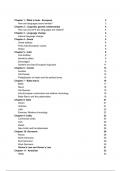
Chapter 1 - What is Indo - European 3
How can languages sound similar? 3
Chapter 2 - Linguistic genetic relationships 4
How can you tell if two languages are related? 4
Chapter 3 - Language change 4
Internal language change 4
Chapter 4 - Greek 5
Greek dialects 6
Proto-Indo-European vowels 8
Ablaut 8
Chapter 5 - Indic 8
Oral tradition 9
Ashoka’s pillars 9
Devanāgarī 9
Sanskrit and Indo-European linguistics 11
Chapter 6 - Iranian 13
Avestan 13
Old Persian 14
Palatalization of velars and the perfect tense 15
Chapter 7 - Balto-slavic 16
Baltic 17
Slavic 18
Old Russian 18
Indo-European consonants and relative chronology 19
Balto-Slavic and the palatovelars 19
Chapter 8: Italic 21
Oscan 21
Umbrian 21
Latin 22
Exercise: Relative chronology 23
Chapter 9: Celtic 23
Continental Celtic 24
Irish 25
Welsh 25
Italo-Celtic and the labiovelars 26
Chapter 10: Germanic 28
Runes 28
North Germanic 29
East Germanic 29
West Germanic 30
Grimm's Law and Verner’s Law 31
Chapter 11 - Anatolian 33
Hittite 33
, Clay tablets 34
Luwian 35
Anatolian and the PIE laryngeals 36
Chapter 12: Tocharian 39
Tocharian A & B 40
Laryngeals 42
Chapter 13: Phrygian, Armenian, Albanian 43
Phrygian 43
Armenian 44
Albanian 44
Who were the Indo-Europeans? 45
Chapter 14: Dichtersprache 47
Formulas 47
Myths 47
Indo-European religion 48
Greek poetic meter 49
,Chapter 1 - What is Indo - European
● Every language belongs to a language family
● Language family: Group of languages genetically related to each other
● English is from the Indo-European language family
● The notion that languages are related and could belong to a family was first
developed in the Renaissance.
● Until the late Middle Ages, the common belief in Europe was that all languages
derived from Hebrew, the original language of the Genesis
● Marcus Zuerius van Boxhorn (professor of rhetoric at Leiden) believed Greek and
Dutch came from Scythian, which was an Indo-European language itself
○ He said loanwords shouldn’t be used for language comparison. Instead,
“words which denote matters or things which are used, borne or encountered
on a daily basis” should be used
● The one credited with the beginnings of modern comparative linguistics was Sir
William Jones (1746-1794), a polyglot employed as a judge in Calcutta (India)
● More languages were added to the Indo-European family tree:
○ Albanian (by Josef von Xylander in 1835)
○ Armenian (by Julius Heinrich Petermann in 1837, recognized as a separate
branch by Heinrich Hübschmann in 1875)
○ Tocharian (by Emil Sieg and Wilhelm Siegling in 1908)
○ Hittite (by Bedřich Hrozný in 1915).
How can languages sound similar?
● Loan words
● Inheritance
● Coincidence
, ● Universal (onomatopoeia)
Chapter 2 - Linguistic genetic relationships
How can you tell if two languages are related?
● If languages share a similarity with modern words/ inventions it doesn’t mean they
have to be related, they may be borrowed words
○ Eg. word for ‘car’ is a recent invention, with its introduction, the word was
borrowed into other languages
You can determine genetic relations through:
● Similarities in basic vocabulary like:
○ Body parts
○ Kinship terms
○ Native animals
○ Numbers
○ Verbs/actions
● Grammar
○ Case endings (nominative, accusative, ergative)
○ Grammatical gender endings
○ Verb ending
○ Inflenction → the change in the form of a word (in English, usually the addition
of endings) to mark such distinctions as tense, person, number, gender,
mood, voice, and case
● Shared irregularities
○ Similar endings in irregular verbs
Chapter 3 - Language change
● Substrate influence
○ When non-Romans learned Latin
as their second language, their
native language still influenced
how they spoke Latin (they had a
foreign accent)
Internal language change
It can occur in 2 forms:
● Sound laws - rule-based changes in sounds
How can languages sound similar? 3
Chapter 2 - Linguistic genetic relationships 4
How can you tell if two languages are related? 4
Chapter 3 - Language change 4
Internal language change 4
Chapter 4 - Greek 5
Greek dialects 6
Proto-Indo-European vowels 8
Ablaut 8
Chapter 5 - Indic 8
Oral tradition 9
Ashoka’s pillars 9
Devanāgarī 9
Sanskrit and Indo-European linguistics 11
Chapter 6 - Iranian 13
Avestan 13
Old Persian 14
Palatalization of velars and the perfect tense 15
Chapter 7 - Balto-slavic 16
Baltic 17
Slavic 18
Old Russian 18
Indo-European consonants and relative chronology 19
Balto-Slavic and the palatovelars 19
Chapter 8: Italic 21
Oscan 21
Umbrian 21
Latin 22
Exercise: Relative chronology 23
Chapter 9: Celtic 23
Continental Celtic 24
Irish 25
Welsh 25
Italo-Celtic and the labiovelars 26
Chapter 10: Germanic 28
Runes 28
North Germanic 29
East Germanic 29
West Germanic 30
Grimm's Law and Verner’s Law 31
Chapter 11 - Anatolian 33
Hittite 33
, Clay tablets 34
Luwian 35
Anatolian and the PIE laryngeals 36
Chapter 12: Tocharian 39
Tocharian A & B 40
Laryngeals 42
Chapter 13: Phrygian, Armenian, Albanian 43
Phrygian 43
Armenian 44
Albanian 44
Who were the Indo-Europeans? 45
Chapter 14: Dichtersprache 47
Formulas 47
Myths 47
Indo-European religion 48
Greek poetic meter 49
,Chapter 1 - What is Indo - European
● Every language belongs to a language family
● Language family: Group of languages genetically related to each other
● English is from the Indo-European language family
● The notion that languages are related and could belong to a family was first
developed in the Renaissance.
● Until the late Middle Ages, the common belief in Europe was that all languages
derived from Hebrew, the original language of the Genesis
● Marcus Zuerius van Boxhorn (professor of rhetoric at Leiden) believed Greek and
Dutch came from Scythian, which was an Indo-European language itself
○ He said loanwords shouldn’t be used for language comparison. Instead,
“words which denote matters or things which are used, borne or encountered
on a daily basis” should be used
● The one credited with the beginnings of modern comparative linguistics was Sir
William Jones (1746-1794), a polyglot employed as a judge in Calcutta (India)
● More languages were added to the Indo-European family tree:
○ Albanian (by Josef von Xylander in 1835)
○ Armenian (by Julius Heinrich Petermann in 1837, recognized as a separate
branch by Heinrich Hübschmann in 1875)
○ Tocharian (by Emil Sieg and Wilhelm Siegling in 1908)
○ Hittite (by Bedřich Hrozný in 1915).
How can languages sound similar?
● Loan words
● Inheritance
● Coincidence
, ● Universal (onomatopoeia)
Chapter 2 - Linguistic genetic relationships
How can you tell if two languages are related?
● If languages share a similarity with modern words/ inventions it doesn’t mean they
have to be related, they may be borrowed words
○ Eg. word for ‘car’ is a recent invention, with its introduction, the word was
borrowed into other languages
You can determine genetic relations through:
● Similarities in basic vocabulary like:
○ Body parts
○ Kinship terms
○ Native animals
○ Numbers
○ Verbs/actions
● Grammar
○ Case endings (nominative, accusative, ergative)
○ Grammatical gender endings
○ Verb ending
○ Inflenction → the change in the form of a word (in English, usually the addition
of endings) to mark such distinctions as tense, person, number, gender,
mood, voice, and case
● Shared irregularities
○ Similar endings in irregular verbs
Chapter 3 - Language change
● Substrate influence
○ When non-Romans learned Latin
as their second language, their
native language still influenced
how they spoke Latin (they had a
foreign accent)
Internal language change
It can occur in 2 forms:
● Sound laws - rule-based changes in sounds



