Week 1:
Tutorial 1:
What is political economy in the context of SMPE?
What is political economy?
A- An object of study: Study of the interaction between politics and economics (“politics”
and “economics”? “Interaction”?).
Character and relationship between political and economic (life, institutions, policies
…) = so both studied together. So look how political fight and policy and what’s the
impact in the economics? In political choices (like democracy), economics s what may
drive development.
B- An analytical approach: Study of political, social, and economic life informed by (not limited
to) the theoretical constructs of micro and macroeconomics, including methodological
individualism, rational/public choice.
But people may mean something way more specific. Marxian, or positive political
economy, understanding public choice, neoclassical, classical ideas.
➔ This is only one way of looking at the object of study. Need to understand the
tenets before being able to hold whichever critic.
➔ Understand decisions, conflicts, key set of tools.
Different kinds of political economy knowledge?
A- Broadly arrayed: Big-picture historical, encompassing grand theorizing (e.g., how the
economic affects and is affected by the political; capitalism and democracy; etc). Not a
lot of room for empirics
B- Narrowly focused: Zeroing-in on important cause-effect, ceteris paribus, relationships
(More important to look at that. E.g., focus on relationship of sanctions on
development of one country etc.
The Political Economy track and SMPE are about ALL of these, though emphasis is on
clarifying ‘positive political economy’ as an analytical approach, with some sessions heavy on
broadly arrayed PE and other on narrowly focused PE.
Retrofitting: Neo-classical Economics (Marshall et al.).
Paradigm to understand the political life
Neo-Classical Economics (still at heart of positive political economy approach).
… We start at the end of the story, with the excellent summary n Caporaso & Levine
- Why move from “messy” classical to the “parsimonious” neo-classical economics?
o Rise of British trade system in 19th century (change of world dynamics).
o Marginal revolution and understanding of rationality and utility maximization
▪ Preferences you want to maximize
o Agent-centrism
▪ So looking at individual agents, nation states and remodeled nation-
states
▪ How do they interact in a system, why do they take such decisions (war
etc).
o From normative/descriptive to the systematic and analytical
, ▪ Most PE work is normative/descriptive (what we should do, what we
should be)
▪ But move towards what is the logic of a decision, the driving force
between 2 actors, 2 institutions
▪ Rise of an austere theoretical framework
o The concept of choice: Our expansive needs we ‘satisfy’ (utility function) within
given constraints (scarcity)
▪ Choice to maximize utility.
o Assigned and bounded rationality?
▪ Make it match with choices at hand.
▪ Maybe people don’t even make a choice, like they’re not even conscious
about what they do
▪ Require that we revise neoclassical assumptions, even if you’re looking
at evidence proving your point.
• Do understand what is wrong with a perspective, understand the
perspective itself
“General equilibrium” and “welfare maximization” through mutually beneficial exchange
(always cooperative? Pareto optimal?)
Concept of market
World built on mutually accepted and beneficial bargains.
Pareto efficiency reminder is when neither actor can improve its payoff without making the
other one worse off.
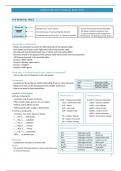
This is what we get …
In this graph, there is no room for politics.
But they acknowledge the role of governments in this on what households want, on the
taxation, room for governmental activity. But it is mostly market actors interacting.
,What does it leave out?
- Not all agents are equal…
- Distribution (winners and losers), and this produces conflict…
o Can be physical conflict resulting
- Who or what determines the rules of exchange etc? …
o Government might define that
- Property rights and enforcement as deus ex machina – outside the system
o Property rights is who owns what, ability to know who start in life with what
and be able to give it to others (descendants etc).
o What are the rules of exchange and who said so
Where are market utility-maximizing and equilibria bad or insufficient?
- More role for politics
- Market failures (externalities, public goods, monopolies/monopsonies, etc.)
o Why politics arises in exchanges, why economic exchanges are political.
o How much of a fiction is Political Economy?
- Property rights and enforcement are not given, not pre-political… Big Pandora’s Box
- Admits people do not always ‘behave” economically or even rationally
o Rationality assumption can really fall apart
o And PE is about understanding what goes wrong in an exchange.
o At the verge of the fact that every exchange is equal and fair
Here’s where ‘political economy’ most obviously/minimally comes in:
Institutions/governments, understanding of political struggles and history, are needed…
The classical political economists
Liberals: economics and politics are separated, but they still have some interactions, but market
and governments should be separate realms so normatively should be kept separate. Berlin of
the 1997.
, Marxists: Economics determine political exchange. In an era of capitalism, events in politics are
what benefits capital owners. It is a one-way street.
Realists: It’s all about political prerogatives. Politics constrains economic choices. Warfare
environment
Retrofitting 1: Liberals (Smith et al.)
Classical scholars explicitly thinking about the relationship between economics and politics.
The classical political economists…
Smith is GREATLY misunderstood (see Gopnik piece).
His two great works (Theory and Wealth) and how they relate to each other
Theory of Moral Sentiments: the key arguments that you read (Sympathy)
- Most importantly, our notion of “self” derives from our perceptions of others and how
we think we perceive us (the imagined other)
- Our moral fiber and our judgments are built up empirically through constant
interaction with each other in society, as is our sense of belonging and group.
- So even our notion of ourselves, our pursuit of our interests, is a social activity, “socially
constructed” (there is no abstract rational individual here!).
- Our sympathy and thus understanding of others always imperfect: hence our actions
sometimes promote the welfare of others, sometimes not!
- The Theory drives analysis of Wealth of Nations: exploring tensions between self-interest
and the public good in the ‘economic’ domain
- Markets and exchange are where sympathy plays out – haggling over price and quality
leads to shared values and (perhaps!) order … i.e. market exchange can Forster
society/social-ties/social-trust among participants.
Using these key insights from Theory, the more famous Wealth of Nations build the key claims
- Specialization and the division of labor: productivity growth is wealth
- People minding their own business and being themselves may promote ends of which
they are but this is not automatic!
- Others seeking to help themselves may help us all more generally; what we do not
intend may result – in the same way society emerges in Theory
- What ordinary people do is more important in generating societal wealth and wellbeing
than do possessions and whims of the Lords of the land.
This is the famous ‘invisible hand’ and it has NOTHING to do with the market equilibrium of
neo-classical origin!!
Also, market equilibria can be predatory (markets full of producers seeking to ‘broaden the
market, narrow the competition’)
Government, rules, redistribution all necessary to assure the good society and economy.
Seeing Politics and Economics as separate is quite problematic especially when reading
liberalist ideas.
Smith acknowledges that things happening in the politics might have implications from
economics.
The functioning of markets is based on others and the concerns of others.
Tutorial 1:
What is political economy in the context of SMPE?
What is political economy?
A- An object of study: Study of the interaction between politics and economics (“politics”
and “economics”? “Interaction”?).
Character and relationship between political and economic (life, institutions, policies
…) = so both studied together. So look how political fight and policy and what’s the
impact in the economics? In political choices (like democracy), economics s what may
drive development.
B- An analytical approach: Study of political, social, and economic life informed by (not limited
to) the theoretical constructs of micro and macroeconomics, including methodological
individualism, rational/public choice.
But people may mean something way more specific. Marxian, or positive political
economy, understanding public choice, neoclassical, classical ideas.
➔ This is only one way of looking at the object of study. Need to understand the
tenets before being able to hold whichever critic.
➔ Understand decisions, conflicts, key set of tools.
Different kinds of political economy knowledge?
A- Broadly arrayed: Big-picture historical, encompassing grand theorizing (e.g., how the
economic affects and is affected by the political; capitalism and democracy; etc). Not a
lot of room for empirics
B- Narrowly focused: Zeroing-in on important cause-effect, ceteris paribus, relationships
(More important to look at that. E.g., focus on relationship of sanctions on
development of one country etc.
The Political Economy track and SMPE are about ALL of these, though emphasis is on
clarifying ‘positive political economy’ as an analytical approach, with some sessions heavy on
broadly arrayed PE and other on narrowly focused PE.
Retrofitting: Neo-classical Economics (Marshall et al.).
Paradigm to understand the political life
Neo-Classical Economics (still at heart of positive political economy approach).
… We start at the end of the story, with the excellent summary n Caporaso & Levine
- Why move from “messy” classical to the “parsimonious” neo-classical economics?
o Rise of British trade system in 19th century (change of world dynamics).
o Marginal revolution and understanding of rationality and utility maximization
▪ Preferences you want to maximize
o Agent-centrism
▪ So looking at individual agents, nation states and remodeled nation-
states
▪ How do they interact in a system, why do they take such decisions (war
etc).
o From normative/descriptive to the systematic and analytical
, ▪ Most PE work is normative/descriptive (what we should do, what we
should be)
▪ But move towards what is the logic of a decision, the driving force
between 2 actors, 2 institutions
▪ Rise of an austere theoretical framework
o The concept of choice: Our expansive needs we ‘satisfy’ (utility function) within
given constraints (scarcity)
▪ Choice to maximize utility.
o Assigned and bounded rationality?
▪ Make it match with choices at hand.
▪ Maybe people don’t even make a choice, like they’re not even conscious
about what they do
▪ Require that we revise neoclassical assumptions, even if you’re looking
at evidence proving your point.
• Do understand what is wrong with a perspective, understand the
perspective itself
“General equilibrium” and “welfare maximization” through mutually beneficial exchange
(always cooperative? Pareto optimal?)
Concept of market
World built on mutually accepted and beneficial bargains.
Pareto efficiency reminder is when neither actor can improve its payoff without making the
other one worse off.
This is what we get …
In this graph, there is no room for politics.
But they acknowledge the role of governments in this on what households want, on the
taxation, room for governmental activity. But it is mostly market actors interacting.
,What does it leave out?
- Not all agents are equal…
- Distribution (winners and losers), and this produces conflict…
o Can be physical conflict resulting
- Who or what determines the rules of exchange etc? …
o Government might define that
- Property rights and enforcement as deus ex machina – outside the system
o Property rights is who owns what, ability to know who start in life with what
and be able to give it to others (descendants etc).
o What are the rules of exchange and who said so
Where are market utility-maximizing and equilibria bad or insufficient?
- More role for politics
- Market failures (externalities, public goods, monopolies/monopsonies, etc.)
o Why politics arises in exchanges, why economic exchanges are political.
o How much of a fiction is Political Economy?
- Property rights and enforcement are not given, not pre-political… Big Pandora’s Box
- Admits people do not always ‘behave” economically or even rationally
o Rationality assumption can really fall apart
o And PE is about understanding what goes wrong in an exchange.
o At the verge of the fact that every exchange is equal and fair
Here’s where ‘political economy’ most obviously/minimally comes in:
Institutions/governments, understanding of political struggles and history, are needed…
The classical political economists
Liberals: economics and politics are separated, but they still have some interactions, but market
and governments should be separate realms so normatively should be kept separate. Berlin of
the 1997.
, Marxists: Economics determine political exchange. In an era of capitalism, events in politics are
what benefits capital owners. It is a one-way street.
Realists: It’s all about political prerogatives. Politics constrains economic choices. Warfare
environment
Retrofitting 1: Liberals (Smith et al.)
Classical scholars explicitly thinking about the relationship between economics and politics.
The classical political economists…
Smith is GREATLY misunderstood (see Gopnik piece).
His two great works (Theory and Wealth) and how they relate to each other
Theory of Moral Sentiments: the key arguments that you read (Sympathy)
- Most importantly, our notion of “self” derives from our perceptions of others and how
we think we perceive us (the imagined other)
- Our moral fiber and our judgments are built up empirically through constant
interaction with each other in society, as is our sense of belonging and group.
- So even our notion of ourselves, our pursuit of our interests, is a social activity, “socially
constructed” (there is no abstract rational individual here!).
- Our sympathy and thus understanding of others always imperfect: hence our actions
sometimes promote the welfare of others, sometimes not!
- The Theory drives analysis of Wealth of Nations: exploring tensions between self-interest
and the public good in the ‘economic’ domain
- Markets and exchange are where sympathy plays out – haggling over price and quality
leads to shared values and (perhaps!) order … i.e. market exchange can Forster
society/social-ties/social-trust among participants.
Using these key insights from Theory, the more famous Wealth of Nations build the key claims
- Specialization and the division of labor: productivity growth is wealth
- People minding their own business and being themselves may promote ends of which
they are but this is not automatic!
- Others seeking to help themselves may help us all more generally; what we do not
intend may result – in the same way society emerges in Theory
- What ordinary people do is more important in generating societal wealth and wellbeing
than do possessions and whims of the Lords of the land.
This is the famous ‘invisible hand’ and it has NOTHING to do with the market equilibrium of
neo-classical origin!!
Also, market equilibria can be predatory (markets full of producers seeking to ‘broaden the
market, narrow the competition’)
Government, rules, redistribution all necessary to assure the good society and economy.
Seeing Politics and Economics as separate is quite problematic especially when reading
liberalist ideas.
Smith acknowledges that things happening in the politics might have implications from
economics.
The functioning of markets is based on others and the concerns of others.