Unit #11: Scientific Method
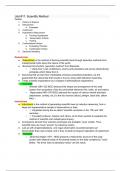
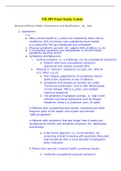
Unit #11: Scientific Method - Deductivism and inductivism are methods used in the scientific method. - Deductivism involves deriving scientific laws through deductive methods from metaphysical truths. - Examples of deductivism include Aristotle deducing the shape of the solar system and Hippocrates deducing the causes of mental disorders. - Inductivism involves generating scientific laws through inductive reasoning from observations or data. - Examples of inductivism include Johannes Kepler presenting a heliocentric account of the solar system and the three laws of planetary motion. - Both deductivism and inductivism use logical arguments to come to scientific conclusions. - Hypothetico-Deductivism (H-D) is a method that introduces hypotheses or explanations and deduces predictions from them. - The verification principle was proposed to reduce scientific inquiry to observation sentences but has limitations when applied to universal generalizations. - Demarcation criteria help distinguish scientific statements from pseudo-scientific ones based on testability. - Testing involves comparing predictions deduced from hypotheses with observations to confirm or refute the hypothesis. - Theories are forms of explanation that contain multiple statements and assumptions and cannot be reduced to a single law. - Theories are evaluated based on empirical predictions and the internal coherence of the propositions. - The Quine-Duhem Thesis states that scientific theories are under-determined relative to evidence. - Confirmation holism rejects isolating specific statements for testing and emphasizes the collective testing of hypotheses. - Semantic modeling involves using collections of models as scientific explanations, where models represent relationships between elements and capture testable hypotheses. - Models are not truth statements but show the relationships between objects or processes in the world. - Semantic modeling can replace theories as scientific explanations by assigning elements in the model to objects or processes and deriving testable hypotheses from the relationships between these elements.

Geschreven voor
- Instelling
- Sam Houston State University
- Vak
- PHIL 2303
Documentinformatie
- Geüpload op
- 23 april 2024
- Aantal pagina's
- 6
- Geschreven in
- 2023/2024
- Type
- College aantekeningen
- Docent(en)
- Brommage
- Bevat
- Alle colleges
Onderwerpen
-
history of science
-
deductivism
-
forming hypotheses
-
hypothetico deductivism
-
confirmational holism
-
semantic modeling

Ook beschikbaar in voordeelbundel