

Marketing communication – lecture 1: breaking through the advertising clutter
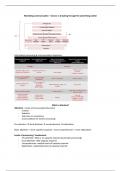
Information processing & communication objectives:
What is attention?
Attention = levels of processing/involvement
- Limited
- Selective
- Voluntary or involuntary
- A precondition for further processing
Pre-attention → focal attention → comprehension → elaboration
More attention = more cognitive capacity = more comprehension = more elaboration
Levels of processing / involvement
- Pre-attention: little or no capacity required (automatic processing)
- Focal attention: little capacity required
- Comprehension: modest levels of capacity required
- Elaboration: substantial levels of capacity required
, - Pre-attention: sensory inputs
- Focal attention: directed through specific info
- Comprehension: cognitive processing → meaning of stimuli
- Connected to other relevant concepts of knowledge
-
How campaigns can stand out: attracting attention
Increasing:
- Involuntary attention
- Voluntary attention
Increasing involuntary attention → attracting attention
- Various communication cues can increase an automatic orienting response
o Salient, original, and novel stimuli (saliency)
o Centrally located stimuli (horizontal centrality)
o Stimuli presented first (primacy)
o Pictures (picture superiority)
- Oftentimes unconscious and unintended
- ‘’attractors’’
- Associated with bottom-up processing = what our senses can detect
Saliency
- Salient stimuli:
o Perceptually prominent (size, color, contrast)
o Novel, unexpected, original stimuli
o Stimuli related to life and death (such as sexual and threatening stimuli)
- These stimuli:
, o Stick out and are hard to ignore
o Lead to mild psychological arousal
o Result in focal attention to the source of stimulation
Horizontal centrality
- Stimuli in the center receive more attention (and are more likely to be chosen)
Primacy
- Consumers are more attentive to items that are presented first in a list → Google search
Picture superiority
- Pictorial information receives more information than textual information
- Analysis of 1363 print ads with eye tracking technology
o Pictures: attract attention, regardless of size
o Text: the bigger the text, the more attention
o Brand: the bigger the brand name, the more attention
Increasing voluntary attention → magnifying attention
- How to increase voluntary attention?
o Increase self-relevance
▪ Personal interest avoids inattentional blindness
▪ Self-referencing
▪ Proximity
o Curiosity
▪ Unfinished ads
▪ Mysterious ads
- Oftentimes conscious and intended
- ‘’magnetizers’’
- Associated with top-down processing
- Attention that is applied and controlled by the individual, as opposed to attention that is
spontaneously captured by a stimulus in the environment
Personal interest & inattentional blindness
- Consumers allocate more attention to information that is consistent with their goals
- Information that is not relevant, is often ignored, and will lead to inattentional blindness
Inattentional blindness & banner blindness:
, Implications for SEO and SEO
- Organic results generate more attention and traffic because they are immediately relevant
- Sponsored results often suffer from inattentional blindness
Self-referencing
Attention increases when personalized information is used
- Second person wording (‘’you’’)
- Names
Proximity & EWOM
- Consumers pay more attention to information that is ‘’close’’
- The more proximate, the more relevant, the more attention
o Sensory proximity: closeness in experience
o Spatial proximity: closeness in physical space
o Temporal proximity: closeness in time
A variety of applications
- E(WOM) comes from people close to use (spatial and sensory proximity)
- Viral marketing is emotionally vivid (sensory proximity) and is shared via friends
- Blogs are written by influencers that feel close (sensory proximity)
- Billboards and Abri’s are prominent and often close in space (spatial)
How campaigns can stand out: sustaining attention
Processing ease
- Increases engagement
o The easier, the more likely that people will continue with the task
- Generates positive affect
o Fluency generally leads to positive feelings
- Increases comprehension
o The easier, the less resources are needed for comprehension and elaboration
Linking your appeal to what consumers already know makes it easier for them to comprehend
How?
- Concrete information is easier to process, and helps to link to existing knowledge structures
- Visual information strengthens memory traces (dual coding theory)
- Variability not only prevents boredom, but also strengthens existing knowledge structures
(encoding variability)
Processing ease, concrete information, ‘’memory traces’’, and the associative network theory:
Information processing & communication objectives:
What is attention?
Attention = levels of processing/involvement
- Limited
- Selective
- Voluntary or involuntary
- A precondition for further processing
Pre-attention → focal attention → comprehension → elaboration
More attention = more cognitive capacity = more comprehension = more elaboration
Levels of processing / involvement
- Pre-attention: little or no capacity required (automatic processing)
- Focal attention: little capacity required
- Comprehension: modest levels of capacity required
- Elaboration: substantial levels of capacity required
, - Pre-attention: sensory inputs
- Focal attention: directed through specific info
- Comprehension: cognitive processing → meaning of stimuli
- Connected to other relevant concepts of knowledge
-
How campaigns can stand out: attracting attention
Increasing:
- Involuntary attention
- Voluntary attention
Increasing involuntary attention → attracting attention
- Various communication cues can increase an automatic orienting response
o Salient, original, and novel stimuli (saliency)
o Centrally located stimuli (horizontal centrality)
o Stimuli presented first (primacy)
o Pictures (picture superiority)
- Oftentimes unconscious and unintended
- ‘’attractors’’
- Associated with bottom-up processing = what our senses can detect
Saliency
- Salient stimuli:
o Perceptually prominent (size, color, contrast)
o Novel, unexpected, original stimuli
o Stimuli related to life and death (such as sexual and threatening stimuli)
- These stimuli:
, o Stick out and are hard to ignore
o Lead to mild psychological arousal
o Result in focal attention to the source of stimulation
Horizontal centrality
- Stimuli in the center receive more attention (and are more likely to be chosen)
Primacy
- Consumers are more attentive to items that are presented first in a list → Google search
Picture superiority
- Pictorial information receives more information than textual information
- Analysis of 1363 print ads with eye tracking technology
o Pictures: attract attention, regardless of size
o Text: the bigger the text, the more attention
o Brand: the bigger the brand name, the more attention
Increasing voluntary attention → magnifying attention
- How to increase voluntary attention?
o Increase self-relevance
▪ Personal interest avoids inattentional blindness
▪ Self-referencing
▪ Proximity
o Curiosity
▪ Unfinished ads
▪ Mysterious ads
- Oftentimes conscious and intended
- ‘’magnetizers’’
- Associated with top-down processing
- Attention that is applied and controlled by the individual, as opposed to attention that is
spontaneously captured by a stimulus in the environment
Personal interest & inattentional blindness
- Consumers allocate more attention to information that is consistent with their goals
- Information that is not relevant, is often ignored, and will lead to inattentional blindness
Inattentional blindness & banner blindness:
, Implications for SEO and SEO
- Organic results generate more attention and traffic because they are immediately relevant
- Sponsored results often suffer from inattentional blindness
Self-referencing
Attention increases when personalized information is used
- Second person wording (‘’you’’)
- Names
Proximity & EWOM
- Consumers pay more attention to information that is ‘’close’’
- The more proximate, the more relevant, the more attention
o Sensory proximity: closeness in experience
o Spatial proximity: closeness in physical space
o Temporal proximity: closeness in time
A variety of applications
- E(WOM) comes from people close to use (spatial and sensory proximity)
- Viral marketing is emotionally vivid (sensory proximity) and is shared via friends
- Blogs are written by influencers that feel close (sensory proximity)
- Billboards and Abri’s are prominent and often close in space (spatial)
How campaigns can stand out: sustaining attention
Processing ease
- Increases engagement
o The easier, the more likely that people will continue with the task
- Generates positive affect
o Fluency generally leads to positive feelings
- Increases comprehension
o The easier, the less resources are needed for comprehension and elaboration
Linking your appeal to what consumers already know makes it easier for them to comprehend
How?
- Concrete information is easier to process, and helps to link to existing knowledge structures
- Visual information strengthens memory traces (dual coding theory)
- Variability not only prevents boredom, but also strengthens existing knowledge structures
(encoding variability)
Processing ease, concrete information, ‘’memory traces’’, and the associative network theory:



