Study of language
Summary of the book
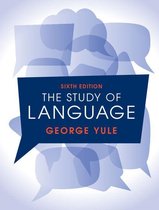
“The Study of Language”
Seventh Edition
George Yule
Chapters 1, 5, 6, 9, 10, 11, 12, 15, 17, 18, 19
,Chapter 1, the origins of language
We suspect that some type of spoken language must have been developed between 100,000 and 50,000 years
ago, well before written language (about 5,000 years ago). There are different theories as to how language
developed.
The divine source
In most religions there appears to be a divine source who provides humans with language. The basic hypothesis
seems to have been that, if human infants were allowed to grow up without hearing any language around
them, then they would spontaneously begin using the original God-given language. If human language did
emanate from a divine source, we have no way of reconstructing that original language, especially given the
events in a place called Babel, “because the Lord did there confound the language of all the earth,” as described
in Genesis.
The natural sound source
This idea says that primitive words derive from imitations of the natural sounds that early men and women
heard around them.
The “Bow-Wow” theory
In this scenario, when different object flew by, making a caw-caw or coo-coo sound, the early human tried to
imitate the sounds and then used them to refer to those objects even when they weren’t present. Words that
sound like the noises they describe are examples of onomatopoeia (in English for example: buzz, boom, hiss).
The “Pooh-Pooh” theory
This theory proposed that speech developed from the instinctive sounds people make in emotional
circumstances (in English for example: ouch, wow, ah). These sounds are not in any other way used in normal
language, so it seems unlikely that this is the source for language.
The musical source
Before we utter words, we can produce a wide range of sounds that aren’t word forms at all. Intonation and the
ability to create melody, develops in the human infant before other aspects of language. We might say that our
first musical instrument was the human voice, or the control of the vibration of the vocal folds. However, other
creatures, like birds, also produce songs. What prompted humans to go beyond melody and develop a more
elaborated means of interacting with each other?
The social interaction source
This theory is nicknamed the “yo-he-ho” theory. This involves the utterance of sounds in physical effort, or the
sounds needed to coordinate a physical activity involving multiple people. Groups of early humans might have
developed grunts and curses that were used when lifting and carrying things. However, apes also live in social
groups and use grunts and social calls, but they have not developed the capacity for speech.
The physical adaptation source
We can start by making the observation that our ancestors made a major transition to an upright posture on
two feet. This changed how we breathe.
Teeth and lips
Human teeth are upright, they are roughly even in hight, and they are small. This is helpful to make certain
sounds, but not helpful to rip or tear food. Human lips have much more intricate muscle interlacing than is
found in other primate and their resulting flexibility certainly helps in making sounds like p, b, and m.
Mouth and tongue
The human mouth is relatively small compared to other primates and can be opened and closed rapidly.
Humans also have a shorter, thicker, and more muscular tongue that can be used to shape a wide variety of
sounds inside the oral cavity. Humans can also close off the airway through the nose to create more air pressure
in the mouth.
2
, Larynx and pharynx
The human larynx (voice box) differs significantly in position from the larynx of other primates such as monkeys.
Because of the upright position humans took, the head moved more directly above the spinal column and the
larynx dropped lower. This created a longer cavity called the pharynx. This does make it more possible for
humans to choke on food.
The tool-making source
By about two million years ago, there is evidence that humans had developed preferential right-handedness
and had become capable of making stone tools. Tool making is evidence of a brain at work.
The human brain
The human brain is not only large related to human body size, it is also lateralized, that is, it has specialized
functions in each of the two hemispheres (chapter 12). Those functions that control the motor movements
involved in complex vocalization (speaking) and object manipulation (making or using tools) are very close to
each other in the left hemisphere of the brain. That is, the area of the motor cortex that controls the muscles of
the arms and hands is next to the articulatory muscles of the face, jaw, and tongue. It may be that there was an
evolutionary connection between the language-using and tool-using abilities of humans and that both were
involved in the development of the speaking brain.
The genetic source
Because certain things happen automatically during the first few years of a child’s life (like the lowering of the
larynx, walking upright, talking), we might assume that human offspring are born with a special capacity for
language. Is it possible that language capacity is genetically hard-wired in the new-born human?
The innateness hypothesis
As a solution to the puzzle of the origins of language, the innateness hypothesis would seem to point to
something in human genetics, possibly a crucial mutation or two, as the source.
3
Summary of the book
“The Study of Language”
Seventh Edition
George Yule
Chapters 1, 5, 6, 9, 10, 11, 12, 15, 17, 18, 19
,Chapter 1, the origins of language
We suspect that some type of spoken language must have been developed between 100,000 and 50,000 years
ago, well before written language (about 5,000 years ago). There are different theories as to how language
developed.
The divine source
In most religions there appears to be a divine source who provides humans with language. The basic hypothesis
seems to have been that, if human infants were allowed to grow up without hearing any language around
them, then they would spontaneously begin using the original God-given language. If human language did
emanate from a divine source, we have no way of reconstructing that original language, especially given the
events in a place called Babel, “because the Lord did there confound the language of all the earth,” as described
in Genesis.
The natural sound source
This idea says that primitive words derive from imitations of the natural sounds that early men and women
heard around them.
The “Bow-Wow” theory
In this scenario, when different object flew by, making a caw-caw or coo-coo sound, the early human tried to
imitate the sounds and then used them to refer to those objects even when they weren’t present. Words that
sound like the noises they describe are examples of onomatopoeia (in English for example: buzz, boom, hiss).
The “Pooh-Pooh” theory
This theory proposed that speech developed from the instinctive sounds people make in emotional
circumstances (in English for example: ouch, wow, ah). These sounds are not in any other way used in normal
language, so it seems unlikely that this is the source for language.
The musical source
Before we utter words, we can produce a wide range of sounds that aren’t word forms at all. Intonation and the
ability to create melody, develops in the human infant before other aspects of language. We might say that our
first musical instrument was the human voice, or the control of the vibration of the vocal folds. However, other
creatures, like birds, also produce songs. What prompted humans to go beyond melody and develop a more
elaborated means of interacting with each other?
The social interaction source
This theory is nicknamed the “yo-he-ho” theory. This involves the utterance of sounds in physical effort, or the
sounds needed to coordinate a physical activity involving multiple people. Groups of early humans might have
developed grunts and curses that were used when lifting and carrying things. However, apes also live in social
groups and use grunts and social calls, but they have not developed the capacity for speech.
The physical adaptation source
We can start by making the observation that our ancestors made a major transition to an upright posture on
two feet. This changed how we breathe.
Teeth and lips
Human teeth are upright, they are roughly even in hight, and they are small. This is helpful to make certain
sounds, but not helpful to rip or tear food. Human lips have much more intricate muscle interlacing than is
found in other primate and their resulting flexibility certainly helps in making sounds like p, b, and m.
Mouth and tongue
The human mouth is relatively small compared to other primates and can be opened and closed rapidly.
Humans also have a shorter, thicker, and more muscular tongue that can be used to shape a wide variety of
sounds inside the oral cavity. Humans can also close off the airway through the nose to create more air pressure
in the mouth.
2
, Larynx and pharynx
The human larynx (voice box) differs significantly in position from the larynx of other primates such as monkeys.
Because of the upright position humans took, the head moved more directly above the spinal column and the
larynx dropped lower. This created a longer cavity called the pharynx. This does make it more possible for
humans to choke on food.
The tool-making source
By about two million years ago, there is evidence that humans had developed preferential right-handedness
and had become capable of making stone tools. Tool making is evidence of a brain at work.
The human brain
The human brain is not only large related to human body size, it is also lateralized, that is, it has specialized
functions in each of the two hemispheres (chapter 12). Those functions that control the motor movements
involved in complex vocalization (speaking) and object manipulation (making or using tools) are very close to
each other in the left hemisphere of the brain. That is, the area of the motor cortex that controls the muscles of
the arms and hands is next to the articulatory muscles of the face, jaw, and tongue. It may be that there was an
evolutionary connection between the language-using and tool-using abilities of humans and that both were
involved in the development of the speaking brain.
The genetic source
Because certain things happen automatically during the first few years of a child’s life (like the lowering of the
larynx, walking upright, talking), we might assume that human offspring are born with a special capacity for
language. Is it possible that language capacity is genetically hard-wired in the new-born human?
The innateness hypothesis
As a solution to the puzzle of the origins of language, the innateness hypothesis would seem to point to
something in human genetics, possibly a crucial mutation or two, as the source.
3