Thema 6 – the other
[Kassin]
Chapter 4 (117-132)
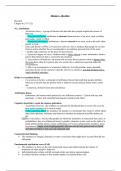
4-2. Attribution
- Attribution theory: a group of theories that describe how people explain the causes of
behavior.
- > Personal attribution: attribution to internal characteristics of an actor, such as ability
personality, mode or effort.
- > Situational attribution: attribution to factors external to an actor such as the task, other
people or luck.
- Jones and David’s (1965) correspondent inference theory predicts that people try to infer
from an action whether the act corresponds to an enduring personal trait of the actor.
- > people make inference on the basis of three factors:
- 1. A person’s degree of choice. Behavior that is freely chosen is more informative about a
person than behavior that is coerced by the situation.
- 2. Expectedness of behavior. An action tells us more about a person when it departs from
the norm than when it is typical, part of a social role or otherwise expected under the
circumstances.
- 3. Effects or consequences of someone’s behavior. Acts that produce many desirable
outcomes do not reveal a person’s specific motives as clearly as acts that produce only a
single desirable outcome.
Kelley’s covariation theory
- Covariation principle: a principle of attribution theory that holds that people attribute
behavior to factors that are present when a behavior occurs and are absent when it does
not.
- > consensus, distinctiveness and consistency
Attribution biases
- Kahneman: the human mind operates by two different systems: 1. Quick and easy and
automatic. 2. Slow and controlled and requires attention and effort.
Cognitive heuristics: regels die mensen gebruiken
- Availability heuristic: the tendency to estimate the likelihood that an event will occur by
how easily instances of it come to mind.
- False-consensus effect: the tendency for people to overestimate this extent to which others
share their opinions, attributes and behaviors (denken dat anderen hetzelfde denken als
jij).
- Base-rate fallacy: the fact that people are relatively insensitive to numerical base rates, or
probabilities; they are influenced more by graphic, dramatic events, such as the sight of a
multi-million-dollar lottery winner celebrating on TV (less influenced by numbers, more
by pictures) (banger voor.vliegtuigongeluk, dan auto terwijl auto grotere kans is) (hoeft
niet alleen beelden te zijn, kan ook uitspraak zijn)
Counterfactual thinking
The tendency to imagine alternative events or outcomes that might have occurred but did not
(delusion).
Fundamental attribution error (FAE)
The tendency to focus on the role of personal causes and underestimate the impact of
situations on other people’s behavior.
Individualistische cultuur schrijft oorzaak eerder aan interne eigenschappen.
In collectivistische culturen is hier minder sprake van (alcoholisme van).
, 4-2D. Motivational biases
- Wishful seeing
- Need for self-esteem
- Belief in a just world
Chapter 4 (140-150)
Confirmation biases: the tendency to seek, interpret and create information that verifies existing
beliefs.
Perseverance of beliefs
- Events that are ambiguous enough to support contrasting interpretations are like inkbots:
we see or hear in them what we expect to see or hear.
- Belief perseverance: the tendency to maintain beliefs even after they have been
discredited.
Confirmatory hypothesis testing
- Even when we form a negative first impression of someone on the basis of all available
evidence and even wehen we interpret that evidence accurately, our impression may be
misleading -> reason is biased experience sampling.
The self-fulfilling prophecy
The process by which one’s expectations about a person eventually lead that person to behave
in ways that confirm those expectations.
1) a perceived has expectations of a target person.
2) the perceived then heaves in a manner consistent with those expectations.
3) the target unwittingly adjusts his or her behavior according to the perceiver’s actions.
Social perception
- We often have little awareness of our limitations, leading us to feel overconfident in our
judgements.
[Kassin]
Chapter 4 (117-132)
4-2. Attribution
- Attribution theory: a group of theories that describe how people explain the causes of
behavior.
- > Personal attribution: attribution to internal characteristics of an actor, such as ability
personality, mode or effort.
- > Situational attribution: attribution to factors external to an actor such as the task, other
people or luck.
- Jones and David’s (1965) correspondent inference theory predicts that people try to infer
from an action whether the act corresponds to an enduring personal trait of the actor.
- > people make inference on the basis of three factors:
- 1. A person’s degree of choice. Behavior that is freely chosen is more informative about a
person than behavior that is coerced by the situation.
- 2. Expectedness of behavior. An action tells us more about a person when it departs from
the norm than when it is typical, part of a social role or otherwise expected under the
circumstances.
- 3. Effects or consequences of someone’s behavior. Acts that produce many desirable
outcomes do not reveal a person’s specific motives as clearly as acts that produce only a
single desirable outcome.
Kelley’s covariation theory
- Covariation principle: a principle of attribution theory that holds that people attribute
behavior to factors that are present when a behavior occurs and are absent when it does
not.
- > consensus, distinctiveness and consistency
Attribution biases
- Kahneman: the human mind operates by two different systems: 1. Quick and easy and
automatic. 2. Slow and controlled and requires attention and effort.
Cognitive heuristics: regels die mensen gebruiken
- Availability heuristic: the tendency to estimate the likelihood that an event will occur by
how easily instances of it come to mind.
- False-consensus effect: the tendency for people to overestimate this extent to which others
share their opinions, attributes and behaviors (denken dat anderen hetzelfde denken als
jij).
- Base-rate fallacy: the fact that people are relatively insensitive to numerical base rates, or
probabilities; they are influenced more by graphic, dramatic events, such as the sight of a
multi-million-dollar lottery winner celebrating on TV (less influenced by numbers, more
by pictures) (banger voor.vliegtuigongeluk, dan auto terwijl auto grotere kans is) (hoeft
niet alleen beelden te zijn, kan ook uitspraak zijn)
Counterfactual thinking
The tendency to imagine alternative events or outcomes that might have occurred but did not
(delusion).
Fundamental attribution error (FAE)
The tendency to focus on the role of personal causes and underestimate the impact of
situations on other people’s behavior.
Individualistische cultuur schrijft oorzaak eerder aan interne eigenschappen.
In collectivistische culturen is hier minder sprake van (alcoholisme van).
, 4-2D. Motivational biases
- Wishful seeing
- Need for self-esteem
- Belief in a just world
Chapter 4 (140-150)
Confirmation biases: the tendency to seek, interpret and create information that verifies existing
beliefs.
Perseverance of beliefs
- Events that are ambiguous enough to support contrasting interpretations are like inkbots:
we see or hear in them what we expect to see or hear.
- Belief perseverance: the tendency to maintain beliefs even after they have been
discredited.
Confirmatory hypothesis testing
- Even when we form a negative first impression of someone on the basis of all available
evidence and even wehen we interpret that evidence accurately, our impression may be
misleading -> reason is biased experience sampling.
The self-fulfilling prophecy
The process by which one’s expectations about a person eventually lead that person to behave
in ways that confirm those expectations.
1) a perceived has expectations of a target person.
2) the perceived then heaves in a manner consistent with those expectations.
3) the target unwittingly adjusts his or her behavior according to the perceiver’s actions.
Social perception
- We often have little awareness of our limitations, leading us to feel overconfident in our
judgements.