H9: Foundations of group behavior
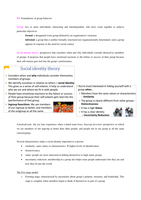
Group: two or more individuals, interacting and interdependent, who have come together to achieve
particular objectives.
- formal: a designated work group defined by an organization’s structure
- informal: a group that is neither formally structured nor organizationally determined; such a group
appears in response to the need for social contact
Social identity theory: perspective that considers when and why individuals consider themselves members
of groups. It proposes that people have emotional reactions to the failure or success of their group because
their self-esteem gets tied into the group’s performance.
Schadenfreude: the joy fans experience when a hated team loses. Ingroup favorism: perspective in which
we see members of our ingroup as better than other people, and people not in our group as all the same
(stereotyping).
Several characteristics make a social identity important to a person:
similarity: same values or characteristics higher levels of identification
distinctiveness
status: people are more interested in linking themselves to high-status groups
uncertainty reduction: membership in a group also helps some people understand who they are and
how they fit into the world.
The five-stage model:
1. Forming stage: characterized by uncertainty about group’s purpose, structure, and leadership. This
stage is complete when members begin to think of themselves as part of a group.
Group: two or more individuals, interacting and interdependent, who have come together to achieve
particular objectives.
- formal: a designated work group defined by an organization’s structure
- informal: a group that is neither formally structured nor organizationally determined; such a group
appears in response to the need for social contact
Social identity theory: perspective that considers when and why individuals consider themselves members
of groups. It proposes that people have emotional reactions to the failure or success of their group because
their self-esteem gets tied into the group’s performance.
Schadenfreude: the joy fans experience when a hated team loses. Ingroup favorism: perspective in which
we see members of our ingroup as better than other people, and people not in our group as all the same
(stereotyping).
Several characteristics make a social identity important to a person:
similarity: same values or characteristics higher levels of identification
distinctiveness
status: people are more interested in linking themselves to high-status groups
uncertainty reduction: membership in a group also helps some people understand who they are and
how they fit into the world.
The five-stage model:
1. Forming stage: characterized by uncertainty about group’s purpose, structure, and leadership. This
stage is complete when members begin to think of themselves as part of a group.