Unit 3- Decision making to improve marketing performance
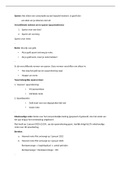
The role of marketing:
The process of identifying, anticipating and satisfying customer needs profitably.
What are objectives?
Objectives are statements of specific outcomes that are to be achieved
Corporate objectives
Coporate objectives are those that relate to the business as a whole. Marketing objectives need to
be consistent with and support corporate objectives.
The value of setting marketing objectives:
- Ensure functional activities are consistent with corporate objectives
- Provide a focus for marketing decision making
- Provide incentives for marketing team and a measure of success/ failure
- Establish priorities for marketing resources and effort
Potential problems with marketing objectives:
- Fast-changing external environment
- Potential conflict between marketing objectives
- Easy to be too ambitious with marketing objectives
Examples of potential marketing objectives:
- Maintaining or increasing market share
- Developing new product/ innovation
- Meeting the needs of customers
- Entering a new market/ market positioning
- Gaining an advantage over competitors
Internal influences on marketing objectives:
- Corporate objectives
- Finance
- Human resources
- Operational issues
- Business culture
External influences on marketing objectives:
- Economic environment
- Competitor actions
- Market dynamics
- Technological changes
- Social and political changes
Primary research:
Can be called field research and involves the collection of data on a first hand basis, this data did not
exist previously and is original data
, Examples: surveys, questionnaires, interviews, focus groups, observations
Secondary research:
Can be called desk research, this is research that has already been undertaken by another
organisation and already exists.
Examples: the internet, newspapers & magazines, national & local government
Market mapping:
Can enable a business to identify the position of its product in the market.
Sampling:
Gathering data from a group of respondents whose views or behaviours should be representative of
the target market as a whole.
Types of sampling techniques:
- Random- a sample is selected for study from a population where each individual is chosen
entirely by chance and has an equal chance of being selected.
- Quota- the population is first segmented into subgroups before a percentage of each group
is chosen to fairly represent the population.
- Stratified- the population is first segmented into subgroups before respondents are
randomly selected from within that subgroup
Correlation:
A statistical technique used to identify the strength of a relationship between two variables.
Types of correlation:
- Positive- the 2 variables move in the same direction
- Negative- the 2 variables move in opposite directions
- Zero- there is no relationship between the factors
Confidence level:
The probability that the research findings are correct
Confidence interval:
The plus or minus figures used to show the accuracy of statistical results arising from sampling
Extrapolation:
Extrapolation used trends established from historical data to forecast the future.
What is elasticity?
Elasticity measures the responsiveness of demand to a change in a relevant variable- such as price or
income
Price elasticity of demand-
Price elasticity of demand measures the extent to which the quantity of a product demanded is
affected by a change in price.
The role of marketing:
The process of identifying, anticipating and satisfying customer needs profitably.
What are objectives?
Objectives are statements of specific outcomes that are to be achieved
Corporate objectives
Coporate objectives are those that relate to the business as a whole. Marketing objectives need to
be consistent with and support corporate objectives.
The value of setting marketing objectives:
- Ensure functional activities are consistent with corporate objectives
- Provide a focus for marketing decision making
- Provide incentives for marketing team and a measure of success/ failure
- Establish priorities for marketing resources and effort
Potential problems with marketing objectives:
- Fast-changing external environment
- Potential conflict between marketing objectives
- Easy to be too ambitious with marketing objectives
Examples of potential marketing objectives:
- Maintaining or increasing market share
- Developing new product/ innovation
- Meeting the needs of customers
- Entering a new market/ market positioning
- Gaining an advantage over competitors
Internal influences on marketing objectives:
- Corporate objectives
- Finance
- Human resources
- Operational issues
- Business culture
External influences on marketing objectives:
- Economic environment
- Competitor actions
- Market dynamics
- Technological changes
- Social and political changes
Primary research:
Can be called field research and involves the collection of data on a first hand basis, this data did not
exist previously and is original data
, Examples: surveys, questionnaires, interviews, focus groups, observations
Secondary research:
Can be called desk research, this is research that has already been undertaken by another
organisation and already exists.
Examples: the internet, newspapers & magazines, national & local government
Market mapping:
Can enable a business to identify the position of its product in the market.
Sampling:
Gathering data from a group of respondents whose views or behaviours should be representative of
the target market as a whole.
Types of sampling techniques:
- Random- a sample is selected for study from a population where each individual is chosen
entirely by chance and has an equal chance of being selected.
- Quota- the population is first segmented into subgroups before a percentage of each group
is chosen to fairly represent the population.
- Stratified- the population is first segmented into subgroups before respondents are
randomly selected from within that subgroup
Correlation:
A statistical technique used to identify the strength of a relationship between two variables.
Types of correlation:
- Positive- the 2 variables move in the same direction
- Negative- the 2 variables move in opposite directions
- Zero- there is no relationship between the factors
Confidence level:
The probability that the research findings are correct
Confidence interval:
The plus or minus figures used to show the accuracy of statistical results arising from sampling
Extrapolation:
Extrapolation used trends established from historical data to forecast the future.
What is elasticity?
Elasticity measures the responsiveness of demand to a change in a relevant variable- such as price or
income
Price elasticity of demand-
Price elasticity of demand measures the extent to which the quantity of a product demanded is
affected by a change in price.