MEDIA CULTUUR EN IDENTITEIT! SAMENVATTING
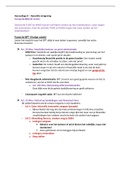
WEEK 1 Post Colonialism
Said – On orientalism
Orientalisme: Westerse interpretatie van het Oosten.
Fedyeratures of orientalism:
1. a distribution of geopolitical awareness…”
2. elaboration of a distinction between West and East and of political interestes.
3. it is a will to understand, control, manipulate and incorporate what is manifestly different.
4. nogadirectreflection of theOrient but a production that exists in an unequal exchange with
various kinds of power (political, cultural, moral).
The orient is an idea: het is geen natuurlijk feit, maar het is een idee van het Westen met een
geschiedenis, traditie van gedachtes, denkbeelden en vocabulaire dat het zijn realiteit geeft (p. 5).
Ssid geeft drie kwalificaties (p. 5-6):
1. De orient is niet per essentie een idee of creatie die niet correspondeert met de realiteit.
2. Ideeën, culturen en geschiedenissen kunnen niet serieus bestudeerd worden zonder te kijken
naar de krachten, macht die van buitenaf wordt opgelegd.
3. Men mag niet aannemen dat de structuur van het orientalisme niets meer is dan een structuur
van leugens en mythes. En dat wanneer men de waarheid zou vertellen zijn die structuur
zouden wegblazen.
‘I myself believe that orientalisme is more particularly valuable as a sign of European-Atlantic
power over the Orient than it is s a veridic discourse about the Orient (Said 1979, p. 6)
‘Orientalisme, therefore is nog an airy European fantasy about the Orient, but a created bodyof
theory and practice in which, for many generations there has been a considerable material
investment.’(p. 6)
Gramsci maakt onderscheid tussen civil (school, familie etc.) en political (leger, politie, etc) society
Hegemony.
The idea of Europe (Denys Hay) A collective notion identifying Us Europeans against all
“Those”non-Europeans (p.7) European identity is superieur.
In a quite constant way, Orientalisme depends for its strategy on this flexible positional superiority,
which puts the Westernerin a whole series of possible relationships with the Orientwithout ver
losing him the relative upper hand.
• Relational
• Superiority
• Flexibility
Het westen had de macht om naar het oosten toe te gaan, die landen uit te pluizen, be bestuderen,
daar boeken over te schrijven en daar conclusies uit te trekken terwijl de mensen daar zelf geen
stem in hebben. Zij zijn objecten van onderzoek (p.8)
1
, MEDIA CULTUUR EN IDENTITEIT! SAMENVATTING
Contemporary reality:
The distinction between pure andpolitical knowledge.
Argument Said: Het orientalisme is een belangrijk aspect in de moderne politiek-intellectuele
cultuur en heeft zodanig weinig te maken met de orient als wel met ‘onze wereld’ (p. 12).
Elke tekst moet in zijn context geplaatst worden.
Schrijvers/wetenschappers baseren zich op werk van andere schrijvers/wetenschappers. Zo krijg je
een opeenstapeling van misstanden.
• Orientalism is a specific kind of knowledge about specific places, peoples andcivilizations
(Manifest = openbaar) veranderlijk.
• Beneath the idioms [repertoire] there was a layer of doctrine...all of them converging upon
such essentials aspects of theOrient as the Oriental character, Oriental despotism, Oriental
sensuality. (Latent = verborgen) constant.
2
WEEK 1 Post Colonialism
Said – On orientalism
Orientalisme: Westerse interpretatie van het Oosten.
Fedyeratures of orientalism:
1. a distribution of geopolitical awareness…”
2. elaboration of a distinction between West and East and of political interestes.
3. it is a will to understand, control, manipulate and incorporate what is manifestly different.
4. nogadirectreflection of theOrient but a production that exists in an unequal exchange with
various kinds of power (political, cultural, moral).
The orient is an idea: het is geen natuurlijk feit, maar het is een idee van het Westen met een
geschiedenis, traditie van gedachtes, denkbeelden en vocabulaire dat het zijn realiteit geeft (p. 5).
Ssid geeft drie kwalificaties (p. 5-6):
1. De orient is niet per essentie een idee of creatie die niet correspondeert met de realiteit.
2. Ideeën, culturen en geschiedenissen kunnen niet serieus bestudeerd worden zonder te kijken
naar de krachten, macht die van buitenaf wordt opgelegd.
3. Men mag niet aannemen dat de structuur van het orientalisme niets meer is dan een structuur
van leugens en mythes. En dat wanneer men de waarheid zou vertellen zijn die structuur
zouden wegblazen.
‘I myself believe that orientalisme is more particularly valuable as a sign of European-Atlantic
power over the Orient than it is s a veridic discourse about the Orient (Said 1979, p. 6)
‘Orientalisme, therefore is nog an airy European fantasy about the Orient, but a created bodyof
theory and practice in which, for many generations there has been a considerable material
investment.’(p. 6)
Gramsci maakt onderscheid tussen civil (school, familie etc.) en political (leger, politie, etc) society
Hegemony.
The idea of Europe (Denys Hay) A collective notion identifying Us Europeans against all
“Those”non-Europeans (p.7) European identity is superieur.
In a quite constant way, Orientalisme depends for its strategy on this flexible positional superiority,
which puts the Westernerin a whole series of possible relationships with the Orientwithout ver
losing him the relative upper hand.
• Relational
• Superiority
• Flexibility
Het westen had de macht om naar het oosten toe te gaan, die landen uit te pluizen, be bestuderen,
daar boeken over te schrijven en daar conclusies uit te trekken terwijl de mensen daar zelf geen
stem in hebben. Zij zijn objecten van onderzoek (p.8)
1
, MEDIA CULTUUR EN IDENTITEIT! SAMENVATTING
Contemporary reality:
The distinction between pure andpolitical knowledge.
Argument Said: Het orientalisme is een belangrijk aspect in de moderne politiek-intellectuele
cultuur en heeft zodanig weinig te maken met de orient als wel met ‘onze wereld’ (p. 12).
Elke tekst moet in zijn context geplaatst worden.
Schrijvers/wetenschappers baseren zich op werk van andere schrijvers/wetenschappers. Zo krijg je
een opeenstapeling van misstanden.
• Orientalism is a specific kind of knowledge about specific places, peoples andcivilizations
(Manifest = openbaar) veranderlijk.
• Beneath the idioms [repertoire] there was a layer of doctrine...all of them converging upon
such essentials aspects of theOrient as the Oriental character, Oriental despotism, Oriental
sensuality. (Latent = verborgen) constant.
2