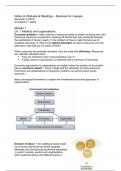
Brief summary Host Response to biomaterials R.F.J.F. Van Doorslaer - 1001804
Step in the host response Explanation
Biomaterial implantation Injury that activates the immune system via alarmins. (t
= 0 s)
Protein adsorption on biomaterial This step includes protein adsorption, coagulation and
complement system. (t = 1 min)
Cell infiltration Inflammatory cell infiltration through; 1)
polymorphonucleated cells (e.g. neutrophils), 2)
monocytes, macrophages, and 3) other signaling cells
such as dendritic cells or mast cells. (t = 60 min )
Adhered cell release cyto- and Time period equals 1-5 days.
chemokines
Recruitment of tissue repair cells Recruitment of fibroblasts is the first thing occurring,
followed up with stem cell homing and is concluded
with ECM formation. ( t= 5-15 days)
Fibrous encapsulation and Foreign body giant cells are formed in this step which
granuloma tissue formation also includes lymphocyte recruitment. (t = 3-4 weeks)
Biocompatibility: “the ability of a material to perform with an appropriate host response in a specific
application”.
M2/M1 paradigm: is highly idealized. More often, the macrophages show mixed polarizations. Therefore,
all cytokine markers are expected to be present (e.g. IL-4 IFN-ɣ). The M polarization depends on the
present cytokines. This ratio is useful as you can compare the downstream constructive tissue
remodelling of methods.
Opsonization:
- Provisional matrix / Protein adsorption of the implant. It determines platelet activation,
coagulation and complement cascades.
- Opsonins: Immunoglobin G (IgG) and complement C3B.
Quorum sensing: Bacteria adapt their gene expression to the population density via signal molecules. The
bacteria then form a biofilm. The proteins in this ECM prevent antibiotics from binding.
Responsive-release materials: When bacteria colonize an implant these implants could be pH-sensitive,
and secrete antibiotics when an acidic environment is sensed by the bacteria.
Contact killing materials: Antibiotics are covalently bound to the material so that the material keeps its
antibiotic capacity.
Hydrophilic surface material modifications: They bind a lot of water molecules. Therefore, proteins are
not able to bind because they would have to expel water molecules which is energy unfavourable. Since
proteins cannot bind, neither can bacteria.
Immunosenescence: elderly immune system is disturbed by e.g. less reactive macrophages.
Adjuvant: boost of immune system, especially useful in vaccines. This gives a longer lasting protection.
1
, Brief summary Host Response to biomaterials R.F.J.F. Van Doorslaer - 1001804
Cytokines:
Cytokine
TFN-α Pro-inflammatory Involved in systemic inflammation. It is produced chiefly by
activated macrophages, although it can be produced by many
other cell types such as CD4+ lymphocytes, NK cells,
neutrophils, mast cells, eosinophils, and neurons. Induces
apoptotic signals and inflammation. Stimulates phagocytosis.
TGF-β Anti-inflammatory Inhibits B-cell proliferation. Stimulates resting monocytes and
inhibits activated macrophages. For monocytes, TGF-β has been
shown to function as a chemoattractant as well as an
upregulator of inflammatory response. However, TGF-β has also
been shown to downregulate inflammatory cytokine production
in monocytes and macrophages, likely by the aforementioned
inhibition of NF-κB.
IFN-ɣ Pro-inflammatory A factor that keeps the macrophages in a pro-inflammatory
state, recruiting more immune cells to the scene. In this state the
macrophages have a high phagocytic activity, trying to clear any
debris from tissue damage. Stimulates M1 polarization. Present
at the very start.
IL-1β Pro-inflammatory Macrophages recruit and activate neutrophils with this cytokine.
Macrophages activate fibroblasts and stimulate their
proliferation with this cytokine.
IL-4 Reparative A cytokine that stimulates macrophages towards a more
reparative state. Phagocytic capacity is reduced and repair is
initiated. Macrophages attract and activate the fibroblasts (for
example via TGF-β). The fibroblasts start to produce a lot of
extracellular matrix (mainly collagens) to repair the defect.
Mediates the FBGC formation. Could cause fibrosis. Stimulates
M2 polarization.
IL-6 Pro-inflammatory Secreted by macrophages in response to PAMPs. TLRs catch
these PAMPs and induce inflammation via signalling pathways.
IL-10 Resolution of One of the main inhibitors of inflammation. It stimulates
inflammation macrophages to a resolution state. In this state the macrophages
produce more IL-10 which stops the production of
inflammatory factors (such as IFN-ɣ or TNF-α). The
macrophages signal to the activated fibroblasts to attain a
quiescent state and start ECM remodeling instead of pure
production (for example by secreting MMP’s that can
breakdown the initially deposited collagen).
IL-13 Reparative Mediates the FBGC formation. Activates macrophages.
Transform airway fibroblasts to myofibroblasts leading to
collagen deposition.
Chemokine
MCP-1 Pro-inflammatory Monocyte chemoattractant protein, attracts monocytes which
turn into macrophages. Inhibiting the monocyte attraction
therefore reduces the amount of TAMs.
IL-8 Pro-inflammatory Realizes the mobilization of more neutrophils.
Subcutaneous implantation: easy model in which material is implanted directly under the skin. Has
different mechanical loads than realistic implants.
Transwell system: Contains a porous membrane, two types of cells can be cultured which could interact.
Co-culture is most realistic.
2
Step in the host response Explanation
Biomaterial implantation Injury that activates the immune system via alarmins. (t
= 0 s)
Protein adsorption on biomaterial This step includes protein adsorption, coagulation and
complement system. (t = 1 min)
Cell infiltration Inflammatory cell infiltration through; 1)
polymorphonucleated cells (e.g. neutrophils), 2)
monocytes, macrophages, and 3) other signaling cells
such as dendritic cells or mast cells. (t = 60 min )
Adhered cell release cyto- and Time period equals 1-5 days.
chemokines
Recruitment of tissue repair cells Recruitment of fibroblasts is the first thing occurring,
followed up with stem cell homing and is concluded
with ECM formation. ( t= 5-15 days)
Fibrous encapsulation and Foreign body giant cells are formed in this step which
granuloma tissue formation also includes lymphocyte recruitment. (t = 3-4 weeks)
Biocompatibility: “the ability of a material to perform with an appropriate host response in a specific
application”.
M2/M1 paradigm: is highly idealized. More often, the macrophages show mixed polarizations. Therefore,
all cytokine markers are expected to be present (e.g. IL-4 IFN-ɣ). The M polarization depends on the
present cytokines. This ratio is useful as you can compare the downstream constructive tissue
remodelling of methods.
Opsonization:
- Provisional matrix / Protein adsorption of the implant. It determines platelet activation,
coagulation and complement cascades.
- Opsonins: Immunoglobin G (IgG) and complement C3B.
Quorum sensing: Bacteria adapt their gene expression to the population density via signal molecules. The
bacteria then form a biofilm. The proteins in this ECM prevent antibiotics from binding.
Responsive-release materials: When bacteria colonize an implant these implants could be pH-sensitive,
and secrete antibiotics when an acidic environment is sensed by the bacteria.
Contact killing materials: Antibiotics are covalently bound to the material so that the material keeps its
antibiotic capacity.
Hydrophilic surface material modifications: They bind a lot of water molecules. Therefore, proteins are
not able to bind because they would have to expel water molecules which is energy unfavourable. Since
proteins cannot bind, neither can bacteria.
Immunosenescence: elderly immune system is disturbed by e.g. less reactive macrophages.
Adjuvant: boost of immune system, especially useful in vaccines. This gives a longer lasting protection.
1
, Brief summary Host Response to biomaterials R.F.J.F. Van Doorslaer - 1001804
Cytokines:
Cytokine
TFN-α Pro-inflammatory Involved in systemic inflammation. It is produced chiefly by
activated macrophages, although it can be produced by many
other cell types such as CD4+ lymphocytes, NK cells,
neutrophils, mast cells, eosinophils, and neurons. Induces
apoptotic signals and inflammation. Stimulates phagocytosis.
TGF-β Anti-inflammatory Inhibits B-cell proliferation. Stimulates resting monocytes and
inhibits activated macrophages. For monocytes, TGF-β has been
shown to function as a chemoattractant as well as an
upregulator of inflammatory response. However, TGF-β has also
been shown to downregulate inflammatory cytokine production
in monocytes and macrophages, likely by the aforementioned
inhibition of NF-κB.
IFN-ɣ Pro-inflammatory A factor that keeps the macrophages in a pro-inflammatory
state, recruiting more immune cells to the scene. In this state the
macrophages have a high phagocytic activity, trying to clear any
debris from tissue damage. Stimulates M1 polarization. Present
at the very start.
IL-1β Pro-inflammatory Macrophages recruit and activate neutrophils with this cytokine.
Macrophages activate fibroblasts and stimulate their
proliferation with this cytokine.
IL-4 Reparative A cytokine that stimulates macrophages towards a more
reparative state. Phagocytic capacity is reduced and repair is
initiated. Macrophages attract and activate the fibroblasts (for
example via TGF-β). The fibroblasts start to produce a lot of
extracellular matrix (mainly collagens) to repair the defect.
Mediates the FBGC formation. Could cause fibrosis. Stimulates
M2 polarization.
IL-6 Pro-inflammatory Secreted by macrophages in response to PAMPs. TLRs catch
these PAMPs and induce inflammation via signalling pathways.
IL-10 Resolution of One of the main inhibitors of inflammation. It stimulates
inflammation macrophages to a resolution state. In this state the macrophages
produce more IL-10 which stops the production of
inflammatory factors (such as IFN-ɣ or TNF-α). The
macrophages signal to the activated fibroblasts to attain a
quiescent state and start ECM remodeling instead of pure
production (for example by secreting MMP’s that can
breakdown the initially deposited collagen).
IL-13 Reparative Mediates the FBGC formation. Activates macrophages.
Transform airway fibroblasts to myofibroblasts leading to
collagen deposition.
Chemokine
MCP-1 Pro-inflammatory Monocyte chemoattractant protein, attracts monocytes which
turn into macrophages. Inhibiting the monocyte attraction
therefore reduces the amount of TAMs.
IL-8 Pro-inflammatory Realizes the mobilization of more neutrophils.
Subcutaneous implantation: easy model in which material is implanted directly under the skin. Has
different mechanical loads than realistic implants.
Transwell system: Contains a porous membrane, two types of cells can be cultured which could interact.
Co-culture is most realistic.
2