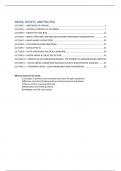
Media, Society and Politics
CH1 + Mullen
Five principles in political communication
- Political power usually can be translated into power over the news media
- When authorities lose control over the political environment they also lose control of the news
- There is no such thing as objective journalism
- The media is dedicated to a good story. That’s it. Can majorly impact the political process.
- Most important effect of news media on citizens are mostly unintentional or unnoticed
Political power and power over the media
- Political power = better position to distribute a message
News media is interested in elites elites get more positive coverage
Media attention rich get richer, poor get poorer
- Need to be heard is still central in the political game if you don’t exist in the media, you don’t exist politically
Become known mobilize supporters influence public opinion influence policy
- Media and politics are competitive symbioses each side tries to exploit the other with minimum cost each
side needs the other to succeed
- Elites VS non-elites’ coverage inequality is structural
Front door powerful get more/automatic media access
Side door civil disobedience provide drama without sacrificing legitimacy
Back door the powerless have to work hard to get in the media weaker political actors who do
something weird must be interesting
Noam Chomsky – Political economy of mass media
- Propaganda model of media criticism market forces, internalized assumptions and self-censorship motivate
newspapers and television networks to stifle dissent
- US media as business that sells a product to other businesses audiences = consumers
- “Naïve” liberal model media as a lapdog
- Media as a watchdog Bennet & Serrin 2005
Liberal idea media take initiative investigative reporting independent scrutiny documenting,
questioning and investigating provide public with official and timely information
- A well-functioning media is paramount for democratic societies
Report events objectively as the occur to allow informed political choices
Control power-holders and expose abuse of power
US media fails to perform its democratic task and are akin to totalitarian propaganda systems media
is often involved in misinformation (Chomsky)
Foucault - Power is everywhere diffused and embodied in discourse, knowledge and regimes of truth
- Norms are embedded beyond our perception self-discipline with no outside coercion
- Panopticism systematic ordering and controlling of human populations through subtle and often unseen
forces surveillance techniques
- Power = the intention production of causal effects
Ability to achieve one’s goals or objectives
Ability to overcome opposition, to exercise control over people
Power is hierarchical relations between a superior (principle) and a subordinate (subaltern) intentional
act of a superior subordinate has some freedom of choice and resistance
- 4 forms of power
Corrective forms affecting the options for actions
Physical force or coercion on decisions or compliance (zero-sum) limiting options
Manipulation, agenda-setting and non-decisions changing the basis of choice
Persuasive forms affecting the reasons for actions
, Shaping the meaning and significance of things cognitive symbolism
Values-shaping thought control ideological and discursive hegemony and disciplining
- Force and coercion physical coercion based on negative bodily and emotional sanctions violent actions
against the mind or body of the sub principal reduced subs options to zero also humiliation
- Manipulation and propaganda principal changes the bases on which the subaltern perceives the rational
bases of action without the subaltern noticing it sub chooses on ‘rational’ grounds what the principal wants
- Signification and cognitive symbolism power relations are articulations of meaning
Framing frames shape individual understanding and public opinion concerning an issue and by stressing
the specific elements or features of the broader controversy
Frames are ideologically laden packages of truth claims about reality they compete
- Value shaping dominant ideology
Ideological hegemony a situation where a particular ideology is pervasively reflected in a society in al
principal social institutions permeates dominant cultural ideas and social relationships \
Filters of propaganda model that determine media content
- Herman and Chomsky US media functions as a mechanism of propaganda thought 5 filter most media
have been filtered to express dominant ideology and interests traces routes by which money and power are
able to filter out the news fit to print, marginalize dissent, and allow the governments and elites to get their
messages out
1. Size and ownership of media companies mainstream media is trapped by interests of advertisers and
authority of the government profit-seeking is imperative and creates bias information presented favors
their interests
2. Advertising as a main income news is a filler to get readers to see ads
3. Sourcing mass media need stable and reliable news-material flow economics dictate concentration of
resources
Churnalism pre-packaged and ready to use news media mainly refers to power-holders
Indexing theory sources and views in media are indexed according to power balance among political
institutions and actors journalists mostly cite dominant actors using dominant views/frames more
likely to determine political outcome, they give legitimacy to a story
4. Flak negative responses to a media statement or broadcast either withdrawal of from advertisers or loss
of viewers/listeners undermining credibility of critics PR companies
5. Anti-ideology and fear scared people do not go against the system dominant ideology controls people
politics of fear: accept everything that is on your side the way artificial fears are created to rid of ideology
opposition and make people afraid so they will accept authority
CH2 + Blumler
Political control and media independence
- When authorities lose control over the political environment they also lose control over the news
- Political environment everything people are doing, thinking and saying about an issue at a particular place
and time
Authorities level of control over important events
Control over the flow of relevant information
Ability to maintain a high level of elite consensus surrounding their policies if consensus breaks down,
policy changes occur
Independent media three points on a continuum
- Right end news media are completely dependent on authorities for everything
- Left end news media have highest level of independence true watchdogs
CH1 + Mullen
Five principles in political communication
- Political power usually can be translated into power over the news media
- When authorities lose control over the political environment they also lose control of the news
- There is no such thing as objective journalism
- The media is dedicated to a good story. That’s it. Can majorly impact the political process.
- Most important effect of news media on citizens are mostly unintentional or unnoticed
Political power and power over the media
- Political power = better position to distribute a message
News media is interested in elites elites get more positive coverage
Media attention rich get richer, poor get poorer
- Need to be heard is still central in the political game if you don’t exist in the media, you don’t exist politically
Become known mobilize supporters influence public opinion influence policy
- Media and politics are competitive symbioses each side tries to exploit the other with minimum cost each
side needs the other to succeed
- Elites VS non-elites’ coverage inequality is structural
Front door powerful get more/automatic media access
Side door civil disobedience provide drama without sacrificing legitimacy
Back door the powerless have to work hard to get in the media weaker political actors who do
something weird must be interesting
Noam Chomsky – Political economy of mass media
- Propaganda model of media criticism market forces, internalized assumptions and self-censorship motivate
newspapers and television networks to stifle dissent
- US media as business that sells a product to other businesses audiences = consumers
- “Naïve” liberal model media as a lapdog
- Media as a watchdog Bennet & Serrin 2005
Liberal idea media take initiative investigative reporting independent scrutiny documenting,
questioning and investigating provide public with official and timely information
- A well-functioning media is paramount for democratic societies
Report events objectively as the occur to allow informed political choices
Control power-holders and expose abuse of power
US media fails to perform its democratic task and are akin to totalitarian propaganda systems media
is often involved in misinformation (Chomsky)
Foucault - Power is everywhere diffused and embodied in discourse, knowledge and regimes of truth
- Norms are embedded beyond our perception self-discipline with no outside coercion
- Panopticism systematic ordering and controlling of human populations through subtle and often unseen
forces surveillance techniques
- Power = the intention production of causal effects
Ability to achieve one’s goals or objectives
Ability to overcome opposition, to exercise control over people
Power is hierarchical relations between a superior (principle) and a subordinate (subaltern) intentional
act of a superior subordinate has some freedom of choice and resistance
- 4 forms of power
Corrective forms affecting the options for actions
Physical force or coercion on decisions or compliance (zero-sum) limiting options
Manipulation, agenda-setting and non-decisions changing the basis of choice
Persuasive forms affecting the reasons for actions
, Shaping the meaning and significance of things cognitive symbolism
Values-shaping thought control ideological and discursive hegemony and disciplining
- Force and coercion physical coercion based on negative bodily and emotional sanctions violent actions
against the mind or body of the sub principal reduced subs options to zero also humiliation
- Manipulation and propaganda principal changes the bases on which the subaltern perceives the rational
bases of action without the subaltern noticing it sub chooses on ‘rational’ grounds what the principal wants
- Signification and cognitive symbolism power relations are articulations of meaning
Framing frames shape individual understanding and public opinion concerning an issue and by stressing
the specific elements or features of the broader controversy
Frames are ideologically laden packages of truth claims about reality they compete
- Value shaping dominant ideology
Ideological hegemony a situation where a particular ideology is pervasively reflected in a society in al
principal social institutions permeates dominant cultural ideas and social relationships \
Filters of propaganda model that determine media content
- Herman and Chomsky US media functions as a mechanism of propaganda thought 5 filter most media
have been filtered to express dominant ideology and interests traces routes by which money and power are
able to filter out the news fit to print, marginalize dissent, and allow the governments and elites to get their
messages out
1. Size and ownership of media companies mainstream media is trapped by interests of advertisers and
authority of the government profit-seeking is imperative and creates bias information presented favors
their interests
2. Advertising as a main income news is a filler to get readers to see ads
3. Sourcing mass media need stable and reliable news-material flow economics dictate concentration of
resources
Churnalism pre-packaged and ready to use news media mainly refers to power-holders
Indexing theory sources and views in media are indexed according to power balance among political
institutions and actors journalists mostly cite dominant actors using dominant views/frames more
likely to determine political outcome, they give legitimacy to a story
4. Flak negative responses to a media statement or broadcast either withdrawal of from advertisers or loss
of viewers/listeners undermining credibility of critics PR companies
5. Anti-ideology and fear scared people do not go against the system dominant ideology controls people
politics of fear: accept everything that is on your side the way artificial fears are created to rid of ideology
opposition and make people afraid so they will accept authority
CH2 + Blumler
Political control and media independence
- When authorities lose control over the political environment they also lose control over the news
- Political environment everything people are doing, thinking and saying about an issue at a particular place
and time
Authorities level of control over important events
Control over the flow of relevant information
Ability to maintain a high level of elite consensus surrounding their policies if consensus breaks down,
policy changes occur
Independent media three points on a continuum
- Right end news media are completely dependent on authorities for everything
- Left end news media have highest level of independence true watchdogs