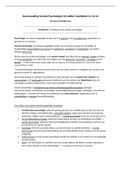
Table of contents
Table of contents..................................................................................................................... 1
Step 1: Unfreeze................................................................................................................. 2
Step 2: Change................................................................................................................... 3
Step 3: Refreeze................................................................................................................. 3
Question 2: Six threats of internal validity................................................................................4
1. Attrition........................................................................................................................... 5
2. Diffusion.......................................................................................................................... 5
3. Experimenter Bias..........................................................................................................5
4. Instrumentation............................................................................................................... 5
5. Maturation....................................................................................................................... 6
6. Selection Bias................................................................................................................. 6
Bibliography............................................................................................................................ 7
Question 1: Three step process model of change
1
, According to the Three Stage Model of Change, the status quo is the current reality;
however, through the course of the proposed change, the current reality should shift into
the desired condition of the future. We must assess the entirety and intricacy of the area
in order to comprehend group behavior and, consequently, the behavior of specific
group members during the transition process. In order to create change models, this is
sometimes referred to as field theory.
Step 1: Unfreeze
According to Lewin, human behavior is an almost constant equilibrium state in terms of
change. This mindset, which can almost certainly be reached, is positioned initially to
allow the mind to develop without actually achieving that capacity. As an illustration,
consider the Investment Bank staff members who are unable to accept the upcoming
changes in their workplace. Eventually, some effective measures will be put in place
that will make the staff more accepting of these new conditions in their workplace.
Let's think about how a meal is prepared. Before anything else can change, food must
first be "unfrozen," or prepared for change, whether it be raw food that needs to be
washed or frozen food that needs to be thawed. According to Lewin's three-step model,
human transformation adheres to a similar concept, so breaking the status quo's frozen
state is necessary before implementing organizational change.
Although they don't directly fit into Lewin's model, actions taken during this unfreeze
stage might include identifying what needs to change by assessing the business and
figuring out why change is required. By speaking with stakeholders to gain support and
framing the issue as one that has a beneficial influence on the entire organization, I can
ensure support from management and the C-suite. A compelling narrative about why
change is preferable should be promoted, and the change should be communicated
using the long-term goal (Mulholland, 2021).
2
Table of contents..................................................................................................................... 1
Step 1: Unfreeze................................................................................................................. 2
Step 2: Change................................................................................................................... 3
Step 3: Refreeze................................................................................................................. 3
Question 2: Six threats of internal validity................................................................................4
1. Attrition........................................................................................................................... 5
2. Diffusion.......................................................................................................................... 5
3. Experimenter Bias..........................................................................................................5
4. Instrumentation............................................................................................................... 5
5. Maturation....................................................................................................................... 6
6. Selection Bias................................................................................................................. 6
Bibliography............................................................................................................................ 7
Question 1: Three step process model of change
1
, According to the Three Stage Model of Change, the status quo is the current reality;
however, through the course of the proposed change, the current reality should shift into
the desired condition of the future. We must assess the entirety and intricacy of the area
in order to comprehend group behavior and, consequently, the behavior of specific
group members during the transition process. In order to create change models, this is
sometimes referred to as field theory.
Step 1: Unfreeze
According to Lewin, human behavior is an almost constant equilibrium state in terms of
change. This mindset, which can almost certainly be reached, is positioned initially to
allow the mind to develop without actually achieving that capacity. As an illustration,
consider the Investment Bank staff members who are unable to accept the upcoming
changes in their workplace. Eventually, some effective measures will be put in place
that will make the staff more accepting of these new conditions in their workplace.
Let's think about how a meal is prepared. Before anything else can change, food must
first be "unfrozen," or prepared for change, whether it be raw food that needs to be
washed or frozen food that needs to be thawed. According to Lewin's three-step model,
human transformation adheres to a similar concept, so breaking the status quo's frozen
state is necessary before implementing organizational change.
Although they don't directly fit into Lewin's model, actions taken during this unfreeze
stage might include identifying what needs to change by assessing the business and
figuring out why change is required. By speaking with stakeholders to gain support and
framing the issue as one that has a beneficial influence on the entire organization, I can
ensure support from management and the C-suite. A compelling narrative about why
change is preferable should be promoted, and the change should be communicated
using the long-term goal (Mulholland, 2021).
2