100% tevredenheidsgarantie Direct beschikbaar na je betaling Lees online óf als PDF Geen vaste maandelijkse kosten 4.2 TrustPilot
logo-home
Samenvatting

Complete samenvatting reader understanding organisations leerjaar 1. Eindcijfer: 8.0

Beoordeling
-
Verkocht
1
Pagina's
30
Geüpload op
30-01-2023
Geschreven in
2022/2023

Volledige samenvatting reader understanding organisations leerjaar 1 inclusief audio's en podcasts.


Oeps! We kunnen je document nu niet laden. Probeer het nog eens of neem contact op met support.

Documentinformatie

Geüpload op
30 januari 2023
Aantal pagina's
30
Geschreven in
2022/2023
Type
Samenvatting

Onderwerpen

Voorbeeld van de inhoud

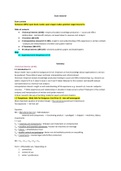
Exam material

Exam content
Tentamen (30%): open boek, reader, open vragen reader, gesloten vragen key terms

Table of contents
● I Technical interest (10-85)= empirical-analytic knowledge production → cause and effect
relationships - cost-benefit analysis, narrowed down to revenue-cost analysis
● I Transition (86-109)
● II Interpretative interest (111-183)= insight in and understanding of life experience in certain contexts
- analyses and interpretations of written and spoken material
● II Transition (184-197)
● III Critical interest (198-225)= scholarly academic papers and bookchapters
Skip:
● Appendices Erik Tempelman 37-47


Summary
I Technical interest (10-85)
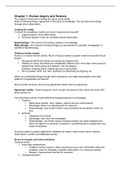
1.1 Introduction 11
About reader: basic academic background in UO. Emphasis on how knowledge about organizations is and can
be produced. Three distinct ways: technical, interpretative and critical interest.
Technical: empirical-analytic knowledge production leading to cause and effect relationships e.g. research q’s:
what is impact of X on Y, does X cause Y, are X and Y linked. Relevant in this context: cost-benefit analysis
narrowed down to a revenue-cost analysis.
Interpretative interest: insight in and understanding of life experience e.g. research q’s, how do <subjects>
conceive …? What experiences and relationships in situation X make sense to whom? Relevant in this context:
analyses and interpretations of written and spoken material.
Critical: research-like way of working. Academic papers and book chapters.
1.2 Tempelman - (Not) Safe For Designers: Cost Price 12 - niet zelf samengevat
Most important equation of product design = the cost price (paramount importance)
Too expensive → will not sell

Equation:
MC = Manufacturing cost = fabriekskosten
materials and components → functioning product → packaged → shipped → machines, labour,
investments
C = cost
Cmc = materials and components = (inkopen van) materialen en componenten
Cma = machine and assembly operations = kosten van machines en montage
Clab = labour = arbeidskosten/-loon
Cqp = quality control and packaging= kosten van de kwaliteitscontrole en verpakking
Cinv = investments = investeringen (afschriften producten)

MC = Cmc + Cma + Clab + Cqp + Cinv

Form = Afhankelijk van / depending on
1. conventions
2. context of use
3. writer´s preferences

,MC increases by a factor between 3-5
10 dollar to make → buying for 30-50 dollar

¨Family compass¨
● Home electronics
● keeps track of where all family members are

MC
● Cost of all materials and components
● the price per kilo will vary with the amount (number of units/ production volume/ series size) N form
´number´
○ The more you buy → cost decrease with increasing scale (20% every tenfold increase)
● gross/net ratio seriously affects the material cost
○ Waste
○ everything recycled = gross/net ratio 1 = does not add any cost
● Kosten van componenten zijn afhankelijk van
○ where you order
○ quality levels
○ if it is a standard components (¨off the shelf¨)
○ if it is a product-specific component
● RFQ = request for quotation
● MOQ = minimum order quantities
○ quality products
○ how fast something can be delivered
Cma Clab,
● Function of N = total number of products
● Costs of machines and labour = dN/dt (number product per unit time)
Machine cost = €/hour
● Cycle time = the time needed to make a single part
● Scale matters
○ scaling up reduces cost
● afhankelijk van location
Labour cost
● assembly (putting components inside the housing)
● Human actions
● thailand and malaysia = real low-wage places
● Scale More investments (= more complex mould design)
● Location

Cqp
● require labour and materials
● considered separately
● distinct fields, with own know-how
Quality
● Random sampling
● Checking (simple and fast) (AQL standard)
● Inspection = time consuming, paperwork
● prove your innocence → rework

, Packaging
● Suitable box, foam
● someone who does the putting
● user manual, warranty documents, assorted paperwork
● safe
● unboxing experience

Cinv
● Moulds
● Fully-automated packaging line
● Knowing more about production volume, manufactured, assembled, configured, inspected, packaged.
● Calculate investment per product = depreciation (amortisation) need to know
○ Number of products
○ suitable interest
○ time between buying the mold and selling products
● Time-to- market
● Net present value (NPV)
○ assuming a certain interest and appropriate time periods
○ Knowing if it is going to be a success
○ Je zet het verwachte aantal eenheden dat verkocht wordt af tegen de investeringen die je
moet gaan doen.
○ één van de belangrijkste methodes voor een investering in een product om te kijken of een
product ooit überhaupt winstgevend zal zijn. Er worden inschattingen gemaakt van de lengte
van de tijd op de markt, levenscycli van producten lopen nogal uiteen.
1.3 Introduction to excerpts 48
Knowledge production about organizations causal, rational and internally coherent. Fit to some extent in
existing systems; to standards used in the industry or bureaucracy you are aiming to become accepted with
your innovation/design proposal.
Technical interest information production takes place in: corporate for-profit organizations and in policy making
e.g. government, provinces, municipalities and their bureaucracies carrying out those policies (e.g. tax
administration, the Central Bureau for Rijexamen or more locally civil workers issuing your identity card or
passport).
1.4 Weber - Rationality of organizations 50 - done.
Weber: theory of authority structures, stems from concerns why one obey commands and do as they are told.
Power= ability to force people to obey, regardless of their resistance
Authority= orders voluntarily obeyed by those receiving them.
Authority system= those in the subordinate role see the issuing of directives by those in the superordinate role
as legitimate.
Three pure types
● charismatic
● traditional
● rational-legal (exercising authorities)
-> any real organization may be a combination, used for distinction to analyze organizations.
Charismatic: authority based on personal qualities. Weber= any quality of which a leader is set apart from
ordinary people and treated as exceptional e.g. in religious or political form, but also organizational leaders
Henry Ford.
● Built-in stability
● The question of success arises when the leader dies, the successor might not be accepted
€8,99
Krijg toegang tot het volledige document:

100% tevredenheidsgarantie
Direct beschikbaar na je betaling
Lees online óf als PDF
Geen vaste maandelijkse kosten

Maak kennis met de verkoper
Seller avatar
elena123
3,0
(1)

Maak kennis met de verkoper

Seller avatar
elena123 Technische Universiteit Delft
Bekijk profiel
Volgen Je moet ingelogd zijn om studenten of vakken te kunnen volgen
Verkocht
6
Lid sinds
2 jaar
Aantal volgers
5
Documenten
4
Laatst verkocht
1 jaar geleden

3,0

1 beoordelingen

5
0
4
0
3
1
2
0
1
0

Recent door jou bekeken

Waarom studenten kiezen voor Stuvia

Gemaakt door medestudenten, geverifieerd door reviews

Kwaliteit die je kunt vertrouwen: geschreven door studenten die slaagden en beoordeeld door anderen die dit document gebruikten.

Niet tevreden? Kies een ander document

Geen zorgen! Je kunt voor hetzelfde geld direct een ander document kiezen dat beter past bij wat je zoekt.

Betaal zoals je wilt, start meteen met leren

Geen abonnement, geen verplichtingen. Betaal zoals je gewend bent via iDeal of creditcard en download je PDF-document meteen.

Student with book image

“Gekocht, gedownload en geslaagd. Zo makkelijk kan het dus zijn.”

Alisha Student

Veelgestelde vragen