Viral Vectors
Specifically viral vectors used for animal cells – tranduced cells can be cultured,
used for nuclear transfer cloning or adult cell transplantation, gene therapy
Replication-incapable viruses
- Deletion of essential viral components
- Use of separate vectors for packaging and viral production
- Multiple cloning site
- Selection gene(s)
- Reporter gene(s)
- Promoters – ubiquitous/tissue specific
- Enhancers (WRPE) to increase expression
Adenoviral Vector
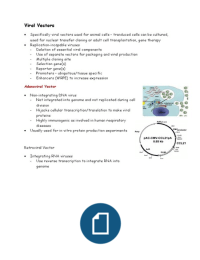
Non-integrating DNA virus
- Not integrated into genome and not replicated during cell
division
- Hijacks cellular transcription/translation to make viral
proteins
- Highly immunogenic as involved in human respiratory
diseases
Usually used for in vitro protein production experiments
Retroviral Vector
Integrating RNA viruses
- Use reverse transcription to integrate RNA into
genome
Specifically viral vectors used for animal cells – tranduced cells can be cultured,
used for nuclear transfer cloning or adult cell transplantation, gene therapy
Replication-incapable viruses
- Deletion of essential viral components
- Use of separate vectors for packaging and viral production
- Multiple cloning site
- Selection gene(s)
- Reporter gene(s)
- Promoters – ubiquitous/tissue specific
- Enhancers (WRPE) to increase expression
Adenoviral Vector
Non-integrating DNA virus
- Not integrated into genome and not replicated during cell
division
- Hijacks cellular transcription/translation to make viral
proteins
- Highly immunogenic as involved in human respiratory
diseases
Usually used for in vitro protein production experiments
Retroviral Vector
Integrating RNA viruses
- Use reverse transcription to integrate RNA into
genome