Nr 509 midterm exam 2022 graded A
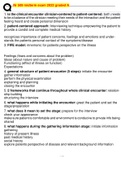
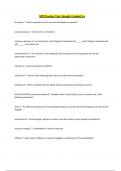
Nr 509 midterm exam 2022 graded A 1. is the clinical encounter clinician-centered to patient-centered: both; needs to be a balance of the clinician meeting their needs of the interaction and the patient feeling heard and create personal dimension 2. patient-centered approach: Interviewing technique empowering the patient to provide a candid and complete medical history recognizes importance of patient concerns, feelings and emotions and under- stands the patients personal contact of the symptoms/disease 3. FIFE model: mnemonic for patients perspective on the illness Feelings (fears and concerns about the problem) Ideas (about nature and cause of problem) Functioning (effect of illness on function) Expectations 4. general structure of patient encounter (5 steps): initiate the encounter gather information perform the physical examination explaining and planning closing the encounter 5. 2 frameworks that continue throughout whole clinical encounter: relation- ship building structuring the interview 6. what happens while initiating the encounter: greet the patient and set the stage/preparation 7. what does it mean to set the stage: prepare for the interview check your appearance make sure patient is comfortable and environment is conducive to private info being shared 8. what happens during the gathering information stage: initiate information gathering history of present illness past medical history social history explore patients perspective of disease and relevant background information 9. what happens during explaining and planning: provide correct amount and type of information negotiate plan of action shared decision making 10. when asking patient about there pronouns it may be helpful to. share your own pronouns "in an effort to promote an inclusive and respectful environment, we use pronouns that are right for us. The pronouns I prefer are......how about you what pronouns do you prefer? 11. the initial moments of your encounter lay the foundation for....: your on- going relationship 12. how to establish rapport: introduce yourself, explain your role and how you will be a part of their care 13. 3 dimensions of cultural humility: 1) Self-awareness 2) Respectful communication 3) Collaborative partnerships 14. active listening: Closely listening to what the patient is communicating, con- necting on an emotional state to the patient. use both verbal and nonverbal skills to encourage pt to expand on their feel- ings/concerns 15. Empathetic responses: capacity to identify with a patient and feel patients pain as your own and respond in a supportive manner "That must have been difficult for you." "I understand, you're worried." Non-verbal: offering a tissue to a crying patient; reaching out and gently touching a patient's hand. Therapeutic use of self: "I've had surgery before, so I can relate to what you're going through." 16. guided questioning: Helps to continue the patients story, shows sustained interest and allows clinician to adapt questioning based on patient i.e.: -moving from open ended to focused questions -using questions that elicit a graded response -asking a series of questions, ONE at a time -clarifying wha

Geschreven voor
- Instelling
- Nr 509
- Vak
- Nr 509
Documentinformatie
- Geüpload op
- 24 oktober 2022
- Aantal pagina's
- 23
- Geschreven in
- 2022/2023
- Type
- Tentamen (uitwerkingen)
- Bevat
- Vragen en antwoorden
Onderwerpen
-
nr 509 midterm exam 2022
-
nr 509 midterm exam
-
nr 509 midterm
-
nr 509
-
nr 509 midterm exam 2022 graded a
-
is the clinical encounter clinician centered to patient centered both

Ook beschikbaar in voordeelbundel