RPA Interview Questions Already Passed
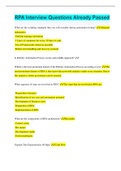
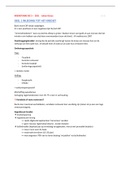
RPA Interview Questions Already Passed What are the scripting standards that you will consider during automation testing? Adequate indentation Uniform naming convention 3 Lines of comments for every 10 lines of code Use of Frameworks wherever possible Robust error handling and recovery scenario Is Robotic Automation Process secure and reliable approach? Which is the most prominent feature of the Robotic Automation Process according to you? The most prominent feature of RPA is that it provides powerful analytics under every situation. Due to this analytics, better governance can be assured. What sequence of steps are involved in RPA? The steps that are involved in RPA are: Preparation of project Identification of use case and automation potential Development of business cases Preparation of RPA Implementation of RPA What are the components of RPA architecture? Recorders Control center Bot runner Development studio Extension/plugins Explain The Characteristics Of Rpa? Code Free: RPA doesn't require programming skills. Employees with any subject expertise can be trained to automate RPA tools instantly. The whole work revolves around RPA chart which provides a flowchart designer to graphically link, drag and drop icons to represent steps in a process. User-Friendly: RPA adoption originates within business operations rather inside IT departments. RPA projects require less IT skills and less investment. Eventually, the automation is lowered at a substantial rate. Non- Disruptive: What Are The Benefits Of Rpa? Wide-Range Automation: RPA speeds up and executes perfect accuracy across different fields viz. banking, healthcare, insurance, telecom, communications, etc. Virtually complex programs are automated on a wide-range by improving the transaction process. Quick ROI: RPA will increase productivity across varied industries. One Software robot is efficient of accomplishing the work of approximately 3 employees. This innovation builds positive ROI much faster than expected. Moreover, cost productions might reach 20% in time. Enterprise Scalability: RPA is highly flexible and scalable with reduced time of induction. Robots perform massive complex operations in parallel, starting from desktop to cloud environments. All this operation is carried out, by allowing multiple users to monitor and control robots from various business units through a single secure device. Powerful Analytics: Gathering agile and exhaustive data enable better management and insights into forever growing business enhancements. Improved governance is achieved through a prescribed set of automation tools. Cost-Saving: How to Select an RPA Tool? Technology First and foremost is the technology in which RPA tool has been built, like Microsoft, .NET, IBM Mainframe, Java, web etc. The tool has to be platform independent, considering many of the organizations perform their day to day tasks outside the local desktop using Citrix or Virtual machines etc. So the automation solution should be able to support any application and platform. Interface Next most important feature is the RPA tool's user interface. A complex user interface will delay the process of implementation and increase the learning curve and adaptability. A more user-friendly interface like drag and drop, auto capture, image recognition etc. would be better. Management It is important to know how effectively and easily the robots can be managed considering these robots are going to be replacing your human workforce. There should be a high level of visibility and control in terms of process monitoring, process change, development, re-use etc. Security Security is one of the most important factors to be considered. How safe are the robots when compared to the humans? After all robots/RPA tools are also a piec How to implement Robotic Process Automation? Identify the Automation Opportunities Optimize the Identified Processes Build a Business Case RPA Vendor Selection Pilot RPA Development Ramp up and Continue Building Expertise RPA bots. Explain about RPA Testing? Business Process Testing This is nothing but the conventional testing done for any application. The end to end business process automated by the RPA tool has to be validated here. If we have to test the RPA use case, a scenario would be to test if Robot is able to get the file from the server, read the data from the application, compare these two data sources, identify any conflicts and send an email notification to respective owner. All combinations of data are to be validated like it is done for any other application. Robots Testing There are multiple aspects when testing Robots. The first one is the interpretation of the models by Robots. It is very important that the Robots are able to interpret the instructions given through the models correctly and able to perform actions on the UI accordingly. This ne Explain The Typical Uses Of RPA? Double-data entry - user rekeying of data and data entry is made easy from one system to another. Application migration - migrates application data and records as part of an upgrade. Automation of reports - automates data to provide accurate reports. Rule-based decision making - RPA can handle decision matrices efficiently and arrive at simple rule-based decisions accurately. Well-defined Processing - Automatically enters inputs from source systems into target systems. For an Agile method, when you will not use automation testing? If your requirements are frequently changing or your documentation becomes massive, then it is better to avoid automation testing method. Name the framework used in software automation testing

Geschreven voor
- Instelling
- RPA
- Vak
- RPA
Documentinformatie
- Geüpload op
- 20 september 2022
- Aantal pagina's
- 12
- Geschreven in
- 2022/2023
- Type
- Tentamen (uitwerkingen)
- Bevat
- Vragen en antwoorden
Onderwerpen
-
rpa interview questions already passed
-
what are the scripting standards that you will consider during automation testing adequate indentation uniform naming convention 3 lines of comments for every 1

Ook beschikbaar in voordeelbundel