Geschreven door studenten die geslaagd zijn Direct beschikbaar na je betaling Online lezen of als PDF Verkeerd document? Gratis ruilen 4,6 TrustPilot
logo-home
Document preview thumbnail
Voorbeeld 2 van de 14 pagina's
Samenvatting

Summary of Introduction To International Organisations (IRO Year 1 - 6441HIIOH)

Document preview thumbnail
Voorbeeld 2 van de 14 pagina's

Summary of the first year course Introduction To International Organisations (6441HIIOH). With main keywords, concepts and international organisations summarised in 14 colour coded pages.

Voorbeeld van de inhoud

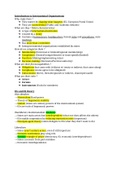
Introduction to International Organisations
Why study them ?
➔ They matter by shaping what happens (EU, European Postal Union)
➔ They are controversial (Public and Academic debates)
What are they ? (Main characteristics)
➔ A type of international institution
➔ Created by a treaty
➔ Contains a bureaucracy, headquarters, formal rules and procedures, state
meetings
➔ Has more than 2 members
➔ Intergovernmental organizations established by states
How do we categorise them ?
➔ Membership (Universal or limited/regional membership)
➔ Competence (General/comprehensive or issue-specific/limited)
➔ Function (Making/implementing rules)
➔ Decision-making (Horizontal/Vertical authority)
What are their forces/capabilities ?
➔ Obligations that come with it (direct w/ treaty or indirect, that come along)
➔ Compliance (states agree to be obligated)
➔ Enforcement (direct, threaten/punish or indirect, shame/persuade)
What are their roles ?
➔ Actors
➔ Forums
➔ Instruments (Tools for members)

IOs and IR theory
(Neo-)Realism
→ Materialism/Hard-power
→ Theory of hegemonic stability
→ Statism (states are unitary powers of the international system)
→ IOs are tools of hegemonic powers

(Neoliberal-) Institutionalism (Keohane)
→ States are main actors but interdependent (what one does affects the others)
→ IOs enable cooperation by reducing transaction costs (important)
→ Principal-agent theory (states delegate to IOs what they don’t want to do)

Liberalism
→ States aren’t unitary actors, even if still important
→ Domestic institutions play a big role
→ Kantian triangle of peace (democracy, IO, economic interdependence)
→ States can learn from past mistakes
→ Economic interdependence

, → Shared values matter

Social Constructivism (Wendt)
→ Considered a meta-theory
→ ≠ only material interests/power matters
→ Norms, Ideas, Discourse and Culture are important
- Shaped by IOs
→ “Anarchy are what states make of it” (Wendt, 1999)
→ Important actors: Norm entrepreneurs, Advocacy networks, Epistemic communities

Critical theories
→ A critical POV of hegemonic powers and the international system, made to overcome
modern theories
→ Neo-marxism, post-colonialsm, feminism, neo-gramsciamism, world-systems theory
→ Argue that international system is shaped by international elites, economic system,
structures of production, masculinity
→ IOs embed imperial/patriarchal/capitalist structures

History of International Organization Research
What is global governance
❖ Informal and formal norms, procedures, ideas, values and institutions that help
actors of all size/shape address and solve trans-boundary problems
❖ New theoretical framework
Why is it criticised ?
❖ Supposedly neglected similar developments that took place earlier
❖ Analytically vague → about everything, can be hard to analyse decision-making
❖ Technical term → not revealing the politically problematic aspect that GG causes
❖ Western-centric
What are international institutions ?
❖ Body of norms, rules, practises that shape behaviour/expectations ≠ necessarily IO
❖ IOs operate within global governance as international institutions
International regimes ?
❖ Principles (Beliefs of facts, causation), Norms (standards of behaviour), Rules
(Prescriptions or proscriptions), decision-making procedures (Practises to
make/implement collective choices)
Example of international regime
❖ Nuclear Non-proliferation regime (Look at table)
Trends in the life of IOs
❖ Trends of existence
➢ Live a long time (15 IOs born b4 1895 lived 100 y)
➢ IOs born b4 WW1 live around 30 y ; After WWII around 15-20y
❖ Why do they die ?
➢ Expiration, dissolution, replacing, merging, disuse

Documentinformatie

Geüpload op
16 september 2022
Aantal pagina's
14
Geschreven in
2021/2022
Type
Samenvatting
€3,49

Verkeerd document? Gratis ruilen Binnen 14 dagen na aankoop en voor het downloaden kun je een ander document kiezen. Je kunt het bedrag gewoon opnieuw besteden.
Geschreven door studenten die geslaagd zijn
Direct beschikbaar na je betaling
Online lezen of als PDF

Seller avatar
De reputatie van een verkoper is gebaseerd op het aantal documenten dat iemand tegen betaling verkocht heeft en de beoordelingen die voor die items ontvangen zijn. Er zijn drie niveau’s te onderscheiden: brons, zilver en goud. Hoe beter de reputatie, hoe meer de kwaliteit van zijn of haar werk te vertrouwen is.
Verkocht
14
Volgers
12
Items
3
Laatst verkocht
3 jaar geleden


Echte notities, van echte studenten
Elk document op Stuvia is geschreven door een medestudent die hetzelfde vak deed. Zo leer je van iemand die het al heeft gehaald.


Waarom studenten kiezen voor Stuvia

Gemaakt door medestudenten, geverifieerd door reviews

Kwaliteit die je kunt vertrouwen: geschreven door studenten die slaagden en beoordeeld door anderen die dit document gebruikten.

Niet tevreden? Kies een ander document

Geen zorgen! Je kunt voor hetzelfde geld direct een ander document kiezen dat beter past bij wat je zoekt.

Betaal zoals je wilt, start meteen met leren

Geen abonnement, geen verplichtingen. Betaal zoals je gewend bent via iDeal of creditcard en download je PDF-document meteen.

Student with book image

“Gekocht, gedownload en geslaagd. Zo makkelijk kan het dus zijn.”

Alisha Student

Bezig met je bronvermelding?

Maak nauwkeurige citaten in APA, MLA en Harvard met onze gratis bronnengenerator.

Bezig met je bronvermelding?

Veelgestelde vragen