

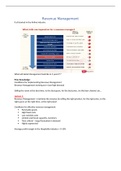
Revenue Management
It all started in the Airline Industry
What will Hotel Management look like in 5 years???
Prior Knowledge:
Conditions for Implementing Revenue Management
Revenue Management techniques in low/high demand
Selling the room at the best time, to the best guest, for the best price, via the best channel, etc…
Lecture 1:
Revenue Management = maximise the revenue by selling the right product, for the right price, to the
right guest, at the right time, at the right place!
Condtions for effective revenue management
Perishable goods
High fixed costs
Low variable costs
Limited and fixced capactity, inventory
Time criticial – large fluctuation in demand
Highly segmented
Average profit margin in the Hospitality Industry = 0-10%
, At the right price…
Timing, Rate Sensitivity & Risk
Displacement Analysis (40 rooms for 70 or taking risk, waiting, and selling 25 rooms for 110)
Leisure guests longer lead time than business guests (on average)
Business guests shorter lead time than leisure guests (on average)
- The price and demand relation
- Multiple prices lead to an increase of revenue (multiple prices for various market segments)
o Dynamic pricing
- Price elasticities of demand
- Cost and value based pricing
Price elasticity of demand:
The absolute value of percentage change in the quantity of a good demanded divided by percentage
change in the price of that good (product or service)
It shows how much the demand is influenced by the change in price (is my segment elastic or
inelastic to price change?)
It provides revenue managers with direction to setting prices and to understand how this may
influence demand P x Q = revenue
To the right guest/customer…
- Customers can be segmented by…
o Why and when do they travel
o When and where do they book
o ‘’Regular’’ segmentation methods (geographical, psychological, etc…)
o Generations (mature, boomers, gen x, gen y, gen z)
- Willingness to pay
- Customer centric approach
The right product…
- Segmentation should lead to differentation (price & product)
- Implementing pricing conditions (price fencing making sure certain prices are only being
used by a certain segment!)
- Building a pricing structure, new products and conditions
At the right time…
At the right place…
Study the Key Topics of Lecture 1
It all started in the Airline Industry
What will Hotel Management look like in 5 years???
Prior Knowledge:
Conditions for Implementing Revenue Management
Revenue Management techniques in low/high demand
Selling the room at the best time, to the best guest, for the best price, via the best channel, etc…
Lecture 1:
Revenue Management = maximise the revenue by selling the right product, for the right price, to the
right guest, at the right time, at the right place!
Condtions for effective revenue management
Perishable goods
High fixed costs
Low variable costs
Limited and fixced capactity, inventory
Time criticial – large fluctuation in demand
Highly segmented
Average profit margin in the Hospitality Industry = 0-10%
, At the right price…
Timing, Rate Sensitivity & Risk
Displacement Analysis (40 rooms for 70 or taking risk, waiting, and selling 25 rooms for 110)
Leisure guests longer lead time than business guests (on average)
Business guests shorter lead time than leisure guests (on average)
- The price and demand relation
- Multiple prices lead to an increase of revenue (multiple prices for various market segments)
o Dynamic pricing
- Price elasticities of demand
- Cost and value based pricing
Price elasticity of demand:
The absolute value of percentage change in the quantity of a good demanded divided by percentage
change in the price of that good (product or service)
It shows how much the demand is influenced by the change in price (is my segment elastic or
inelastic to price change?)
It provides revenue managers with direction to setting prices and to understand how this may
influence demand P x Q = revenue
To the right guest/customer…
- Customers can be segmented by…
o Why and when do they travel
o When and where do they book
o ‘’Regular’’ segmentation methods (geographical, psychological, etc…)
o Generations (mature, boomers, gen x, gen y, gen z)
- Willingness to pay
- Customer centric approach
The right product…
- Segmentation should lead to differentation (price & product)
- Implementing pricing conditions (price fencing making sure certain prices are only being
used by a certain segment!)
- Building a pricing structure, new products and conditions
At the right time…
At the right place…
Study the Key Topics of Lecture 1



