100% tevredenheidsgarantie Direct beschikbaar na je betaling Lees online óf als PDF Geen vaste maandelijkse kosten 4,6 TrustPilot
logo-home
Tentamen (uitwerkingen)

PYC1501 EXAM PREP 2022.

Beoordeling
-
Verkocht
-
Pagina's
58
Cijfer
A+
Geüpload op
30-06-2022
Geschreven in
2021/2022

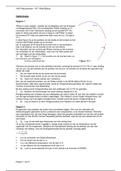
PYC1501 EXAM PREP 2022. This is a complete and an all-inclusive guide to PYC1501 - Basic Psychology Human nervous system IMPULSE CONDUCTION IN THE HUMAN NERVOUS SYSTEM Parts of a neuron Dendrites: look like tree roots, receive messages from other neurons and surround the cell body Cell body: also called the soma. It receives and sends messages in the form of new impulses Cell nucleus: control centre of the cell; it controls all metabolic activities Axon: carries messages from the soma. It is a thin fibre that differs in length Myelin: white fatty sheath insulating the axon. It conducts much faster than un-myelinated axons. Multiple sclerosis is the effect of axons that aren’t properly myelinated, as it attacks the myelin Axon terminals: also called telodendria. Axon terminals branch out from the axon and end in small knobs, called boutons (buttons in French). Vesicles: tiny containers in the boutons which are filled with neurotransmitters Neurotransmitters: chemical substances that play an important role in the conduction of a message from one neuron to the next Types of neurons Sensory/afferent: carry messages from the environment to the brain/spinal cord. Info is detected by the senses. This info can also come from the organs in the body Motor/efferent: conduct messages from the spinal cord/brain to the muscles and glands Nerve tract: bundle of axons in the brain/spinal cord Nerve: bundle of nerves outside the brain and spinal cord Process of impulse conduction Stimulus is a form of energy received by the senses and converted into a form of energy understandable to the nervous system. Impulse conduction is the basic form of sending info in the nervous system. Two main processes: • Electrical – nerve impulse begins in the first segment of the axon and travels down the axon to the terminals because of electrical events at the cell membrane 3 • Chemical – the passage of the nerve impulse from one axon to another. There is a small gap between the axon terminals of one neuron and the dendrites of another and the chemical process will determine whether it reaches it or not Nerve impulse: each neuron is like a tiny battery that stores potential energy. The fluid inside and outside the cell contains small chemical particles called ions that are electrically charged. Some are positive and some are negative. There are more positive ions on the outside of the cell and more negative ones on the inside and they naturally constantly move from an area of high concentration to an area of low concentration. Also, opposites attract and like repel. Resting membrane potential: condition of readiness before an impulse can fire. It is an electrical charge brought about by the difference between the positive and negative ions inside and outside the cell. The neuron is ready to receive or conduct impulses Action potential: messages arriving from other neurons alter the resting potential. If the resting potential changes enough the cell reaches a threshold or critical point. Each neuron has a different threshold and the stimulus has to be intense enough to exceed the threshold and change the resting potential into action potential. In this way the structure of the axon membrane changes: tiny openings in the cell membrane allow ions from the outside of the cell to move inside. These channels first open near the soma and then sweep along the length of the axon as the action potential (and thus the impulse) sweeps along. Refractory period: immediately after an impulse has been conducted, the neuron is not ready to send another message until the resting potential has been restored. Two types of refractory periods: • Absolute – no impulse can be generated • Relative – an impulse can be generated but only with very intense stiulus Refractory periods ensure that stimulus only travel one way and also prevent over-stimulation Characteristics of impulse conduction: ‘all or nothing’ event. The stimulus is either strong enough to result in impulse conduction or it isn’t. the strength of the stimulus does not change the strength or speed of the impulse. • Strength + speed: the strength + speed of impulse conduction is constant within a particular neuron but it can vary with nerve fibres of different sizes. The larger the fibre, the stronger and faster the impulse can be conducted. 4 • Frequency: the intensity of the stimulus does make a difference in terms of the frequency at which impulses are conducted. If the stimulus is very strong there is a shorter space between the firing of each impulse so the frequency increases. • Effect of myelination: myelin sheaths insulate the axons and make action potentials travel much faster than along un-myelinated axons. There are gaps or nodes between the sheaths and it is in these nodes that ion channels open and the impulse is conducted by jumping from node to node (saltatory conduction) Synaptic transmission of impulses: the conduction of a nerve impulse in a neuron is electrical, but between neurons it is chemical. There is a tiny gap between neurons called a synapse. When an action potential reaches the tip of the axon terminals, the vesicles attach themselves to the presynaptic membrane where the membrane opens and causes chemicals to be released into the little space between the neurons called the synaptic cleft. This is the gap between the presynaptic membrane of one neuron and the postsynaptic membrane of another. These chemicals are called neurotransmitters. These chemicals combine with the fluid outside the cells and receptors in the postsynaptic membrane. Different neurons use different chemicals as their neurotransmitters but each neuron releases the same chemical from all branches of its axon. Postsynaptic potentials: Neurons that excite can make the next neuron more likely to produce an action potential. The action potential in the next neuron is called postsynaptic potential. Other neurons release neurotransmitters than inhibit the production of an action potential in the next neuron. Once the neurotransmitter excites/inhibits a receptor in the next neuron, it can become reabsorbed by the axon that released it (re-uptake), it could diffuse away, it could be broken up by enzymes, or it could bounce around for a while and then return to the postsynaptic receptor again. The longer the neurotransmitter stays in the synaptic cleft, the more likely it is to affect the next neuron. A postsynaptic potential will only be generated if the amounts of neurotransmitters discharged into the synapse are large enough. Postsynaptic potential is a graded potential. The impulse will get weaker as it travels further from the point of stimulation. If the impulse is no reinforced or strengthened, it may disappear before it reaches the next axon and then no postsynaptic potential is generated. Even a weak impulse can be strengthened by additional neurotransmitters: • Spatial summation – action potentials from the terminals of several axons reaching the same synapse at one time or closely together. This results in the accumulation of the neurotransmitter in the synaptic cleft and makes more of it available. 5 • Temporal summation – frequent action potentials along the same axon that allow the discharge of more of the neurotransmitter to reinforce the postsynaptic potential. Increases the chance of a neuron firing in the case of excitatory and decreases the chance in the case of inhibitory. Nature of neurotransmitters: whether a neurotransmitter has excitatory or inhibitory effects depends on: • Nature of the neurotransmitter • Place where it acts • Quantity of the neurotransmitter in relation to the enzymes that destroy it • Amount of inhibitory neurotransmitter in relation to the amount of excitatory neurotransmitter at a particular synapse What are neurotransmitters? • Chemicals that are present in/made by neurons • When a neuron is active the chemical is released and produces a response in the target cell • There is a mechanism for removing the neurotransmitter form the synaptic cleft once its work is done Classic neurotransmitters • Acetylcholine (Ach) – released by cells in the brain and spinal cord as well as by the parasympathetic nerves. Effects: causes skeletal muscles to contract. It is also believed to be related to memory because it supports normal wakeful behaviour and mental alertness. An insufficiency has been found in some brain areas of patients suffering from Alzheimers. It may explain the decline in cognitive functioning • Adrenalin (epinephrine) – released by the sympathetic nerves and the adrenal glands. Increases heart beat and the contraction of blood vessels, skeletal muscles and heart muscle. Speeds up metabolism and the release of glucose in the blood • Noradrenalin (NA) – also called norepinephrine (NE) and is released by brain cells, sympathetic nerves as well as the adrenal glands. Has an excitatory effect. Lack of NE is associated with depression and an excess with mania. 6 • Dopamine (DA) – associated with good mental health. An excess is associated with schizophrenia – mental disorder where you lose contact with reality. Dopamine is also involved with control of motor behaviour. Too little DA can result in muscle rigidity and tremor, as seen in Parkinson’s disease, a form of mental disorder characterized by disturbances of movement and dementia. • Serotonin – found in the brain, digestive tract and blood. Helps to regulate the sleep-wake cycle and temperature. Associated with seasonal depression which occurs in autumn and winter. • Gamma-aminobutyric acid (GABA) – inhibitory neurotransmitter. Helps with aggression and eating • Endorphin – involved in the experience of pleasure and suppression of pain The effect of drugs on synaptic processes: drugs work by affecting synaptic processes. Two main classes of drugs: • Agonists: drugs that have a similar effect to some neurotransmitters. Opiate sensitive receptors in postsynaptic membranes are highly receptive to narcotics like morphine and codeine • Antagonists: drugs that block the action of some neurotransmitters. Anaesthetic drugs and barbiturates (sedatives) increase the sensitivity of postsynaptic receptors to inhibitors and therefore prevent excitation of the neurons. 7 STRUCTURE AND FUNCTIONS OF THE HUMAN NERVOUS SYSTEM The nervous system has two parts: • Central nervous system – control room of the body and sends and receives info in the body and with the outside world. Brain and spinal cord • Peripheral nervous system – neurons and organs that lie outside the brain and spinal cord. Two parts – somatic nervous system and autonomous nervous system Central nervous system Brain and spinal cord are protected by bones. The brain is protected by the skull, whereas the spine is protected by the bones of the spinal column (vertebrae) and three strong membranes. The outer is the dura mater (strong and thick). Middle – arachnoid (thick but flexible) inner – pia mater (soft and flexible). The brain and spinal cords are mirror images of each other in terms of nerve tracts and structures. The spinal cord Acts like a cable running from your brain down your back. It is made of columns of white matter, which are bundles of axons covered in myelin. Outside of the spinal cord, the axons form nerves. There are 30 pairs of nerves on each side of the spinal cord. Each nerve divides into a sensory and motor root. Sensory: nerve fibres that convey sensory messages to the brain from the sensory receptors in the skin, skeletal muscles, tendons, joins and internal organs of the body. This info is conducted from the sensory receptors to the brain along the sensory root of the spinal cord Motor: motor nerve fibres that convey info from the brain to the muscles and glands in the body (abdomen, arms and legs). The spinal nerves carry sensory and motor messages to and from the spinal cord and keep the body in communication with the brain. Reflexes: the spinal cord also produces basic forms of behaviour called reflexes that are simple, stereotyped responses that follow immediately after a certain stimulus. Hand on a hot stove plate. 8 The brain Extremely complex. Estimated to have 10 billion neurons with multiple connections. The space between the skull and the brain is filled with cerebrospinal fluid. It is produced by the brain and surrounds it. The brain ‘floats’ in it and it protects it from bumps and injuries. The brain is also protected by the blood-brain barrier that keeps out certain harmful substances. The capillaries are very narrow and tiny so it is impermeable to many substances. The brain is richly supplied with blood vessels that carry important substances such as oxygen and glucose to the brain and transport waste products such as carbon dioxide away. The outer layer is called the cerebral cortex. It is wrinkled like a pecan nut because the cortex has bumps and grooves (fissures). These fissures also help demarcate the brain into lobes. The cortex is composed of tissue that is grey in colour because of the colour of the cell bodies. The brain consists of two halves called cerebral hemispheres. They are connected by a thick band of fibres called the corpus callosum which allows the left and right hemispheres to communicate with each other. Controlateral control means that the right side of the brain largely controls the left side, and visa versa. Some parts of the body are controlled by the corresponding side of the brain – ipsilateral control. The left brain is typically associated with logical organization, processing information sequentially, dealing with language and verbal info. The right hemisphere is usually associated with creativity, holistic, and simultaneous. Concerned with spatial and non-verbal abilities. Both hemispheres work together but the hemisphere that does the task better takes the main role. Lobes of the brain. • Occipital – lie at the back of the brain and are the primary visual area of the cortex. If tumor/cell growth interferes with brain activity here, vision will be affected. These lobes are also responsible for translating visual stimuli into meaningful patterns. For example, being able to recognize faces and words. Also, the integration of sensory experiences takes place here. 9 • Parietal – made up of the somatosensory cortex. This word refers to bodily sensations such as touch, temperature, pressure and pain. These lobes receive input about these sensations and also info from the muscles and joints which tell the brain about the body’s position in space. Researchers have been able to map out which areas of the lobes control which parts of the body. Areas of the body that are very sensitive, such as the lips and hands, have a larger representative in the parietal cortex than other things, such as the knees. These lobes put all the somatosensory material together and provide feedback based on this info so that the individual knows what part of the body has been touched, for example.

Meer zien Lees minder
Instelling
Vak

Voorbeeld van de inhoud

PYC1501
EXAM
PREP 2022.

, 1


PYC1501 EXAM PREP


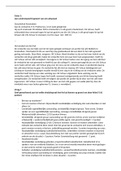
Chapters Number of questions
Human nervous 10
system
States of 5
consciousness
Sensation and 5
perception
Cognition 8
Intelligence and 2
creativity
Learning and memory 10
Emotion 6
Personality 4

, 2


Human nervous system
IMPULSE CONDUCTION IN THE HUMAN NERVOUS SYSTEM
Parts of a neuron

Dendrites: look like tree roots, receive messages from other neurons and surround the cell body

Cell body: also called the soma. It receives and sends messages in the form of new impulses

Cell nucleus: control centre of the cell; it controls all metabolic activities

Axon: carries messages from the soma. It is a thin fibre that differs in length

Myelin: white fatty sheath insulating the axon. It conducts much faster than un-myelinated axons.
Multiple sclerosis is the effect of axons that aren’t properly myelinated, as it attacks the myelin

Axon terminals: also called telodendria. Axon terminals branch out from the axon and end in small
knobs, called boutons (buttons in French).

Vesicles: tiny containers in the boutons which are filled with neurotransmitters

Neurotransmitters: chemical substances that play an important role in the conduction of a
message from one neuron to the next

Types of neurons

Sensory/afferent: carry messages from the environment to the brain/spinal cord. Info is detected
by the senses. This info can also come from the organs in the body

Motor/efferent: conduct messages from the spinal cord/brain to the muscles and glands

Nerve tract: bundle of axons in the brain/spinal cord

Nerve: bundle of nerves outside the brain and spinal cord

Process of impulse conduction

Stimulus is a form of energy received by the senses and converted into a form of energy
understandable to the nervous system. Impulse conduction is the basic form of sending info in the
nervous system. Two main processes:

• Electrical – nerve impulse begins in the first segment of the axon and travels down the axon to
the terminals because of electrical events at the cell membrane

, 3

• Chemical – the passage of the nerve impulse from one axon to another. There is a small gap
between the axon terminals of one neuron and the dendrites of another and the chemical process
will determine whether it reaches it or not

Nerve impulse: each neuron is like a tiny battery that stores potential energy. The fluid inside and
outside the cell contains small chemical particles called ions that are electrically charged. Some
are positive and some are negative. There are more positive ions on the outside of the cell and
more negative ones on the inside and they naturally constantly move from an area of high
concentration to an area of low concentration. Also, opposites attract and like repel.

Resting membrane potential: condition of readiness before an impulse can fire. It is an electrical
charge brought about by the difference between the positive and negative ions inside and outside
the cell. The neuron is ready to receive or conduct impulses

Action potential: messages arriving from other neurons alter the resting potential. If the resting
potential changes enough the cell reaches a threshold or critical point. Each neuron has a different
threshold and the stimulus has to be intense enough to exceed the threshold and change the
resting potential into action potential. In this way the structure of the axon membrane changes: tiny
openings in the cell membrane allow ions from the outside of the cell to move inside. These
channels first open near the soma and then sweep along the length of the axon as the action
potential (and thus the impulse) sweeps along.

Refractory period: immediately after an impulse has been conducted, the neuron is not ready to
send another message until the resting potential has been restored. Two types of refractory
periods:

• Absolute – no impulse can be generated

• Relative – an impulse can be generated but only with very intense stiulus

Refractory periods ensure that stimulus only travel one way and also prevent over-stimulation

Characteristics of impulse conduction: ‘all or nothing’ event. The stimulus is either strong enough
to result in impulse conduction or it isn’t. the strength of the stimulus does not change the strength
or speed of the impulse.

• Strength + speed: the strength + speed of impulse conduction is constant within a particular
neuron but it can vary with nerve fibres of different sizes. The larger the fibre, the stronger and
faster the impulse can be conducted.


Geschreven voor

Instelling
Vak

Documentinformatie

Geüpload op
30 juni 2022
Aantal pagina's
58
Geschreven in
2021/2022
Type
Tentamen (uitwerkingen)
Bevat
Vragen en antwoorden

Onderwerpen

Maak kennis met de verkoper

Seller avatar
De reputatie van een verkoper is gebaseerd op het aantal documenten dat iemand tegen betaling verkocht heeft en de beoordelingen die voor die items ontvangen zijn. Er zijn drie niveau’s te onderscheiden: brons, zilver en goud. Hoe beter de reputatie, hoe meer de kwaliteit van zijn of haar werk te vertrouwen is.
SOLUTIONS2024 Chamberlain College Of Nursing
Volgen Je moet ingelogd zijn om studenten of vakken te kunnen volgen
Verkocht
918
Lid sinds
3 jaar
Aantal volgers
696
Documenten
5441
Laatst verkocht
2 dagen geleden
ALPHA STUDY CENTRE.

Alpha Academy is a dedicated study centre where you will find QUALITY & RELIABLE study resources that will help you prepare, revise and pass your examinations for all majors and modules in real TIME.. Good Luck from ALPHA ACADEMY.

3,7

182 beoordelingen

5
93
4
26
3
19
2
7
1
37

Populaire documenten

Recent door jou bekeken

Waarom studenten kiezen voor Stuvia

Gemaakt door medestudenten, geverifieerd door reviews

Kwaliteit die je kunt vertrouwen: geschreven door studenten die slaagden en beoordeeld door anderen die dit document gebruikten.

Niet tevreden? Kies een ander document

Geen zorgen! Je kunt voor hetzelfde geld direct een ander document kiezen dat beter past bij wat je zoekt.

Betaal zoals je wilt, start meteen met leren

Geen abonnement, geen verplichtingen. Betaal zoals je gewend bent via iDeal of creditcard en download je PDF-document meteen.

Student with book image

“Gekocht, gedownload en geslaagd. Zo makkelijk kan het dus zijn.”

Alisha Student

Veelgestelde vragen