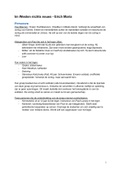
Protein Metabolism
Wednesday, 16th March 2022
Transamination:
The amino acid pool is the
collection of amino acids inside our
body.
Dietary protein is the main
source and is mostly excreted
our used in catabolism, as
carbon dioxide, water, urea and
energy.
Essential and non-essential amino acids.
Tissue protein, plasma protein, enzymes, hormones, antibodies, haemoglobin,
amines and other new amino acids take from the pool as well as restocking it
when needed.
An excess of amino acids can be converted to glucose, glycogen and lipids for
storage.
Metabolism:
In excess, the amine group is removed and excreted as urea and the carbon
skeleton is converted to glucose or lipids by the liver.
Protein Metabolism 1
, The fed state is when amino acids
are taken in from the diet and are
used for mainly protein synthesis as
well as transamination to leave
behind the skeleton which becomes
an intermediate in many other
metabolic cycles.
Glucogenic amino acids will go
through metabolism to become
glucose while ketogenic amino
acids will enter cycles as acetyl-
CoA to become TAGs.
The fasted state is when amino acids are needed
from the body’s store either from muscle tissue or
from fatty acids stored in adipocytes.
Amino acids from the muscle tissue enter the
glucogenic cycle or as acetyl-CoA to produce
energy, while fats from adipose tissue enters
the Krebs cycle as acetyl-CoA.
Acetyl-CoA is also made into ketones.
Ketones are used as a protective molecule
to prevent your body from breaking down
muscle tissue to sustain itself during
During this fasting
fasting.
phase amino acids
Protein Metabolism 2
Wednesday, 16th March 2022
Transamination:
The amino acid pool is the
collection of amino acids inside our
body.
Dietary protein is the main
source and is mostly excreted
our used in catabolism, as
carbon dioxide, water, urea and
energy.
Essential and non-essential amino acids.
Tissue protein, plasma protein, enzymes, hormones, antibodies, haemoglobin,
amines and other new amino acids take from the pool as well as restocking it
when needed.
An excess of amino acids can be converted to glucose, glycogen and lipids for
storage.
Metabolism:
In excess, the amine group is removed and excreted as urea and the carbon
skeleton is converted to glucose or lipids by the liver.
Protein Metabolism 1
, The fed state is when amino acids
are taken in from the diet and are
used for mainly protein synthesis as
well as transamination to leave
behind the skeleton which becomes
an intermediate in many other
metabolic cycles.
Glucogenic amino acids will go
through metabolism to become
glucose while ketogenic amino
acids will enter cycles as acetyl-
CoA to become TAGs.
The fasted state is when amino acids are needed
from the body’s store either from muscle tissue or
from fatty acids stored in adipocytes.
Amino acids from the muscle tissue enter the
glucogenic cycle or as acetyl-CoA to produce
energy, while fats from adipose tissue enters
the Krebs cycle as acetyl-CoA.
Acetyl-CoA is also made into ketones.
Ketones are used as a protective molecule
to prevent your body from breaking down
muscle tissue to sustain itself during
During this fasting
fasting.
phase amino acids
Protein Metabolism 2