Summary Customer Relationship Management
NHL Stenden 2.3
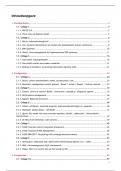
Table of Content
Chapter 1: Customer-supplier relationships............................................................................................................2
Chapter 2: Customer Relationship Management.....................................................................................................3
Chapter 3: CRM as an integral business strategy.....................................................................................................4
Chapter 6: Customer data management..................................................................................................................9
Chapter 7: Data analyses and data mining.............................................................................................................10
Chapter 9: Retention and cross-sell analyses.........................................................................................................11
Chapter 11:.............................................................................................................................................................13
Chapter 12: The relationship policy.......................................................................................................................15
Chapter 13: Multichannel management................................................................................................................16
Chapter 15: The online environment.....................................................................................................................18
Chapter 17: CRM systems......................................................................................................................................19
Chapter 18: Implementation of CRM systems.......................................................................................................21
,Chapter 1: Customer-supplier relationships
1.1 History
In the last 20 years, different market situations have witnessed a shift in focus on the transaction to the
relational aspects of the exchange.
Bagozzi (1970) concept relationship marketing marketing is an exchange process between buyer and
seller.
Customer relationship comprises various exchange processes. Phases in change over the years:
- 1980: Gruesson and Grönroos defined relationship marketing and contrasted it with transaction
marketing, its marketing instruments and organization.
- 1990: Håkansson designed a conceptual model for relationship marketing in B to B markets.
Relationship marketing became more and more relevant in business to consumer markets.
1.2 Description of customer-supplier relationships
Hinde: ‘Relationships imply some sort of interaction between 2 or more persons, involving interchanges
over an extended period of time.’
- Interactions must take place between at least 2 parties. Interactions is that the activities of 1 influence
those of the others.
- Certain degree of continuity must be present in a relationship longer period of time
Primary relationships: basic, long-term interpersonal relationship which is based on emotional.
bonds and the feeling of mutual obligation. (love relationship of people)
Secondary relationships: short-term interpersonal relationship with a limited degree of social.
interaction, clear rules and defined social roles. (customer-supplier)
o Customer-supplier relationships vary a lot, can be secondary but can also be between primary
and secondary. (in the transitional area)
o Classifications to clarify the differences between the parties involved in customer-supplier
relationships:
o Whether or not a transaction has already been completed (prospect to customer)
o If a long-term orientation is present (customer to client)
o To what degree the relationship is felt by both parties (supporter to ambassador)
o To what degree both parties are actively involved (ambassador to partner)
In analyzing the quality of the relationship, also attention to: commitment, fairness, loyalty, trust
Even though all customer-supplier relationships are different, these factors are always present:
interactions and reciprocity, commitment, and trust in relationships.
Without reciprocal basis, no relationship and for continuing a relationship trust and commitment are
necessary.
Reciprocity
-Forms the basis for a relationship: giving, receiving, and giving again. never ending cycle
-A positive gift = return a positive gift, a negative gift = return negative gift
Interactions and emotions
-(sub)conscious emotions influence what we observe and the way we respond. 7 basic ones: surprise, fear,
anger, sorrow, loathing, contempt, and happiness.
-Emotions influence the amount of attention we pay, our drive for results, openness to stimuli and
decision-making behaviour.
Trust
-is associated with qualities like: honesty, fairness, responsibility and integrity
-makes higher level of commitment in relationship possible, and also ‘goodwill’.
Commitment:
-‘Enduring desire to maintain a valued relationship’, the ultimate goal for mutual beneficial relations
-Personal commitment: the desire someone displays to continue a relationship
-Moral commitment: people feel a sense of obligation
-Structural commitment: there is no escaping from it
-Disproportional commitment: when one person is more committed to the other.
, 1.3 The dynamic in relationships
Trust and commitment must develop over time, done by asking questions and analyzing.
5 phases in Relationship Life Cycle
1. Awareness: Parties become aware of each other and position themselves
2. Exploration: parties are attracted, and interaction starts
3. Growth: interaction processes continue, negotiation
4. Saturation: relation reaches maximum trust, respect, and mutual dependency
5.Decline: focus on others may cause discontinuity in relationship (differences in expectations)
1.4 Networks
Social position: the position a person has in a complex of people interacting with one another
Customers who develop a relationship with an organization, build a relationship with the people who
represent it.
Social media bridges distance and time and bring people together (also customers and suppliers)
Social network: a group of customers and suppliers who interact with one another without the need to
analyze the connection within the social structure.
Socialization
-Humans have the tendency to belong to or form groups
-Groups form because people share similar interests or experiences
-Socialization from the social structure perspective: individual is part of a system
Behaviour is explained through the system
Behaviour is context-determined, situation determines how we act
Socialization on the worldwide web
- Radio and TV were controlled by institutions rather than persons, the internet changed that.
- Socialization can be facilitated and stimulated online, people can engage in new communities
- Honeycomb of social media, where each block represents a specific aspect of the socialization process on the
web: Identity, conversations, sharing, presence, relationships, reputation, groups.
- SNA (social network analysis): gain insight into the social structures within a network, group or community
and the relationships between the actors.
Empirical insights from marketing
-Research into the influence of social networks and the relationships between actors is focused on
interaction patterns and group formation.
-Interaction patterns: how do conversations spread and develop through a network?
-Group formation: the possible meaning of group formation as a consequence of social identification,
exercise of social pressure, commitment and sense of belonging to the organization.
Chapter 2: Customer Relationship Management
2.1 The definition of CRM
CRM: a business strategy that is aimed towards developing mutually profitable customer-supplier
relationships through social networks and which is based on an IT infrastructure to be developed to
become well-defined process and places capable personnel in an optimal position.
2.2 CRM Building Blocks
Business strategy:
- Building relationships requires a business strategy. This affects the organization as a whole.
- The CRM strategy describes how consumers and the organization can find each other and how they
can develop their relationship.
NHL Stenden 2.3
Table of Content
Chapter 1: Customer-supplier relationships............................................................................................................2
Chapter 2: Customer Relationship Management.....................................................................................................3
Chapter 3: CRM as an integral business strategy.....................................................................................................4
Chapter 6: Customer data management..................................................................................................................9
Chapter 7: Data analyses and data mining.............................................................................................................10
Chapter 9: Retention and cross-sell analyses.........................................................................................................11
Chapter 11:.............................................................................................................................................................13
Chapter 12: The relationship policy.......................................................................................................................15
Chapter 13: Multichannel management................................................................................................................16
Chapter 15: The online environment.....................................................................................................................18
Chapter 17: CRM systems......................................................................................................................................19
Chapter 18: Implementation of CRM systems.......................................................................................................21
,Chapter 1: Customer-supplier relationships
1.1 History
In the last 20 years, different market situations have witnessed a shift in focus on the transaction to the
relational aspects of the exchange.
Bagozzi (1970) concept relationship marketing marketing is an exchange process between buyer and
seller.
Customer relationship comprises various exchange processes. Phases in change over the years:
- 1980: Gruesson and Grönroos defined relationship marketing and contrasted it with transaction
marketing, its marketing instruments and organization.
- 1990: Håkansson designed a conceptual model for relationship marketing in B to B markets.
Relationship marketing became more and more relevant in business to consumer markets.
1.2 Description of customer-supplier relationships
Hinde: ‘Relationships imply some sort of interaction between 2 or more persons, involving interchanges
over an extended period of time.’
- Interactions must take place between at least 2 parties. Interactions is that the activities of 1 influence
those of the others.
- Certain degree of continuity must be present in a relationship longer period of time
Primary relationships: basic, long-term interpersonal relationship which is based on emotional.
bonds and the feeling of mutual obligation. (love relationship of people)
Secondary relationships: short-term interpersonal relationship with a limited degree of social.
interaction, clear rules and defined social roles. (customer-supplier)
o Customer-supplier relationships vary a lot, can be secondary but can also be between primary
and secondary. (in the transitional area)
o Classifications to clarify the differences between the parties involved in customer-supplier
relationships:
o Whether or not a transaction has already been completed (prospect to customer)
o If a long-term orientation is present (customer to client)
o To what degree the relationship is felt by both parties (supporter to ambassador)
o To what degree both parties are actively involved (ambassador to partner)
In analyzing the quality of the relationship, also attention to: commitment, fairness, loyalty, trust
Even though all customer-supplier relationships are different, these factors are always present:
interactions and reciprocity, commitment, and trust in relationships.
Without reciprocal basis, no relationship and for continuing a relationship trust and commitment are
necessary.
Reciprocity
-Forms the basis for a relationship: giving, receiving, and giving again. never ending cycle
-A positive gift = return a positive gift, a negative gift = return negative gift
Interactions and emotions
-(sub)conscious emotions influence what we observe and the way we respond. 7 basic ones: surprise, fear,
anger, sorrow, loathing, contempt, and happiness.
-Emotions influence the amount of attention we pay, our drive for results, openness to stimuli and
decision-making behaviour.
Trust
-is associated with qualities like: honesty, fairness, responsibility and integrity
-makes higher level of commitment in relationship possible, and also ‘goodwill’.
Commitment:
-‘Enduring desire to maintain a valued relationship’, the ultimate goal for mutual beneficial relations
-Personal commitment: the desire someone displays to continue a relationship
-Moral commitment: people feel a sense of obligation
-Structural commitment: there is no escaping from it
-Disproportional commitment: when one person is more committed to the other.
, 1.3 The dynamic in relationships
Trust and commitment must develop over time, done by asking questions and analyzing.
5 phases in Relationship Life Cycle
1. Awareness: Parties become aware of each other and position themselves
2. Exploration: parties are attracted, and interaction starts
3. Growth: interaction processes continue, negotiation
4. Saturation: relation reaches maximum trust, respect, and mutual dependency
5.Decline: focus on others may cause discontinuity in relationship (differences in expectations)
1.4 Networks
Social position: the position a person has in a complex of people interacting with one another
Customers who develop a relationship with an organization, build a relationship with the people who
represent it.
Social media bridges distance and time and bring people together (also customers and suppliers)
Social network: a group of customers and suppliers who interact with one another without the need to
analyze the connection within the social structure.
Socialization
-Humans have the tendency to belong to or form groups
-Groups form because people share similar interests or experiences
-Socialization from the social structure perspective: individual is part of a system
Behaviour is explained through the system
Behaviour is context-determined, situation determines how we act
Socialization on the worldwide web
- Radio and TV were controlled by institutions rather than persons, the internet changed that.
- Socialization can be facilitated and stimulated online, people can engage in new communities
- Honeycomb of social media, where each block represents a specific aspect of the socialization process on the
web: Identity, conversations, sharing, presence, relationships, reputation, groups.
- SNA (social network analysis): gain insight into the social structures within a network, group or community
and the relationships between the actors.
Empirical insights from marketing
-Research into the influence of social networks and the relationships between actors is focused on
interaction patterns and group formation.
-Interaction patterns: how do conversations spread and develop through a network?
-Group formation: the possible meaning of group formation as a consequence of social identification,
exercise of social pressure, commitment and sense of belonging to the organization.
Chapter 2: Customer Relationship Management
2.1 The definition of CRM
CRM: a business strategy that is aimed towards developing mutually profitable customer-supplier
relationships through social networks and which is based on an IT infrastructure to be developed to
become well-defined process and places capable personnel in an optimal position.
2.2 CRM Building Blocks
Business strategy:
- Building relationships requires a business strategy. This affects the organization as a whole.
- The CRM strategy describes how consumers and the organization can find each other and how they
can develop their relationship.