
humans recognize bilateral kin (maternal and paternal) as well as affines (relatives through
marriage).
Task 5:
6.3 Brain Size:
The relative size of brain: the ratio of brain mass to body mass
Allometry: when an organism increases in size, the parts would not increase in
proportion to mass or volume
One variable Y (such as brain size, gestation period) can be related to a more fundamental
one X (usually body size) by an equation:
Y = 𝐶𝑋 !
C AND K ARE CONSTANTS
Brain size = C (Body size)
b
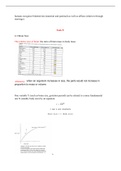
, - We lie well above the allometric line seen for other mammals.
o According to the equation, for a 65 kg our brains should weigh about 265 g. In reality, it
weighs 1300g.
The departure of brain size from the allometric line is known as the encephalization quotient
(EQ)
"#$%"& ()"*+ ,-*./$
EQ =
()"*+ ,-*./$ 0)-1*#$-1 2)34 "&&34-$)*# &*+-
, → Cooking may have been the key
to increasing calorific and
nutritional inputs without
exceeding ecological limits for
feeding time.
→If we didn’t cook, we would
2 Basic Strategies to fuel the high-energy demanding brains: have to spend more than 9 hours a
day to feed ourselves
Cooperative breeding is very
rare in other animals
The increased energy is channeled to the brain
instead of other organs which shows that the brain
was in a strong selective pressure at that time
Growing with slower
reproduction rates, and
diverting the energy to the
brain growth instead.
renewing diet with more varieties for a
balanced diet by using cognitive
power
marriage).
Task 5:
6.3 Brain Size:
The relative size of brain: the ratio of brain mass to body mass
Allometry: when an organism increases in size, the parts would not increase in
proportion to mass or volume
One variable Y (such as brain size, gestation period) can be related to a more fundamental
one X (usually body size) by an equation:
Y = 𝐶𝑋 !
C AND K ARE CONSTANTS
Brain size = C (Body size)
b
, - We lie well above the allometric line seen for other mammals.
o According to the equation, for a 65 kg our brains should weigh about 265 g. In reality, it
weighs 1300g.
The departure of brain size from the allometric line is known as the encephalization quotient
(EQ)
"#$%"& ()"*+ ,-*./$
EQ =
()"*+ ,-*./$ 0)-1*#$-1 2)34 "&&34-$)*# &*+-
, → Cooking may have been the key
to increasing calorific and
nutritional inputs without
exceeding ecological limits for
feeding time.
→If we didn’t cook, we would
2 Basic Strategies to fuel the high-energy demanding brains: have to spend more than 9 hours a
day to feed ourselves
Cooperative breeding is very
rare in other animals
The increased energy is channeled to the brain
instead of other organs which shows that the brain
was in a strong selective pressure at that time
Growing with slower
reproduction rates, and
diverting the energy to the
brain growth instead.
renewing diet with more varieties for a
balanced diet by using cognitive
power



