Elasticity of demand measures how responsive the demand of a product is to changes in the factors affecting demand.
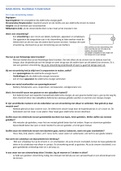
Price (own) Elasticity of demand measures how much the quantity demanded changes, relative to a change in price.
Cross price elasticity of demand measures how the quantity demand of one good changes as the price of another good
changes
% Change in quantity demanded of product 1
% Change in price of product 2
Cross price elasticity of demand is positive for substitute goods and negative for complementary goods.
Income elasticity of demand measures how the quantity demanded changes as the consumer income changes.
Income elasticity is positive for normal goods and negative for inferior goods.
Price elastic demand: when price increases the quantity demanded decreases by more than the increase in price, thus total
revenue increases
Price Inelastic demand: when price increases the quantity demanded decreases by less than the increase in price, thus total
revenue decreases
Determinants of price elasticity of demand:
*Availability of close substitutes: products with close substitutes are more elastic
*Necessities vs Luxuries: demand for necessities is inelastic and the demand for luxuries is elastic.
*Definition of the market: narrowly defined markets are more elastic than broadly defined markets
*Time horizon: more elastic in the long run
*Percentage of income devoted to the product
*The degree of brand loyalty/addition
,
Price (own) Elasticity of demand measures how much the quantity demanded changes, relative to a change in price.
Cross price elasticity of demand measures how the quantity demand of one good changes as the price of another good
changes
% Change in quantity demanded of product 1
% Change in price of product 2
Cross price elasticity of demand is positive for substitute goods and negative for complementary goods.
Income elasticity of demand measures how the quantity demanded changes as the consumer income changes.
Income elasticity is positive for normal goods and negative for inferior goods.
Price elastic demand: when price increases the quantity demanded decreases by more than the increase in price, thus total
revenue increases
Price Inelastic demand: when price increases the quantity demanded decreases by less than the increase in price, thus total
revenue decreases
Determinants of price elasticity of demand:
*Availability of close substitutes: products with close substitutes are more elastic
*Necessities vs Luxuries: demand for necessities is inelastic and the demand for luxuries is elastic.
*Definition of the market: narrowly defined markets are more elastic than broadly defined markets
*Time horizon: more elastic in the long run
*Percentage of income devoted to the product
*The degree of brand loyalty/addition
,