WILLS
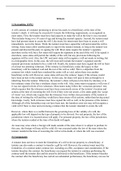
1) Formalities (UPC)
A will consists of a testator promising to devise his assets to a beneficiary at the time of the
testator’s death. A will may be executed if it meets the following requirements, as recognised in
most states. First, the testator must have had capacity to make the will at the time it was executed.
This includes being over 18 years of age and having due mental capacity. Second, the testator must
have had present intent to create the will. Like trusts, his intent must have been to create a will
immediately, not in the future. Third, the testator must have signed the will and created the will in
writing. Some states allow another party to sign for the testator instead, so long as the testator was
present and directed the party in signing the will. Most states require the testator’s signature
anywhere on the will, but a few states still require his signature at the end of the will. If he signed it
elsewhere, some states still permit the validity of the will, but any provisions following his
signature will be void. Also, the UPC and most states still recognise a will not made in writing, but
in a holographic form. In this case, the will must still include the testator’s signature and the
material provisions included to be a valid will. Fourth, the testator must have signed the will in front
of at least two attesting witnesses. If the witness is a beneficiary, today the legacy to that
beneficiary will be rendered void and the rest of the will as valid. This is a departure from the
common law which would have rendered the entire will as void, unless there was another
beneficiary in the will. However, some states still save the witness’ legacy if the witness would
have been an heir to the testator anyway. In this case, his share will pass to him as though he is
inheriting from the testator. Otherwise, the testator’s share will pass to his heirs by intestacy or to
his residuary estate if he has a residuary clause in the will. Also, some states recognise a will even if
it was not signed in front of two witnesses. Most states today follow the ‘conscious presence’ test,
which requires that the witnesses must have been consciously aware of the testator’s location and
actions at the time of executing the will. Even if they were not aware, a few states apply the ‘scope
of vision’ test, which only require that the witnesses were within close proximity of the testator at
the time of writing the will and they would have been aware of his actions, rather than having actual
knowledge. Lastly, both witnesses must have signed the will as well, in the presence of the testator.
Although all of the formalities may not have been met, the harmless error test may still recognise a
valid will if there is clear and convincing evidence that the testator intended to create the will.
However, where there is a conflict between the governing laws of the validity of a will, the
applicable law will depend on the type of property to be devised. For real property, the law of the
jurisdiction where it is located (situs) will apply. For personal property, the law of the jurisdiction
where the testator resided at the time of his death will apply.
An issue may arise where a foreign will made outside of the state where it is subject to probate. In
this case, the foreign will may still be valid if it was executed under the law of the state where the
testator resided at the time of executing the will or at his death, or where the will was executed.
2) Components
A testator does not have to meet the formalities of a will to devise property to a beneficiary. A
testator can also make a contract to transfer a gift by will. However, the contract must meet the
formalities of a contract under contract law, including an offer, acceptance and consideration. If the
testator breaches the contract, the beneficiary can request the testator to continue performing the
contract until the testator dies and his assets be delivered to the beneficiary. If the testator breaches
the contract after the beneficiary has carried out substantial performance, the beneficiary can sue for
1) Formalities (UPC)
A will consists of a testator promising to devise his assets to a beneficiary at the time of the
testator’s death. A will may be executed if it meets the following requirements, as recognised in
most states. First, the testator must have had capacity to make the will at the time it was executed.
This includes being over 18 years of age and having due mental capacity. Second, the testator must
have had present intent to create the will. Like trusts, his intent must have been to create a will
immediately, not in the future. Third, the testator must have signed the will and created the will in
writing. Some states allow another party to sign for the testator instead, so long as the testator was
present and directed the party in signing the will. Most states require the testator’s signature
anywhere on the will, but a few states still require his signature at the end of the will. If he signed it
elsewhere, some states still permit the validity of the will, but any provisions following his
signature will be void. Also, the UPC and most states still recognise a will not made in writing, but
in a holographic form. In this case, the will must still include the testator’s signature and the
material provisions included to be a valid will. Fourth, the testator must have signed the will in front
of at least two attesting witnesses. If the witness is a beneficiary, today the legacy to that
beneficiary will be rendered void and the rest of the will as valid. This is a departure from the
common law which would have rendered the entire will as void, unless there was another
beneficiary in the will. However, some states still save the witness’ legacy if the witness would
have been an heir to the testator anyway. In this case, his share will pass to him as though he is
inheriting from the testator. Otherwise, the testator’s share will pass to his heirs by intestacy or to
his residuary estate if he has a residuary clause in the will. Also, some states recognise a will even if
it was not signed in front of two witnesses. Most states today follow the ‘conscious presence’ test,
which requires that the witnesses must have been consciously aware of the testator’s location and
actions at the time of executing the will. Even if they were not aware, a few states apply the ‘scope
of vision’ test, which only require that the witnesses were within close proximity of the testator at
the time of writing the will and they would have been aware of his actions, rather than having actual
knowledge. Lastly, both witnesses must have signed the will as well, in the presence of the testator.
Although all of the formalities may not have been met, the harmless error test may still recognise a
valid will if there is clear and convincing evidence that the testator intended to create the will.
However, where there is a conflict between the governing laws of the validity of a will, the
applicable law will depend on the type of property to be devised. For real property, the law of the
jurisdiction where it is located (situs) will apply. For personal property, the law of the jurisdiction
where the testator resided at the time of his death will apply.
An issue may arise where a foreign will made outside of the state where it is subject to probate. In
this case, the foreign will may still be valid if it was executed under the law of the state where the
testator resided at the time of executing the will or at his death, or where the will was executed.
2) Components
A testator does not have to meet the formalities of a will to devise property to a beneficiary. A
testator can also make a contract to transfer a gift by will. However, the contract must meet the
formalities of a contract under contract law, including an offer, acceptance and consideration. If the
testator breaches the contract, the beneficiary can request the testator to continue performing the
contract until the testator dies and his assets be delivered to the beneficiary. If the testator breaches
the contract after the beneficiary has carried out substantial performance, the beneficiary can sue for