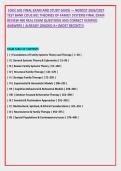
COUC 601 FINAL EXAM AND STUDY GUIDE — NEWEST 2026/2027
TEST BANK COUC 601 THEORIES OF FAMILY SYSTEMS FINAL EXAM
REVIEW 400 REAL EXAM QUESTIONS AND CORRECT VERIFIED
ANSWERS | ALREADY GRADED A+ (MOST RECENT!!)
EXAM TABLE OF CONTENTS
| I | Foundations of Family Systems Theory and Therapy | 1–50 |
| II | General Systems Theory & Cybernetics | 51–90 |
| III | Bowen Family Systems Theory | 91–130 |
| IV | Structural Family Therapy | 131–170 |
| V | Strategic Family Therapy | 171–205 |
| VI | Experiential & Humanistic Models | 206–235 |
| VII | Cognitive-Behavioral & Behavioral Models | 236–260 |
| VIII | Solution-Focused & Narrative Therapy | 261–290 |
| IX | Feminist & Postmodern Approaches | 291–320 |
| X | Multicultural, Spiritual, & Ethical Considerations | 321–355 |
| XI | Neuroscience & Family Therapy | 356–375 |
| XII | Special Populations & Contemporary Issues | 376–400 |
,SECTION I: FOUNDATIONS OF FAMILY SYSTEMS THEORY AND THERAPY (Questions 1–50)
1. Unlike approaches such as psychoanalysis or behavior therapy, family therapy has
always been a ______ enterprise with competing schools and conflicting theories.
A) Unified
B) Diverse
C) Monolithic
D) Singular
Answer: B) Diverse
Rationale: Unlike psychoanalysis or behavior therapy, which are structured around a
single model with more theoretical cohesion, family therapy has always been a diverse
enterprise with competing schools and conflicting theories. This diversity reflects the
field's origins in multiple disciplines and its ongoing evolution.
2. All of the following are typical characteristics of traditional individual approaches like
psychoanalysis and behavior therapy EXCEPT:
A) Structured around a single model
B) Emphasize intrapsychic processes
C) View symptoms in relational context
D) Have more theoretical cohesion than family therapy
Answer: C) View symptoms in relational context
Rationale: Viewing symptoms in relational context is characteristic of family therapy, not
individual models. Traditional individual approaches emphasize intrapsychic processes
and are structured around a single model with more theoretical cohesion.
,3. What core belief united the various, sometimes conflicting schools of family therapy?
A) That individual pathology causes family problems
B) That problems run in families — symptoms are embedded in relational patterns rather
than individual pathology
C) That medication is the primary treatment
D) That childhood trauma is the root of all problems
Answer: B) That problems run in families — symptoms are embedded in relational
patterns rather than individual pathology
Rationale: Despite their differences, the various schools of family therapy were united by
the core belief that problems run in families — symptoms are embedded in relational
patterns rather than individual pathology. This systemic viewpoint is the foundational
metatheory of family therapy.
4. What are three common elements found across most therapy approaches, including
family therapy?
A) Empathy, encouragement, and questioning assumptions
B) Medication, hospitalization, and diagnosis
C) Confrontation, interpretation, and analysis
D) Assessment, diagnosis, and treatment
Answer: A) Empathy, encouragement, and questioning assumptions
Rationale: Most therapy approaches, including family therapy, share common elements
such as empathy, encouragement, and questioning assumptions. These are the core
relational and cognitive components that facilitate therapeutic change.
, 5. Most therapy models share several common elements, EXCEPT which of the following?
A) Empathy
B) Encouragement
C) Prescribed rituals
D) Questioning assumptions
Answer: C) Prescribed rituals
Rationale: Prescribed rituals are more specific to certain models like Strategic or Milan
therapy, not a common element across most therapy models. Empathy, encouragement,
and questioning assumptions are universal.
6. While most therapies share elements like empathy and questioning assumptions, they
also include ______ differences.
A) Irrelevant
B) Distinct
C) Minimal
D) Uniform
Answer: B) Distinct
Rationale: While most therapies share common elements, they also include distinct
differences. These differences are what distinguish one approach from another and guide
the therapist's choice of interventions.
TEST BANK COUC 601 THEORIES OF FAMILY SYSTEMS FINAL EXAM
REVIEW 400 REAL EXAM QUESTIONS AND CORRECT VERIFIED
ANSWERS | ALREADY GRADED A+ (MOST RECENT!!)
EXAM TABLE OF CONTENTS
| I | Foundations of Family Systems Theory and Therapy | 1–50 |
| II | General Systems Theory & Cybernetics | 51–90 |
| III | Bowen Family Systems Theory | 91–130 |
| IV | Structural Family Therapy | 131–170 |
| V | Strategic Family Therapy | 171–205 |
| VI | Experiential & Humanistic Models | 206–235 |
| VII | Cognitive-Behavioral & Behavioral Models | 236–260 |
| VIII | Solution-Focused & Narrative Therapy | 261–290 |
| IX | Feminist & Postmodern Approaches | 291–320 |
| X | Multicultural, Spiritual, & Ethical Considerations | 321–355 |
| XI | Neuroscience & Family Therapy | 356–375 |
| XII | Special Populations & Contemporary Issues | 376–400 |
,SECTION I: FOUNDATIONS OF FAMILY SYSTEMS THEORY AND THERAPY (Questions 1–50)
1. Unlike approaches such as psychoanalysis or behavior therapy, family therapy has
always been a ______ enterprise with competing schools and conflicting theories.
A) Unified
B) Diverse
C) Monolithic
D) Singular
Answer: B) Diverse
Rationale: Unlike psychoanalysis or behavior therapy, which are structured around a
single model with more theoretical cohesion, family therapy has always been a diverse
enterprise with competing schools and conflicting theories. This diversity reflects the
field's origins in multiple disciplines and its ongoing evolution.
2. All of the following are typical characteristics of traditional individual approaches like
psychoanalysis and behavior therapy EXCEPT:
A) Structured around a single model
B) Emphasize intrapsychic processes
C) View symptoms in relational context
D) Have more theoretical cohesion than family therapy
Answer: C) View symptoms in relational context
Rationale: Viewing symptoms in relational context is characteristic of family therapy, not
individual models. Traditional individual approaches emphasize intrapsychic processes
and are structured around a single model with more theoretical cohesion.
,3. What core belief united the various, sometimes conflicting schools of family therapy?
A) That individual pathology causes family problems
B) That problems run in families — symptoms are embedded in relational patterns rather
than individual pathology
C) That medication is the primary treatment
D) That childhood trauma is the root of all problems
Answer: B) That problems run in families — symptoms are embedded in relational
patterns rather than individual pathology
Rationale: Despite their differences, the various schools of family therapy were united by
the core belief that problems run in families — symptoms are embedded in relational
patterns rather than individual pathology. This systemic viewpoint is the foundational
metatheory of family therapy.
4. What are three common elements found across most therapy approaches, including
family therapy?
A) Empathy, encouragement, and questioning assumptions
B) Medication, hospitalization, and diagnosis
C) Confrontation, interpretation, and analysis
D) Assessment, diagnosis, and treatment
Answer: A) Empathy, encouragement, and questioning assumptions
Rationale: Most therapy approaches, including family therapy, share common elements
such as empathy, encouragement, and questioning assumptions. These are the core
relational and cognitive components that facilitate therapeutic change.
, 5. Most therapy models share several common elements, EXCEPT which of the following?
A) Empathy
B) Encouragement
C) Prescribed rituals
D) Questioning assumptions
Answer: C) Prescribed rituals
Rationale: Prescribed rituals are more specific to certain models like Strategic or Milan
therapy, not a common element across most therapy models. Empathy, encouragement,
and questioning assumptions are universal.
6. While most therapies share elements like empathy and questioning assumptions, they
also include ______ differences.
A) Irrelevant
B) Distinct
C) Minimal
D) Uniform
Answer: B) Distinct
Rationale: While most therapies share common elements, they also include distinct
differences. These differences are what distinguish one approach from another and guide
the therapist's choice of interventions.