

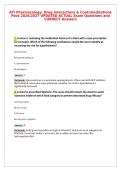
ATI Pharmacology: Drug Interactions & Contraindications
Pack 2026/2027 UPDATED ACTUAL Exam Questions and
CORRECT Answers
1. A nurse is reviewing the medication history of a client with a new prescription
for Lisinopril. Which of the following medications should the nurse identify as
increasing the risk for hyperkalemia?
A. Furosemide
B. Hydrochlorothiazide
C. Spironolactone
D. Amlodipine
Answer: C
Rationale: Spironolactone is a potassium-sparing diuretic. When used with ACE inhibitors
like Lisinopril, which also cause potassium retention, the risk for hyperkalemia is
significantly increased.
2. A client is prescribed Warfarin. The nurse should instruct the client to avoid
excessive intake of which food category to prevent decreased drug efficacy?
A. Dairy products
B. Citrus fruits
C. Red meat
D. Leafy green vegetables
Answer: D
Rationale: Leafy green vegetables are high in Vitamin K, which acts as an antagonist to
Warfarin. Consistent intake is necessary, but a sudden increase can reduce the
anticoagulant effect.
,3. A nurse is teaching a client about a new prescription for Tetracycline. Which
of the following dietary items should the nurse advise the client to avoid within
2 hours of taking this medication?
A. Orange juice
B. Whole wheat bread
C. Yogurt
D. Baked chicken
Answer: C
Rationale: Tetracyclines chelate with calcium and other minerals in dairy products like
yogurt, which significantly reduces their absorption.
4. Which of the following electrolyte imbalances increases the risk of Digoxin
toxicity?
A. Hypercalcemia
B. Hypokalemia
C. Hypernatremia
D. Hypocalcemia
Answer: B
Rationale: Low serum potassium levels (hypokalemia) increase the sensitivity of the
myocardium to Digoxin, leading to a higher risk of toxicity.
5. A client is taking Atorvastatin. The nurse should advise the client to avoid
consuming which of the following beverages?
A. Grapefruit juice
B. Apple juice
C. Cranberry juice
D. Milk
Answer: A
, Rationale: Grapefruit juice inhibits the CYP3A4 enzyme, which metabolizes many statins,
leading to increased drug levels and a higher risk of myopathy and rhabdomyolysis.
6. A client is prescribed a Monoamine Oxidase Inhibitor (MAOI). Which of the
following foods should the nurse instruct the client to avoid to prevent a
hypertensive crisis?
A. Aged cheddar cheese
B. Fresh strawberries
C. Grilled salmon
D. Boiled eggs
Answer: A
Rationale: Aged cheeses contain tyramine, which can cause a massive release of
norepinephrine when MAOIs are present, leading to a hypertensive crisis.
7. A client taking Lithium Carbonate should be monitored for toxicity when
which of the following medications is added to their regimen?
A. Acetaminophen
B. Calcium Carbonate
C. Aspirin
D. Ibuprofen
Answer: D
Rationale: NSAIDs like Ibuprofen increase renal reabsorption of Lithium, which can lead to
toxic serum levels.
Pack 2026/2027 UPDATED ACTUAL Exam Questions and
CORRECT Answers
1. A nurse is reviewing the medication history of a client with a new prescription
for Lisinopril. Which of the following medications should the nurse identify as
increasing the risk for hyperkalemia?
A. Furosemide
B. Hydrochlorothiazide
C. Spironolactone
D. Amlodipine
Answer: C
Rationale: Spironolactone is a potassium-sparing diuretic. When used with ACE inhibitors
like Lisinopril, which also cause potassium retention, the risk for hyperkalemia is
significantly increased.
2. A client is prescribed Warfarin. The nurse should instruct the client to avoid
excessive intake of which food category to prevent decreased drug efficacy?
A. Dairy products
B. Citrus fruits
C. Red meat
D. Leafy green vegetables
Answer: D
Rationale: Leafy green vegetables are high in Vitamin K, which acts as an antagonist to
Warfarin. Consistent intake is necessary, but a sudden increase can reduce the
anticoagulant effect.
,3. A nurse is teaching a client about a new prescription for Tetracycline. Which
of the following dietary items should the nurse advise the client to avoid within
2 hours of taking this medication?
A. Orange juice
B. Whole wheat bread
C. Yogurt
D. Baked chicken
Answer: C
Rationale: Tetracyclines chelate with calcium and other minerals in dairy products like
yogurt, which significantly reduces their absorption.
4. Which of the following electrolyte imbalances increases the risk of Digoxin
toxicity?
A. Hypercalcemia
B. Hypokalemia
C. Hypernatremia
D. Hypocalcemia
Answer: B
Rationale: Low serum potassium levels (hypokalemia) increase the sensitivity of the
myocardium to Digoxin, leading to a higher risk of toxicity.
5. A client is taking Atorvastatin. The nurse should advise the client to avoid
consuming which of the following beverages?
A. Grapefruit juice
B. Apple juice
C. Cranberry juice
D. Milk
Answer: A
, Rationale: Grapefruit juice inhibits the CYP3A4 enzyme, which metabolizes many statins,
leading to increased drug levels and a higher risk of myopathy and rhabdomyolysis.
6. A client is prescribed a Monoamine Oxidase Inhibitor (MAOI). Which of the
following foods should the nurse instruct the client to avoid to prevent a
hypertensive crisis?
A. Aged cheddar cheese
B. Fresh strawberries
C. Grilled salmon
D. Boiled eggs
Answer: A
Rationale: Aged cheeses contain tyramine, which can cause a massive release of
norepinephrine when MAOIs are present, leading to a hypertensive crisis.
7. A client taking Lithium Carbonate should be monitored for toxicity when
which of the following medications is added to their regimen?
A. Acetaminophen
B. Calcium Carbonate
C. Aspirin
D. Ibuprofen
Answer: D
Rationale: NSAIDs like Ibuprofen increase renal reabsorption of Lithium, which can lead to
toxic serum levels.



