1 of 14
B13- Neuronal communication
5.1.3 Neuronal communication
(a) The roles of mammalian sensory receptors in converting different types of stimuli into nerve
impulses
To include an outline of the roles of sensory receptors (e.g. Pacinian corpuscle) in responding to
specific types of stimuli and their roles as transducers.
Key words:
Pacinian corpuscle- a pressure sensor found in the skin.
Sensory receptors- cells/sensory nerve endings that respond to a stimulus in the internal or
external environment of an organism and can create action potentials.
Transducer- a cell that converts one form of energy into another.
Stimulus- each change in the environment whether it is a change in the energy level or the
presence of a new chemical.
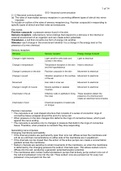
Sensory receptors
Stimulus Sensory receptor Energy change involved
Change in light intensity Light sensitive cells (rods and Light to electrical
cones) in the retina
Change in temperature Temperature receptors in the skin Heat to electrical
and the hypothalamus
Change in pressure on the skin Pacinian corpuscle in the skin Movement to electrical
Change in sound Vibration receptors in the cochlea Movement to electrical
of the ear
Movement Hair cells in inner ear Movement to electrical
Change in length of muscle Muscle spindles in skeletal Movement to electrical
muscles
Chemicals in the air Olfactory cells in epithelium lining These receptors detect the
the nose presence of a chemical and
create an electrical nerve impulse
Chemicals in food Chemical receptors in taste buds
on tongue
Pacinian corpuscles
- The corpuscle is an oval shaped structure that consists of a series of concentric rings of
connective tissue wrapped around the end of a nerve cell.
- When pressure on the skin changes this deforms the rings of connective tissue, which push
against the nerve ending.
- The corpuscle is sensitive only to changes in pressure that deform the rings of connective
tissue. Therefore, when pressure is constant they stop responding.
Generating nerve impulses
Changing membrane permeability
- If the channel proteins are permanently open then ions can diffuse across the membrane and
will do so until their concentrations on either side of the membrane are in equilibrium.
- If the channels can be closed then the action of the active pumps can create a concentration
gradient across the membrane.
- Sodium channels are sensitive to small movements of the membrane, so when the membrane
is deformed by the changing pressure the sodium channels open. This allows sodium ions to
diffuse into the cell, producing a generator potential/receptor potential.
- The membranes also contain sodium/potassium pumps that actively pump sodium ions out of
the cell and potassium ions into the cell. Three sodium ions are pumped out for every two
potassium ions pumped into the cell.
, 2 of 14
- When the channels proteins are all closed, the sodium/potassium pumps work to create a
concentration gradient. The conc. of sodium ions outside the cell increases. The membrane is
more permeable to potassium ions, so some of these leak out of the cell. The membrane is less
permeable to sodium ions, so few of these are able to leak into the cell.
- The results of these ionic movements is a potential gradient across the cell membrane. The cell
is negatively charged inside compared with outside. This negative potential is enhanced by the
presence of negatively charged anions inside the cell.
Create a nerve impulse
- Cell is inactive the cell membrane is said to be polarised, negatively charged inside compared
with the outside.
- A nerve impulse is created by altering the permeability of the nerve cell membrane to sodium
ions. This is achieved by opening the sodium ion channels. As they open the membrane
permeability increases and sodium ions can move across the membrane down their
concentration gradient into the cell.
- The movement of ions across the membrane creates a change in the potential difference
across the membrane. The inside of the cell becomes less negative, depolarised, and the
change in potential across a receptor membrane is often called a generator potential.
- If a small stimulus is detected only a few sodium channels will open. The larger the stimulus the
more gated channels will open.
- If enough gates are opened and enough sodium ions enter the cell, the potential difference
across the cell membrane changes and will initiate a impulse or action potential.
(b) The structure and functions of sensory, relay and motor neurones
To include differences between the structure and function of myelinated and non-myelinated
neurones.
Key words:
Stimulus- detectable change in the external or internal environment of an organism.
Response- the way a body reacts to stimulus.
Neurones- specialised cells which transmit impulses in the form of action potentials.
Neurotransmitters- chemical involved in communication across a synapse between adjacent
neurones or a neurone and muscle cell.
Myelin sheath- membrane rich in lipid which surrounds the axon of some neurones, speeding up
impulse transmission.
Motor neurones- neurones that carry an action potential from the CNS to the effector.
Relay neurones- join sensory neurones to motor neurones.
Sensory neurones- neurones that carry an action potential from the sensory receptors to the
CNS.
Function of neurones
• Once a stimulus has been detected and its energy has been converted to a depolarisation of the
receptor cell membrane, the impulse must be transmitted to other parts of the body.
• The impulse is transmitted along neurones as an action potential.
• The action potential is carried as a rapid depolarisation of the membrane caused by the influx of
sodium ions.
Structure of a neurone
Neurones are specialised cells with these features:
• Long: so can transmit the action potential over long distances.
• Gated ion channels: cell surface membrane has gated ion channels that control the entry or exit
of sodium, potassium or calcium ions.
• Sodium/potassium pumps use ATP to actively transport sodium ions out of the cell and
potassium ions into the cell.
• Neurones maintain a potential difference across their cell surface membrane.
• A cell body contains the nucleus, many mitochondria and ribosomes.
(c) the generation and transmission of nerve impulses in mammals
To include how the resting potential is established and maintained and how an action potential is
generated (including reference to positive feedback) and transmitted in a myelinated neurone
AND
B13- Neuronal communication
5.1.3 Neuronal communication
(a) The roles of mammalian sensory receptors in converting different types of stimuli into nerve
impulses
To include an outline of the roles of sensory receptors (e.g. Pacinian corpuscle) in responding to
specific types of stimuli and their roles as transducers.
Key words:
Pacinian corpuscle- a pressure sensor found in the skin.
Sensory receptors- cells/sensory nerve endings that respond to a stimulus in the internal or
external environment of an organism and can create action potentials.
Transducer- a cell that converts one form of energy into another.
Stimulus- each change in the environment whether it is a change in the energy level or the
presence of a new chemical.
Sensory receptors
Stimulus Sensory receptor Energy change involved
Change in light intensity Light sensitive cells (rods and Light to electrical
cones) in the retina
Change in temperature Temperature receptors in the skin Heat to electrical
and the hypothalamus
Change in pressure on the skin Pacinian corpuscle in the skin Movement to electrical
Change in sound Vibration receptors in the cochlea Movement to electrical
of the ear
Movement Hair cells in inner ear Movement to electrical
Change in length of muscle Muscle spindles in skeletal Movement to electrical
muscles
Chemicals in the air Olfactory cells in epithelium lining These receptors detect the
the nose presence of a chemical and
create an electrical nerve impulse
Chemicals in food Chemical receptors in taste buds
on tongue
Pacinian corpuscles
- The corpuscle is an oval shaped structure that consists of a series of concentric rings of
connective tissue wrapped around the end of a nerve cell.
- When pressure on the skin changes this deforms the rings of connective tissue, which push
against the nerve ending.
- The corpuscle is sensitive only to changes in pressure that deform the rings of connective
tissue. Therefore, when pressure is constant they stop responding.
Generating nerve impulses
Changing membrane permeability
- If the channel proteins are permanently open then ions can diffuse across the membrane and
will do so until their concentrations on either side of the membrane are in equilibrium.
- If the channels can be closed then the action of the active pumps can create a concentration
gradient across the membrane.
- Sodium channels are sensitive to small movements of the membrane, so when the membrane
is deformed by the changing pressure the sodium channels open. This allows sodium ions to
diffuse into the cell, producing a generator potential/receptor potential.
- The membranes also contain sodium/potassium pumps that actively pump sodium ions out of
the cell and potassium ions into the cell. Three sodium ions are pumped out for every two
potassium ions pumped into the cell.
, 2 of 14
- When the channels proteins are all closed, the sodium/potassium pumps work to create a
concentration gradient. The conc. of sodium ions outside the cell increases. The membrane is
more permeable to potassium ions, so some of these leak out of the cell. The membrane is less
permeable to sodium ions, so few of these are able to leak into the cell.
- The results of these ionic movements is a potential gradient across the cell membrane. The cell
is negatively charged inside compared with outside. This negative potential is enhanced by the
presence of negatively charged anions inside the cell.
Create a nerve impulse
- Cell is inactive the cell membrane is said to be polarised, negatively charged inside compared
with the outside.
- A nerve impulse is created by altering the permeability of the nerve cell membrane to sodium
ions. This is achieved by opening the sodium ion channels. As they open the membrane
permeability increases and sodium ions can move across the membrane down their
concentration gradient into the cell.
- The movement of ions across the membrane creates a change in the potential difference
across the membrane. The inside of the cell becomes less negative, depolarised, and the
change in potential across a receptor membrane is often called a generator potential.
- If a small stimulus is detected only a few sodium channels will open. The larger the stimulus the
more gated channels will open.
- If enough gates are opened and enough sodium ions enter the cell, the potential difference
across the cell membrane changes and will initiate a impulse or action potential.
(b) The structure and functions of sensory, relay and motor neurones
To include differences between the structure and function of myelinated and non-myelinated
neurones.
Key words:
Stimulus- detectable change in the external or internal environment of an organism.
Response- the way a body reacts to stimulus.
Neurones- specialised cells which transmit impulses in the form of action potentials.
Neurotransmitters- chemical involved in communication across a synapse between adjacent
neurones or a neurone and muscle cell.
Myelin sheath- membrane rich in lipid which surrounds the axon of some neurones, speeding up
impulse transmission.
Motor neurones- neurones that carry an action potential from the CNS to the effector.
Relay neurones- join sensory neurones to motor neurones.
Sensory neurones- neurones that carry an action potential from the sensory receptors to the
CNS.
Function of neurones
• Once a stimulus has been detected and its energy has been converted to a depolarisation of the
receptor cell membrane, the impulse must be transmitted to other parts of the body.
• The impulse is transmitted along neurones as an action potential.
• The action potential is carried as a rapid depolarisation of the membrane caused by the influx of
sodium ions.
Structure of a neurone
Neurones are specialised cells with these features:
• Long: so can transmit the action potential over long distances.
• Gated ion channels: cell surface membrane has gated ion channels that control the entry or exit
of sodium, potassium or calcium ions.
• Sodium/potassium pumps use ATP to actively transport sodium ions out of the cell and
potassium ions into the cell.
• Neurones maintain a potential difference across their cell surface membrane.
• A cell body contains the nucleus, many mitochondria and ribosomes.
(c) the generation and transmission of nerve impulses in mammals
To include how the resting potential is established and maintained and how an action potential is
generated (including reference to positive feedback) and transmitted in a myelinated neurone
AND