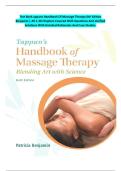
Test Bank appans Handbook Of Massage Therapy 6th Edition
Benjamin | All 1-28 Chapters Covered With Questions And Verified
Solutions With Detailed Rationales And Case Studies.
, TABLE OF CONTENT
Part 1: Foundations for Massage Therapy Professionals
• Chapter 1: Massage Therapy Profession
• Chapter 2: History of Massage as a Vocation
• Chapter 3: Professional and Personal Development
• Chapter 4: Physical Skills, Fitness, and Self-Care for the Massage Therapist
• Chapter 5: Ethics and the Therapeutic Relationship
Part 2: Foundations of Planning and Giving Massage Sessions
• Chapter 6: Effects of Massage and Research Literacy
• Chapter 7: Clinical Applications of Massage
• Chapter 8: Endangerment Sites, Contraindications, and Cautions
• Chapter 9: Medical Terminology, Goal-Oriented Planning, and Documentation
• Chapter 10: Hygiene, Equipment, and Environment
• Chapter 11: Body Mechanics, Table Skills, and General Guidelines
Part 3: Tappan’s Guide to Healing Massage
• Chapter 12: Swedish Massage Techniques
• Chapter 13: Joint Movements
• Chapter 14: Full-Body Swedish Massage
• Chapter 15: Regional Massage Applications—Upper Body
• Chapter 16: Regional Massage Applications—Lower Body
• Chapter 17: Hydrotherapy and Temperature Therapies
Part 4: Tappan’s Guide to Special Applications
• Chapter 18: Special Populations and Adaptations
• Chapter 19: Spa Treatments
• Chapter 20: Seated Massage
,Part 5: Tappan’s Guide to Contemporary Massage and Bodywork
• Chapter 21: Myofascial Massage
• Chapter 22: Trigger Point Therapy
• Chapter 23: Lymphatic Facilitation
• Chapter 24: Reflexology
• Chapter 25: Energy-Based Bodywork
Part 6: Foundations of Career and Practice Development
• Chapter 26: Career Plans and Employment
• Chapter 27: Private Practice and Finances
• Chapter 28: Business Ethics
CHAPTER 1: MASSAGE THERAPY PROFESSION
Multiple Choice Questions (MCQs)
1. The primary goal of the massage therapy profession is to:
A. Diagnose diseases
B. Promote health and wellness through manual techniques
C. Prescribe medication
D. Perform surgical procedures
✔ Answer: B
Rationale: Massage therapy focuses on improving physical and mental well-being through
manipulation of soft tissues, not medical diagnosis or pharmacological treatment.
2. A licensed massage therapist is primarily trained to work on:
A. Bone fractures
B. Soft tissues of the body
C. Internal organs
D. Nervous system surgeries
✔ Answer: B
Rationale: Massage therapists primarily work on muscles, fascia, and connective tissues.
, 3. Which of the following best describes professionalism in massage therapy?
A. Casual interaction with clients
B. Maintaining ethical standards and boundaries
C. Providing medical diagnoses
D. Using unverified techniques
✔ Answer: B
Rationale: Professionalism includes ethics, confidentiality, and appropriate therapist-client
boundaries.
4. Informed consent in massage therapy means:
A. Client signs without explanation
B. Client agrees after understanding treatment
C. Therapist decides treatment alone
D. Insurance approves the session
✔ Answer: B
Rationale: Clients must understand and voluntarily agree to treatment before it begins.
5. One major benefit of massage therapy is:
A. Bone regeneration
B. Stress reduction
C. Cure for infections
D. Permanent pain elimination
✔ Answer: B
Rationale: Massage therapy is well known for reducing stress and promoting relaxation.
6. Scope of practice refers to:
A. Marketing strategies
B. Legal boundaries of what a therapist can do
C. Client preferences
D. Clinic location
✔ Answer: B
Rationale: It defines what a massage therapist is legally allowed to perform.
7. A key ethical responsibility of a massage therapist is:
A. Sharing client records publicly
B. Maintaining confidentiality
Benjamin | All 1-28 Chapters Covered With Questions And Verified
Solutions With Detailed Rationales And Case Studies.
, TABLE OF CONTENT
Part 1: Foundations for Massage Therapy Professionals
• Chapter 1: Massage Therapy Profession
• Chapter 2: History of Massage as a Vocation
• Chapter 3: Professional and Personal Development
• Chapter 4: Physical Skills, Fitness, and Self-Care for the Massage Therapist
• Chapter 5: Ethics and the Therapeutic Relationship
Part 2: Foundations of Planning and Giving Massage Sessions
• Chapter 6: Effects of Massage and Research Literacy
• Chapter 7: Clinical Applications of Massage
• Chapter 8: Endangerment Sites, Contraindications, and Cautions
• Chapter 9: Medical Terminology, Goal-Oriented Planning, and Documentation
• Chapter 10: Hygiene, Equipment, and Environment
• Chapter 11: Body Mechanics, Table Skills, and General Guidelines
Part 3: Tappan’s Guide to Healing Massage
• Chapter 12: Swedish Massage Techniques
• Chapter 13: Joint Movements
• Chapter 14: Full-Body Swedish Massage
• Chapter 15: Regional Massage Applications—Upper Body
• Chapter 16: Regional Massage Applications—Lower Body
• Chapter 17: Hydrotherapy and Temperature Therapies
Part 4: Tappan’s Guide to Special Applications
• Chapter 18: Special Populations and Adaptations
• Chapter 19: Spa Treatments
• Chapter 20: Seated Massage
,Part 5: Tappan’s Guide to Contemporary Massage and Bodywork
• Chapter 21: Myofascial Massage
• Chapter 22: Trigger Point Therapy
• Chapter 23: Lymphatic Facilitation
• Chapter 24: Reflexology
• Chapter 25: Energy-Based Bodywork
Part 6: Foundations of Career and Practice Development
• Chapter 26: Career Plans and Employment
• Chapter 27: Private Practice and Finances
• Chapter 28: Business Ethics
CHAPTER 1: MASSAGE THERAPY PROFESSION
Multiple Choice Questions (MCQs)
1. The primary goal of the massage therapy profession is to:
A. Diagnose diseases
B. Promote health and wellness through manual techniques
C. Prescribe medication
D. Perform surgical procedures
✔ Answer: B
Rationale: Massage therapy focuses on improving physical and mental well-being through
manipulation of soft tissues, not medical diagnosis or pharmacological treatment.
2. A licensed massage therapist is primarily trained to work on:
A. Bone fractures
B. Soft tissues of the body
C. Internal organs
D. Nervous system surgeries
✔ Answer: B
Rationale: Massage therapists primarily work on muscles, fascia, and connective tissues.
, 3. Which of the following best describes professionalism in massage therapy?
A. Casual interaction with clients
B. Maintaining ethical standards and boundaries
C. Providing medical diagnoses
D. Using unverified techniques
✔ Answer: B
Rationale: Professionalism includes ethics, confidentiality, and appropriate therapist-client
boundaries.
4. Informed consent in massage therapy means:
A. Client signs without explanation
B. Client agrees after understanding treatment
C. Therapist decides treatment alone
D. Insurance approves the session
✔ Answer: B
Rationale: Clients must understand and voluntarily agree to treatment before it begins.
5. One major benefit of massage therapy is:
A. Bone regeneration
B. Stress reduction
C. Cure for infections
D. Permanent pain elimination
✔ Answer: B
Rationale: Massage therapy is well known for reducing stress and promoting relaxation.
6. Scope of practice refers to:
A. Marketing strategies
B. Legal boundaries of what a therapist can do
C. Client preferences
D. Clinic location
✔ Answer: B
Rationale: It defines what a massage therapist is legally allowed to perform.
7. A key ethical responsibility of a massage therapist is:
A. Sharing client records publicly
B. Maintaining confidentiality