Problem 9 2.4
Balance
The vestibular system: perceiving balance and acceleration
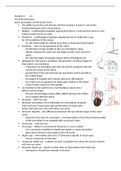
Vestibular system – the sense organs used to produce neural signals carrying
information about balance and acceleration; includes the semi-circular canals and
the otolith organs
Semicircular canals – three mutually perpendicular hollow curved tubes in the skull
filled with endolymph which are responsible for signalling head rotation
- part of the vestibular system
- at the base of each canal is a small chamber called an ampulla, also filled with
endolymph and containing a specialised structure called a crista
- the cristae contain hair cells, with stereocilia enclosed within a gelatinous cap
called a cupula
otolith organs – part of the vestibular system; consist of the utricle and the saccule
which are responsible for signalling when the head is undergoing linear acceleration
or being held in a tilted position
- both the saccule and utricle contain a specialised structure with hair cells called
macula
- within each macula, the hair cells are oriented in different directions and are
embedded in a gelatinous layer topped by tiny crystals called otoconia
rotation of the head causes the endolymph within one or more of the semicircular
canals to move
- this movement displaces the cupula, which causes the stereocilia of the hair cells
to bend
- this in turn causes the hair cells’ rate of neurotransmitter release to increase
above baseline or decrease below baseline, depending on the direction of head
rotation
- each different head rotation evokes a different pattern of relative
neurotransmitter release by the hair cell in three canals which serves as a neural
code indicating how the head is rotating
When the head undergoes linear acceleration in any direction, the otoconia drag on
the gelatinous layer in the macula
- the consequent movement of this layer cause the stereocilia of the hair cells to
bend, with a resulting increase or decrease in the rate of neurotransmitter
release by the hair cells
when the hedge is held in a tilted position, gravity pulls on the otoconia in a different
direction than when the head is held up right, and the force of this gravitational pull
causes the otoconia to drag on the gelatinous layer in the macula
- the resultant is the bending of the hair cells’ stereocilia and changes in
neurotransmitter release corresponding with the particular tilt off the head
The stereocilia in the maculae are orientated in different directions, so each different
acceleration will tilt of the head results in different amounts and directions of
bending of the stereocilia
- the different patterns of neurotransmitter release by the hair cells of the otolith
function as a code indicating the degree and direction of acceleration and tilt of
the head
, Nerve fibres carrying neural signals from the hair cells in the semi-circular canals and
the otolith organs bundled together to form the vestibular nerve
- this nerve carries these signals to the vestibular complex in the brain stem
- the vestibular complex contains multiple vestibular nuclei, which receives signals
not only from the vestibular system, but also from the visual system and the
motor system responsible for neck movements
signals from the vestibular nuclei go to several brain regions, including the parietal
insular vestibular cortex (PIVC), deep in the lateral sulcus
- the PIVC is thought to provide a representation of the position and orientation of
the head, which can be used as a basis for maintaining balance during complex
movements
the brain combines signals from the vestibular system with signals from other parts
of the body to produce a unified perception of whole-body position, balance, and
movement
Other regions receiving signals from the vestibular nuclei (e.g. the frontal eye field)
are involved in controlling eye movements in order to maintain a stable gaze, which
is amongst the most important functions of the vestibular system
- The first movement is a saccade, a rapid movement of the eyes to point out a
new target
- this is often followed by a turn
or tilt of the head, so the eyes
and head end up aligned with
one another
- The hair cells in the semi
circular canals produce signals
in response to this head
movement, which in turn cause
signals to flow from the
vestibular complex to the
oculomotor system
- this moves the eyes in a
direction opposite to the
direction of the head in order
to keep the eyes pointed at a
target while the head is moving
vestibulo-ocular reflex - and
unconscious compensating
movement of the eyes during head
movements in order to maintain a
stable gaze
Vertigo - a full sensation in which an individual or individuals surroundings seemed
to move or spin; most commonly caused by loose otoconia in a semi circular canal
- caused by damage to the vestibular system – otoconia Crystals become dislodged
from the macula and accumulate in one of these semi circular canals
- when the head is tilted or turned to one side, the crystals produce abnormal
forces on the cupula, stimulating the hair cells in a way that creates a false
motion signal
Balance
The vestibular system: perceiving balance and acceleration
Vestibular system – the sense organs used to produce neural signals carrying
information about balance and acceleration; includes the semi-circular canals and
the otolith organs
Semicircular canals – three mutually perpendicular hollow curved tubes in the skull
filled with endolymph which are responsible for signalling head rotation
- part of the vestibular system
- at the base of each canal is a small chamber called an ampulla, also filled with
endolymph and containing a specialised structure called a crista
- the cristae contain hair cells, with stereocilia enclosed within a gelatinous cap
called a cupula
otolith organs – part of the vestibular system; consist of the utricle and the saccule
which are responsible for signalling when the head is undergoing linear acceleration
or being held in a tilted position
- both the saccule and utricle contain a specialised structure with hair cells called
macula
- within each macula, the hair cells are oriented in different directions and are
embedded in a gelatinous layer topped by tiny crystals called otoconia
rotation of the head causes the endolymph within one or more of the semicircular
canals to move
- this movement displaces the cupula, which causes the stereocilia of the hair cells
to bend
- this in turn causes the hair cells’ rate of neurotransmitter release to increase
above baseline or decrease below baseline, depending on the direction of head
rotation
- each different head rotation evokes a different pattern of relative
neurotransmitter release by the hair cell in three canals which serves as a neural
code indicating how the head is rotating
When the head undergoes linear acceleration in any direction, the otoconia drag on
the gelatinous layer in the macula
- the consequent movement of this layer cause the stereocilia of the hair cells to
bend, with a resulting increase or decrease in the rate of neurotransmitter
release by the hair cells
when the hedge is held in a tilted position, gravity pulls on the otoconia in a different
direction than when the head is held up right, and the force of this gravitational pull
causes the otoconia to drag on the gelatinous layer in the macula
- the resultant is the bending of the hair cells’ stereocilia and changes in
neurotransmitter release corresponding with the particular tilt off the head
The stereocilia in the maculae are orientated in different directions, so each different
acceleration will tilt of the head results in different amounts and directions of
bending of the stereocilia
- the different patterns of neurotransmitter release by the hair cells of the otolith
function as a code indicating the degree and direction of acceleration and tilt of
the head
, Nerve fibres carrying neural signals from the hair cells in the semi-circular canals and
the otolith organs bundled together to form the vestibular nerve
- this nerve carries these signals to the vestibular complex in the brain stem
- the vestibular complex contains multiple vestibular nuclei, which receives signals
not only from the vestibular system, but also from the visual system and the
motor system responsible for neck movements
signals from the vestibular nuclei go to several brain regions, including the parietal
insular vestibular cortex (PIVC), deep in the lateral sulcus
- the PIVC is thought to provide a representation of the position and orientation of
the head, which can be used as a basis for maintaining balance during complex
movements
the brain combines signals from the vestibular system with signals from other parts
of the body to produce a unified perception of whole-body position, balance, and
movement
Other regions receiving signals from the vestibular nuclei (e.g. the frontal eye field)
are involved in controlling eye movements in order to maintain a stable gaze, which
is amongst the most important functions of the vestibular system
- The first movement is a saccade, a rapid movement of the eyes to point out a
new target
- this is often followed by a turn
or tilt of the head, so the eyes
and head end up aligned with
one another
- The hair cells in the semi
circular canals produce signals
in response to this head
movement, which in turn cause
signals to flow from the
vestibular complex to the
oculomotor system
- this moves the eyes in a
direction opposite to the
direction of the head in order
to keep the eyes pointed at a
target while the head is moving
vestibulo-ocular reflex - and
unconscious compensating
movement of the eyes during head
movements in order to maintain a
stable gaze
Vertigo - a full sensation in which an individual or individuals surroundings seemed
to move or spin; most commonly caused by loose otoconia in a semi circular canal
- caused by damage to the vestibular system – otoconia Crystals become dislodged
from the macula and accumulate in one of these semi circular canals
- when the head is tilted or turned to one side, the crystals produce abnormal
forces on the cupula, stimulating the hair cells in a way that creates a false
motion signal