Eating disorders
Are characterized by a persistent disturbance in eating behavior.
At the heart of both disorders (bulimia and anorexia) is an intense fear
of becoming overweight and fat and an accompanying pursuit of
thinness.
Anorexia Nervosa
A lack of appetite is neither the core difficulty nor necessarily even
true.
At the heart of anorexia nervosa is an intense fear of gaining weight or
becoming fat, combined with behaviors that result in a significantly
low body weight.
It is centuries old. The first known medical account of anorexia
nervosa was published in 1689 by Richard Morton.
Many patients deny having any problem, may come to feel fulfilled by
their weight loss or may feel ambivalent about their weight.
Wear baggy clothes or carrying hidden bulky objects so that they will
weigh more when measured by others.
Drinking large amounts of water to increase their weight temporarily.
Restriction of energy intake relative to requirements, leading to a
significantly low body weight in the context of age, sex,
developmental trajectory, and physical health. Significantly low
weight is defined as a weight that is less than minimally normal or,
for children and adolescents, less than that minimally expected
Intense fear of gaining weight or of becoming fat, or persistent
behavior that interferes with weight gain, even though at a
significantly low weight.
Disturbance in the way in which one's body weight or shape is
experienced, undue influence of body weight or shape on self-
evaluation, or persistent lack of recognition of the seriousness of the
current low body weight.
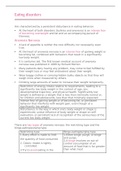
There are two types of anorexia nervosa: the restricting type and the
binge-eating/purging type.
Restricting type Binge-eating/purging type
1.Every effort is made to limit 1.Either binge, purge, or binge
and purge.
the quantity of food consumed.
2.A binge involves an out-of-
2. Caloric intake is tightly control consumption of an
controlled. amount of food that is far greater
3.Try to avoid eating in the than what most
, presence of other people. people would eat in the same
amount of time and under the
4.When are at the table, they
same circumstances.
may eat excessively slowly, cut 3. These binges may be followed
their food into very small by efforts to purge, or remove
from their bodies, the food they
pieces, or dispose of food have eaten.
secretly. 4.Methods of purging commonly
5. Are often greatly admired by include self-induced vomiting or
others with eating disorders. using laxatives, diuretics, and
enemas.
5.Other compensatory behaviors
that do not involve purging are
excessive exercise or fasting.
Ballet dancers are at an especially high risk for eating disorders.
High comorbidity between eating disorders and obsessive-compulsive
symptoms.
Often deny the seriousness of their disorder.
Bulimia Nervosa
Characterized by uncontrollable binge eating and efforts to prevent
resulting weight gain by using inappropriate behaviors such as self-
induced vomiting and excessive exercise.
Binge eating and purging now have to occur on average once a week
(instead of twice a week) over a 3-month period.
1.Recurrent episodes of binge eating. An episode of binge eating is
characterized by both of the following:
Eating, in a discrete period of time (e.g., within any 2-hour
period), an amount of food that is definitely larger than what
most individuals would eat in a similar period of time under
similar circumstances.
A sense of lack of control over eating during the episode (e.g., a
feeling that one cannot stop eating or control what or how much
one is eating).
2.Recurrent inappropriate compensatory behaviors in order to
prevent weight gain, such as self-induced vomiting; misuse of
laxatives, diuretics, or other medications; fasting; or excessive
exercise.
3.The binge eating and inappropriate compensatory behaviors both
occur, on average, at least once a week for 3 months.
4.Self-evaluation is unduly influenced by body shape and weight.
5.The disturbance does not occur exclusively during episodes of
anorexia nervosa.
The difference between a person with bulimia nervosa and a person
with the binge-eating/purging type anorexia nervosa is weight. the
person with anorexia nervosa is severely underweight.
2
Are characterized by a persistent disturbance in eating behavior.
At the heart of both disorders (bulimia and anorexia) is an intense fear
of becoming overweight and fat and an accompanying pursuit of
thinness.
Anorexia Nervosa
A lack of appetite is neither the core difficulty nor necessarily even
true.
At the heart of anorexia nervosa is an intense fear of gaining weight or
becoming fat, combined with behaviors that result in a significantly
low body weight.
It is centuries old. The first known medical account of anorexia
nervosa was published in 1689 by Richard Morton.
Many patients deny having any problem, may come to feel fulfilled by
their weight loss or may feel ambivalent about their weight.
Wear baggy clothes or carrying hidden bulky objects so that they will
weigh more when measured by others.
Drinking large amounts of water to increase their weight temporarily.
Restriction of energy intake relative to requirements, leading to a
significantly low body weight in the context of age, sex,
developmental trajectory, and physical health. Significantly low
weight is defined as a weight that is less than minimally normal or,
for children and adolescents, less than that minimally expected
Intense fear of gaining weight or of becoming fat, or persistent
behavior that interferes with weight gain, even though at a
significantly low weight.
Disturbance in the way in which one's body weight or shape is
experienced, undue influence of body weight or shape on self-
evaluation, or persistent lack of recognition of the seriousness of the
current low body weight.
There are two types of anorexia nervosa: the restricting type and the
binge-eating/purging type.
Restricting type Binge-eating/purging type
1.Every effort is made to limit 1.Either binge, purge, or binge
and purge.
the quantity of food consumed.
2.A binge involves an out-of-
2. Caloric intake is tightly control consumption of an
controlled. amount of food that is far greater
3.Try to avoid eating in the than what most
, presence of other people. people would eat in the same
amount of time and under the
4.When are at the table, they
same circumstances.
may eat excessively slowly, cut 3. These binges may be followed
their food into very small by efforts to purge, or remove
from their bodies, the food they
pieces, or dispose of food have eaten.
secretly. 4.Methods of purging commonly
5. Are often greatly admired by include self-induced vomiting or
others with eating disorders. using laxatives, diuretics, and
enemas.
5.Other compensatory behaviors
that do not involve purging are
excessive exercise or fasting.
Ballet dancers are at an especially high risk for eating disorders.
High comorbidity between eating disorders and obsessive-compulsive
symptoms.
Often deny the seriousness of their disorder.
Bulimia Nervosa
Characterized by uncontrollable binge eating and efforts to prevent
resulting weight gain by using inappropriate behaviors such as self-
induced vomiting and excessive exercise.
Binge eating and purging now have to occur on average once a week
(instead of twice a week) over a 3-month period.
1.Recurrent episodes of binge eating. An episode of binge eating is
characterized by both of the following:
Eating, in a discrete period of time (e.g., within any 2-hour
period), an amount of food that is definitely larger than what
most individuals would eat in a similar period of time under
similar circumstances.
A sense of lack of control over eating during the episode (e.g., a
feeling that one cannot stop eating or control what or how much
one is eating).
2.Recurrent inappropriate compensatory behaviors in order to
prevent weight gain, such as self-induced vomiting; misuse of
laxatives, diuretics, or other medications; fasting; or excessive
exercise.
3.The binge eating and inappropriate compensatory behaviors both
occur, on average, at least once a week for 3 months.
4.Self-evaluation is unduly influenced by body shape and weight.
5.The disturbance does not occur exclusively during episodes of
anorexia nervosa.
The difference between a person with bulimia nervosa and a person
with the binge-eating/purging type anorexia nervosa is weight. the
person with anorexia nervosa is severely underweight.
2