Lectures Marketing in a Global Business
World
Lecture 1
Core aims of the course
• Understand what marketing is about – breadth rather than depth!
• Learn how to write a marketing plan
Mandatory course materials
Final exam: MC exam questions based on the following materials
• Book
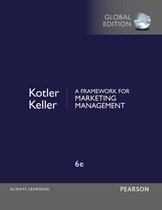
* A Framework for Marketing Management, Global Edition, 6th Edition, Philip Kotler,
Kevin Lane Keller; ©2016|Pearson, 352 pages
* Print ISBN-13: 9781292093147, eText ISBN: 9781292093154
* Note: we do not cover the entire book during the lectures – self study!
* Lecture slides are no substitute for the book, but complementary.
* Every part of the book is important
• Additional mandatory readings: articles posted under weekly Lecture materials
(marked as ‘mandatory for the exam’) -> contents will be addressed in some of the
lectures.
• Guest lectures
• Lecture slides: also mandatory information for the exam. Note: the slides may
address additional materials not covered in the book.
Course structure
Plenary lectures
• Tuesdays + Thursdays
• In class and recorded
• Red thread book -> other topics: self-study!
• Selected topics – focus on team assignments
• Additional mandatory readings
• Feedback on weekly quizzes
• Interactive case study discussion on lab-grown meat
Seminars
• Fridays or Mondays
• In class only
, • Team presentations of assignments
• Assignment feedback
• Case discussions
• Intro upcoming assignment
Outside class work
• Outside class
• Weekly team assignments → writing parts of a marketing plan
• Apply literature to real brands
Weekly planning
see Canvas – Modules – Week 0
• No seminars in week 4 (26 + 29 September)!
• No midterm exam
• Final exam: Monday, 20 October (17-19h, to be confirmed): MC questions only.
• Please check https://rooster.uva.nl/schedule for updates!
Guest lectures
• 30 September
* https://trueprice.org/
• 14 October
https://eventlabs.ai
How to prepare for the lectures?
, • Read the respective book chapters prior to the lectures
• Attend the lectures (or watch recordings)
• Test your knowledge by taking the weekly quizzes → Canvas ‘Quizzes’, posted on
Thursdays
* Read the mandatory readings prior to taking the quiz
* General quiz feedback on during selected lectures
• Preparation needed for the lab-grown meat case study discussion!
* Students attending the respective lectures are expected to have taken the weekly
quiz AND be prepared to interactively discuss their ideas for the case study in class
How to prepare for the seminars?
• Attend the seminars and be on time
• Please prepare the individual mini-assignment for the 1st seminar.
• Students are randomly assigned to a team shortly before seminar 1.
* The 1st assignment is already due at the start of seminar 2. The first teams present
their team assignment in seminar 2!
* Cannot attend Seminar 1? Get in touch with your teammates (Canvas – People tab –
Project groups) to divide the work for the upcoming assignment.
* Additionally, inform your seminar teacher PRIOR TO seminar 1. Contact details
seminar teachers: see Modules – Week 1 – Seminars.
• Contributed to a team assignment insufficiently or not at all? – Grade 0
• Students who have not contributed to two or more team assignments can no longer
participate in the remaining team assignments or the team’s presentation. They will
thus fail the course.
• Reserve sufficient time each week to meet up with your team outside class (in-person
or online), and for working on the written team assignments and presentations.
Individual mini assignment for the 1st seminar
• Think of one example of either excellent or poor marketing
• If possible, have information, a link or materials ready for Seminar 1 (e.g. an ad,
YouTube clip, packaging, etc).
• Which aspects of the entire marketing process (5 steps) make this specific marketing
activity so good/bad?
* Is it e.g. the positioning of the brand, choice of the target group, product
characteristics, distribution, promotion, pricing, etc.?
• Individual assignment to THINK about BFORE the 1st seminar -> no need to hand in
anything in written, but be prepared to discuss!
• See Modules – week 1 on Canvas for more info
, Agenda this week
Part 1 – Introduction to Marketing Management
Book Chapters
1. Scope of Marketing for New Realities
* Definitions of Marketing
* Brief history of marketing & philosophies
* New marketing realities
2. Marketing Strategies & Plans
* Mission statements
3. Marketing Research and Analysis
* Market Information System (MIS)
Marketing process in 5 steps
• Lecture 1: Marketing insights (Part 1)
• Lecture 2: Connecting with Customers (Part 2)
Segmenting, Targeting (Part 3, ch.6)
• Lecture 3: Branding – Positioning (Part 3, ch. 7 + 8)
• Lecture 4: Product (Part 4)
Price (Part 4)
Place (Part 5)
• Lecture 5: Promotion (Part 6)
• Lecture 6: Responsible Marketing (Part 7)
Marketing definitions
• Marketing is the performance of business activities that direct the flow of goods and
services from producers to consumers. AMA (1935, in Keefe 2004 )
* How can we set up an distribution system
• Marketing is the process of planning and executing the conception, pricing,
promotion, and distribution of ideas, goods, and services to create exchanges that
World
Lecture 1
Core aims of the course
• Understand what marketing is about – breadth rather than depth!
• Learn how to write a marketing plan
Mandatory course materials
Final exam: MC exam questions based on the following materials
• Book
* A Framework for Marketing Management, Global Edition, 6th Edition, Philip Kotler,
Kevin Lane Keller; ©2016|Pearson, 352 pages
* Print ISBN-13: 9781292093147, eText ISBN: 9781292093154
* Note: we do not cover the entire book during the lectures – self study!
* Lecture slides are no substitute for the book, but complementary.
* Every part of the book is important
• Additional mandatory readings: articles posted under weekly Lecture materials
(marked as ‘mandatory for the exam’) -> contents will be addressed in some of the
lectures.
• Guest lectures
• Lecture slides: also mandatory information for the exam. Note: the slides may
address additional materials not covered in the book.
Course structure
Plenary lectures
• Tuesdays + Thursdays
• In class and recorded
• Red thread book -> other topics: self-study!
• Selected topics – focus on team assignments
• Additional mandatory readings
• Feedback on weekly quizzes
• Interactive case study discussion on lab-grown meat
Seminars
• Fridays or Mondays
• In class only
, • Team presentations of assignments
• Assignment feedback
• Case discussions
• Intro upcoming assignment
Outside class work
• Outside class
• Weekly team assignments → writing parts of a marketing plan
• Apply literature to real brands
Weekly planning
see Canvas – Modules – Week 0
• No seminars in week 4 (26 + 29 September)!
• No midterm exam
• Final exam: Monday, 20 October (17-19h, to be confirmed): MC questions only.
• Please check https://rooster.uva.nl/schedule for updates!
Guest lectures
• 30 September
* https://trueprice.org/
• 14 October
https://eventlabs.ai
How to prepare for the lectures?
, • Read the respective book chapters prior to the lectures
• Attend the lectures (or watch recordings)
• Test your knowledge by taking the weekly quizzes → Canvas ‘Quizzes’, posted on
Thursdays
* Read the mandatory readings prior to taking the quiz
* General quiz feedback on during selected lectures
• Preparation needed for the lab-grown meat case study discussion!
* Students attending the respective lectures are expected to have taken the weekly
quiz AND be prepared to interactively discuss their ideas for the case study in class
How to prepare for the seminars?
• Attend the seminars and be on time
• Please prepare the individual mini-assignment for the 1st seminar.
• Students are randomly assigned to a team shortly before seminar 1.
* The 1st assignment is already due at the start of seminar 2. The first teams present
their team assignment in seminar 2!
* Cannot attend Seminar 1? Get in touch with your teammates (Canvas – People tab –
Project groups) to divide the work for the upcoming assignment.
* Additionally, inform your seminar teacher PRIOR TO seminar 1. Contact details
seminar teachers: see Modules – Week 1 – Seminars.
• Contributed to a team assignment insufficiently or not at all? – Grade 0
• Students who have not contributed to two or more team assignments can no longer
participate in the remaining team assignments or the team’s presentation. They will
thus fail the course.
• Reserve sufficient time each week to meet up with your team outside class (in-person
or online), and for working on the written team assignments and presentations.
Individual mini assignment for the 1st seminar
• Think of one example of either excellent or poor marketing
• If possible, have information, a link or materials ready for Seminar 1 (e.g. an ad,
YouTube clip, packaging, etc).
• Which aspects of the entire marketing process (5 steps) make this specific marketing
activity so good/bad?
* Is it e.g. the positioning of the brand, choice of the target group, product
characteristics, distribution, promotion, pricing, etc.?
• Individual assignment to THINK about BFORE the 1st seminar -> no need to hand in
anything in written, but be prepared to discuss!
• See Modules – week 1 on Canvas for more info
, Agenda this week
Part 1 – Introduction to Marketing Management
Book Chapters
1. Scope of Marketing for New Realities
* Definitions of Marketing
* Brief history of marketing & philosophies
* New marketing realities
2. Marketing Strategies & Plans
* Mission statements
3. Marketing Research and Analysis
* Market Information System (MIS)
Marketing process in 5 steps
• Lecture 1: Marketing insights (Part 1)
• Lecture 2: Connecting with Customers (Part 2)
Segmenting, Targeting (Part 3, ch.6)
• Lecture 3: Branding – Positioning (Part 3, ch. 7 + 8)
• Lecture 4: Product (Part 4)
Price (Part 4)
Place (Part 5)
• Lecture 5: Promotion (Part 6)
• Lecture 6: Responsible Marketing (Part 7)
Marketing definitions
• Marketing is the performance of business activities that direct the flow of goods and
services from producers to consumers. AMA (1935, in Keefe 2004 )
* How can we set up an distribution system
• Marketing is the process of planning and executing the conception, pricing,
promotion, and distribution of ideas, goods, and services to create exchanges that