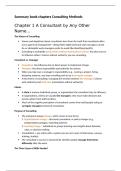
Summary book chapters Consulting Methods
Chapter 1 A Consultant by Any Other
Name...
The Nature of Consulting
Humor and skepticism about consultants stem from the truth that consultants often
act as agents of management—doing either highly technical work managers cannot
do, or distasteful work managers prefer to avoid (like identifying layoffs).
Consulting is essentially giving advice without having direct control. Any time you try
to influence others’ choices without authority, you are consulting.
Consultant vs. Manager
Consultant: Has influence but no direct power to implement change.
Manager: Has direct responsibility and authority for actions.
When you take over a manager’s responsibility (e.g., running a project, hiring,
designing systems), you stop consulting and act as a surrogate manager.
A key theme of consulting: managing the tension between line managers (clients
with authority) and staff roles (consultants without authority).
Clients
A client is anyone (individual, group, or organization) the consultant tries to influence.
In organizations, clients are usually line managers, who must make decisions but
receive advice from staff functions.
Much of the negative perception of consultants comes from staff people acting as
surrogate managers instead of consultants.
Purpose of Consulting
The end goal is always change, which comes in two forms:
1. Organizational change – structural, procedural, or policy changes (e.g.,
compensation packages, reporting systems).
2. Learning change – individuals or groups learning new insights about behavior,
roles, or decision-making.
Consultation = any action with a system you are not a part of (interviews, surveys,
training, studies).
The consultant’s success is measured by whether people manage themselves
differently after the work.
The Three Types of Skills Needed
, 1. Technical Skills – Subject-matter expertise (finance, engineering, HR, law, etc.).
Without expertise, clients won’t seek your advice.
2. Interpersonal Skills – Ability to build and maintain relationships: listening, giving
support, handling disagreement, communication.
3. Consulting Skills – Unique set of skills beyond technical and interpersonal. They
involve managing the process of working with clients, handling resistance,
contracting, discovery, feedback, and guiding change.
The Five Phases of Consulting
Each consulting project (10 minutes or 10 months) follows these sequential phases:
1. Entry & Contracting
* Initial contact with the client.
* Define the problem, expectations (yours and theirs), roles, and how to start
* Many consulting “disasters” happen due to poor contracting.
2. Discovery & Dialogue
* Consultant develops their own understanding of the problem.
* Decide who defines the problem, what data to collect, and methods used.
3. Feedback & the Decision to Act
* Consultant reduces data into key issues and presents findings.
* Must manage client resistance before decisions can be made.
4. Engagement & Implementation
* Action planning and execution.
* May include training, workshops, meetings, or the consultant directly assisting in
implementation.
5. Extension, Recycle, or Termination
* Evaluate results.
* Decide whether to extend, recycle into a new contract, or end the project.
* Termination is important for closure, learning, and maintaining future
opportunities.
Preliminary events (contracting, discovery, feedback) are often more critical than the main
event (implementation), because they lay the foundation for success.
The Promise of Flawless Consultation
Consulting is difficult because it involves lateral relationships (consultant ↔ client),
not vertical boss-subordinate ones.
Ambiguity in power requires careful negotiation and management.
Flawless consultation = working without error by:
* Building strong contracting, discovery, and feedback processes.
* Acting authentically, with trust in yourself and openness with clients.
* Avoiding manipulative or inauthentic behavior, which undermines consulting.
, Outcomes of Flawless Consulting
By applying these principles, consultants can
1. Have their expertise better utilized.
2. See recommendations implemented more often.
3. Build true partnerships with clients.
4. Avoid no-win situations.
5. Develop client commitment.
6. Gain client support.
7. Increase influence and leverage.
8. Build trust-based relationships.
Core Message
The book argues for authenticity in consulting: trusting yourself, aligning behavior
with beliefs, and resisting the pressure to “play roles” or act inauthentically.
Consultants face vulnerability (short-term contracts, easy to dismiss), but the best
path is to stay authentic.
Flawless consulting = high self-trust choices that lead to better outcomes and
deeper client relationships.
Chapter 2 Techniques Are Not Enough
Core Idea
Consulting is not just about techniques, methods, or expertise.
The consultant’s self (feelings, reactions, ability to engage the client) is central to
success.
Consulting always operates on two levels:
1. Substance level → solving the technical/business problem.
2. Relationship level → managing the interpersonal dynamics, feelings, and trust
between consultant and client.
Four Key Affective Elements in Consulting
1. Balanced Responsibility (50/50)
* Success depends on shared responsibility between consultant and client.
* Example: Clients should take visible responsibility (e.g., communicating about
programs), not outsource everything.
* Consultants should resist taking over tasks that shift accountability away from
clients.
2. Owning Feelings
* Clients must own their feelings rather than staying detached observers.
* Consultants should also notice and use their own feelings as data about the
client/organization.
Chapter 1 A Consultant by Any Other
Name...
The Nature of Consulting
Humor and skepticism about consultants stem from the truth that consultants often
act as agents of management—doing either highly technical work managers cannot
do, or distasteful work managers prefer to avoid (like identifying layoffs).
Consulting is essentially giving advice without having direct control. Any time you try
to influence others’ choices without authority, you are consulting.
Consultant vs. Manager
Consultant: Has influence but no direct power to implement change.
Manager: Has direct responsibility and authority for actions.
When you take over a manager’s responsibility (e.g., running a project, hiring,
designing systems), you stop consulting and act as a surrogate manager.
A key theme of consulting: managing the tension between line managers (clients
with authority) and staff roles (consultants without authority).
Clients
A client is anyone (individual, group, or organization) the consultant tries to influence.
In organizations, clients are usually line managers, who must make decisions but
receive advice from staff functions.
Much of the negative perception of consultants comes from staff people acting as
surrogate managers instead of consultants.
Purpose of Consulting
The end goal is always change, which comes in two forms:
1. Organizational change – structural, procedural, or policy changes (e.g.,
compensation packages, reporting systems).
2. Learning change – individuals or groups learning new insights about behavior,
roles, or decision-making.
Consultation = any action with a system you are not a part of (interviews, surveys,
training, studies).
The consultant’s success is measured by whether people manage themselves
differently after the work.
The Three Types of Skills Needed
, 1. Technical Skills – Subject-matter expertise (finance, engineering, HR, law, etc.).
Without expertise, clients won’t seek your advice.
2. Interpersonal Skills – Ability to build and maintain relationships: listening, giving
support, handling disagreement, communication.
3. Consulting Skills – Unique set of skills beyond technical and interpersonal. They
involve managing the process of working with clients, handling resistance,
contracting, discovery, feedback, and guiding change.
The Five Phases of Consulting
Each consulting project (10 minutes or 10 months) follows these sequential phases:
1. Entry & Contracting
* Initial contact with the client.
* Define the problem, expectations (yours and theirs), roles, and how to start
* Many consulting “disasters” happen due to poor contracting.
2. Discovery & Dialogue
* Consultant develops their own understanding of the problem.
* Decide who defines the problem, what data to collect, and methods used.
3. Feedback & the Decision to Act
* Consultant reduces data into key issues and presents findings.
* Must manage client resistance before decisions can be made.
4. Engagement & Implementation
* Action planning and execution.
* May include training, workshops, meetings, or the consultant directly assisting in
implementation.
5. Extension, Recycle, or Termination
* Evaluate results.
* Decide whether to extend, recycle into a new contract, or end the project.
* Termination is important for closure, learning, and maintaining future
opportunities.
Preliminary events (contracting, discovery, feedback) are often more critical than the main
event (implementation), because they lay the foundation for success.
The Promise of Flawless Consultation
Consulting is difficult because it involves lateral relationships (consultant ↔ client),
not vertical boss-subordinate ones.
Ambiguity in power requires careful negotiation and management.
Flawless consultation = working without error by:
* Building strong contracting, discovery, and feedback processes.
* Acting authentically, with trust in yourself and openness with clients.
* Avoiding manipulative or inauthentic behavior, which undermines consulting.
, Outcomes of Flawless Consulting
By applying these principles, consultants can
1. Have their expertise better utilized.
2. See recommendations implemented more often.
3. Build true partnerships with clients.
4. Avoid no-win situations.
5. Develop client commitment.
6. Gain client support.
7. Increase influence and leverage.
8. Build trust-based relationships.
Core Message
The book argues for authenticity in consulting: trusting yourself, aligning behavior
with beliefs, and resisting the pressure to “play roles” or act inauthentically.
Consultants face vulnerability (short-term contracts, easy to dismiss), but the best
path is to stay authentic.
Flawless consulting = high self-trust choices that lead to better outcomes and
deeper client relationships.
Chapter 2 Techniques Are Not Enough
Core Idea
Consulting is not just about techniques, methods, or expertise.
The consultant’s self (feelings, reactions, ability to engage the client) is central to
success.
Consulting always operates on two levels:
1. Substance level → solving the technical/business problem.
2. Relationship level → managing the interpersonal dynamics, feelings, and trust
between consultant and client.
Four Key Affective Elements in Consulting
1. Balanced Responsibility (50/50)
* Success depends on shared responsibility between consultant and client.
* Example: Clients should take visible responsibility (e.g., communicating about
programs), not outsource everything.
* Consultants should resist taking over tasks that shift accountability away from
clients.
2. Owning Feelings
* Clients must own their feelings rather than staying detached observers.
* Consultants should also notice and use their own feelings as data about the
client/organization.