
Samenvatting Social Dialogue (2025-2026)
INTRODUCTION
Labour relations refers to the interactions, agreements, and negotiations between employers, employees, and
their representatives (such as trade unions) concerning working conditions, rights, duties, and employment
matters.
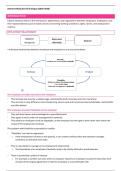
EMPLOYMENT RELATIONSHIP
= Individual relationship between employee and employer as a structural problem
The employer provides security to the employee
- This includes job security, a stable wage, and benefits (both monetary and non-monetary)
- This security is a key diCerence from freelancing, where work and income are less predictable, and benefits
are often absent
The employee provides flexibility to the employer
- They sell their labour and knowledge for a specified period
- They agree to work under the management's authority
- This means an employee must be adaptable, as the employer has the right to direct their work within the
scope of the employment contract
The problem with flexibility is potential for conflict
- "Flexibility" can lead to vagueness
o If the employment contract is not specific, it can create conflicts when the employer changes
conditions or demands new tasks
- This is a key detail to manage in the employment relationship
o The boundaries of an employee's flexibility need to be clearly defined to avoid disputes
- There is a potential conflict of interest
o For example, a conflict can arise when an employer requires an employee to perform tasks that were
not part of the original agreement or that the employee is uncomfortable with
,- Even voluntary agreements can cause conflict
o Although an employment contract is signed voluntarily by both parties, the inherent power imbalance
and vague terms can still be a source of significant conflict later on
At the collective level, employers are represented by employer associations or representatives, who negotiate
and discuss issues with employee representatives or trade unions
- The focus is on collective agreements, not on individual labour contracts.
- These agreements apply to all employees covered by the agreement
- A third actor in social dialogue is the state, which plays an important role in shaping and supporting the
process
o Social dialogue does not only take place at the company level – it can also occur at the sectoral or even
the national level
o The state actively participates in social dialogue, ensuring regulation, mediation, and sometimes direct
involvement in negotiations
SOCIAL DIALOGUE
= an attempt to pacify the employment relationship by institutionalizing the conflict à political, social
= an attempt to rebalance unequal power relation through collective voice à individual, HR
= an attempt to regulate the labour market, through collective bargaining à economic
INSTITUTIONALIZE CONFLICT
Around 1886, workers faced exploitation and poor working conditions, leading to violent uprisings
- Later, in the 1960s, large-scale national strikes took place
- To avoid violence, deaths, and social unrest, a framework of agreements was developed between
employers and employees
- Social dialogue emerged as a way to institutionalize conflict, turning open confrontation into structured
negotiation
- Its aim is to pacify and regulate the relationship between employers and employees through collective
bargaining and mediation.
2
,COLLECTIVE VOICE
= refers to the ways in which employees (or members of any group) express their opinions, concerns,
suggestions, or grievances together as a group rather than individually. It’s about having a shared platform or
mechanism to communicate with management or decision-makers, usually to improve working conditions,
policies, or organizational practices.
Example: At the end of the course, there is an exam → illustrates the unequal power relationship between
teacher and student.
- Similarly, in a company, the employer holds power (e.g., can fire employees, change their oCice, or alter
their job)
- Because of this power inequality, individuals are often reluctant to complain directly
- Social dialogue addresses this by shifting issues to the collective level (e.g., through student
representatives or worker representatives)
o This provides a sense of security, since the authority (teacher/employer) does not know who
specifically raised the complaint
o The aim is to make the relationship more balanced and to improve communication and trust between
the two parties
REGULATE LABOUR MARKET
Sectoral / National Level
- Without regulations, companies tend to compete by lowering workers’ wages – paying as little as possible
- Competition is good when it focuses on positive factors, e.g., innovation
- Bad competition occurs when it is based solely on lowering wages
Role of Parliament
- Sets rules such as maximum working hours and minimum wages
- Companies can compete, but only within certain limits set by law
Role of Trade Unions / Collective Bargaining
- Workers negotiate collectively to improve conditions and wages
- Parliament members may not have detailed knowledge of specific jobs, but workers do
- Collective bargaining ensures that worker expertise and needs are represented in agreements
3
, FRAMES OF REFERENCE IN SOCIAL DIALOGUE
INTRODUCTION
Perception of a company
- Your assumptions about a company shape how you view it
- Your point of view influences your perception of reality, which in turn aCects your
actions
- DiCerent perceptions can lead to misunderstandings or problems
The diKerent perspectives
Unitarist
- Sees the company as a team. Everyone has a diCerent role, but ultimately everyone works toward the same
goal
- Emphasizes communication and shared (unitary) interests
- Conflict is seen as a problem because it disrupts communication.
Pluralist
- Sees the company as a football match between two teams: employees and employers
- Sometimes interests align, but there are also diCerent interests – plural interests exist in the firm
- Conflict is normal and part of the “game”
- Important to institutionalize conflict through rules and negotiation
Radical
- Sees an unequal playing field between two teams: the employer (more power) and employees (less power)
- Conflict is inevitable due to power imbalance
- Rules alone cannot ensure fairness; structural change or struggle is needed to fight exploitation
Individualist
- Sees everyone as their own player, not part of a team
- Interests may sometimes align, but conflict is normal and expected
- No need to regulate extensively; if there’s a problem, individuals can simply leave
UNITARIST FRAME OF REFERENCE / PERSPECTIVE
Basic Idea
- Unitary interests, but with diCerent roles
- Property rights → management rights.
4
INTRODUCTION
Labour relations refers to the interactions, agreements, and negotiations between employers, employees, and
their representatives (such as trade unions) concerning working conditions, rights, duties, and employment
matters.
EMPLOYMENT RELATIONSHIP
= Individual relationship between employee and employer as a structural problem
The employer provides security to the employee
- This includes job security, a stable wage, and benefits (both monetary and non-monetary)
- This security is a key diCerence from freelancing, where work and income are less predictable, and benefits
are often absent
The employee provides flexibility to the employer
- They sell their labour and knowledge for a specified period
- They agree to work under the management's authority
- This means an employee must be adaptable, as the employer has the right to direct their work within the
scope of the employment contract
The problem with flexibility is potential for conflict
- "Flexibility" can lead to vagueness
o If the employment contract is not specific, it can create conflicts when the employer changes
conditions or demands new tasks
- This is a key detail to manage in the employment relationship
o The boundaries of an employee's flexibility need to be clearly defined to avoid disputes
- There is a potential conflict of interest
o For example, a conflict can arise when an employer requires an employee to perform tasks that were
not part of the original agreement or that the employee is uncomfortable with
,- Even voluntary agreements can cause conflict
o Although an employment contract is signed voluntarily by both parties, the inherent power imbalance
and vague terms can still be a source of significant conflict later on
At the collective level, employers are represented by employer associations or representatives, who negotiate
and discuss issues with employee representatives or trade unions
- The focus is on collective agreements, not on individual labour contracts.
- These agreements apply to all employees covered by the agreement
- A third actor in social dialogue is the state, which plays an important role in shaping and supporting the
process
o Social dialogue does not only take place at the company level – it can also occur at the sectoral or even
the national level
o The state actively participates in social dialogue, ensuring regulation, mediation, and sometimes direct
involvement in negotiations
SOCIAL DIALOGUE
= an attempt to pacify the employment relationship by institutionalizing the conflict à political, social
= an attempt to rebalance unequal power relation through collective voice à individual, HR
= an attempt to regulate the labour market, through collective bargaining à economic
INSTITUTIONALIZE CONFLICT
Around 1886, workers faced exploitation and poor working conditions, leading to violent uprisings
- Later, in the 1960s, large-scale national strikes took place
- To avoid violence, deaths, and social unrest, a framework of agreements was developed between
employers and employees
- Social dialogue emerged as a way to institutionalize conflict, turning open confrontation into structured
negotiation
- Its aim is to pacify and regulate the relationship between employers and employees through collective
bargaining and mediation.
2
,COLLECTIVE VOICE
= refers to the ways in which employees (or members of any group) express their opinions, concerns,
suggestions, or grievances together as a group rather than individually. It’s about having a shared platform or
mechanism to communicate with management or decision-makers, usually to improve working conditions,
policies, or organizational practices.
Example: At the end of the course, there is an exam → illustrates the unequal power relationship between
teacher and student.
- Similarly, in a company, the employer holds power (e.g., can fire employees, change their oCice, or alter
their job)
- Because of this power inequality, individuals are often reluctant to complain directly
- Social dialogue addresses this by shifting issues to the collective level (e.g., through student
representatives or worker representatives)
o This provides a sense of security, since the authority (teacher/employer) does not know who
specifically raised the complaint
o The aim is to make the relationship more balanced and to improve communication and trust between
the two parties
REGULATE LABOUR MARKET
Sectoral / National Level
- Without regulations, companies tend to compete by lowering workers’ wages – paying as little as possible
- Competition is good when it focuses on positive factors, e.g., innovation
- Bad competition occurs when it is based solely on lowering wages
Role of Parliament
- Sets rules such as maximum working hours and minimum wages
- Companies can compete, but only within certain limits set by law
Role of Trade Unions / Collective Bargaining
- Workers negotiate collectively to improve conditions and wages
- Parliament members may not have detailed knowledge of specific jobs, but workers do
- Collective bargaining ensures that worker expertise and needs are represented in agreements
3
, FRAMES OF REFERENCE IN SOCIAL DIALOGUE
INTRODUCTION
Perception of a company
- Your assumptions about a company shape how you view it
- Your point of view influences your perception of reality, which in turn aCects your
actions
- DiCerent perceptions can lead to misunderstandings or problems
The diKerent perspectives
Unitarist
- Sees the company as a team. Everyone has a diCerent role, but ultimately everyone works toward the same
goal
- Emphasizes communication and shared (unitary) interests
- Conflict is seen as a problem because it disrupts communication.
Pluralist
- Sees the company as a football match between two teams: employees and employers
- Sometimes interests align, but there are also diCerent interests – plural interests exist in the firm
- Conflict is normal and part of the “game”
- Important to institutionalize conflict through rules and negotiation
Radical
- Sees an unequal playing field between two teams: the employer (more power) and employees (less power)
- Conflict is inevitable due to power imbalance
- Rules alone cannot ensure fairness; structural change or struggle is needed to fight exploitation
Individualist
- Sees everyone as their own player, not part of a team
- Interests may sometimes align, but conflict is normal and expected
- No need to regulate extensively; if there’s a problem, individuals can simply leave
UNITARIST FRAME OF REFERENCE / PERSPECTIVE
Basic Idea
- Unitary interests, but with diCerent roles
- Property rights → management rights.
4


