9️⃣
Organization structure
Finished
1. Fundamentals of organizing
2.Organization structure: 2 dimensions
2.1 Vertical Dimension
2.2 The Horizontal Dimension
1. Fundamentals of organizing
⇒ Organization structure shows how in an org reporting takes place, responsibilities are assigned & how tasks and activities are
divided
⇒ the structure is aligned with the org’s goals & mission, as part of the strategy
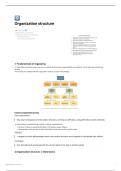
Example of organization chart: visualization of the structure
Features of organization structure
Internal differentiation
how org is composed of units and/or divisions, working on diff tasks, using diff skilss & work methods
⇒ differentiation is created through division of labour & specialization
→ Division of labour is assigning diff tasks to diff people, groups & teams
→ Specialization is the process in which individuals & units each perform specific tasks
Integration
= degree to which differentiated work units and/or divisions work together & coordinate their efforts
Coordination
how procedures & processes link the various parts of an org, to achieve goals
2.Organization structure: 2 dimensions
Organization structure 1
, 2.1 Vertical Dimension
Authority in organizations
⇒ it’s the legitimate right to make decisions on resources & to tell other people what to do
Responsibility
⇒ obligation to carry out tasks correctly, it’s the glue within the hierarchy
Hierarchy
⇒ the diff authority levels, from high to low, that indicate who is accountable to who
The delegation of authority
1. Shareholders
→ They review & approve the financial performance ( annual accounts, allocation of profits or losses,…)
→ they elect or remove directors
→ they appoint the external auditors, they approve corporate management changes, mergers,….
→ they approve the dissolution of the company & any other topics required by law
2. Board of Directors (BoD)
→ They are appointed by the shareholders & consist of the chairperson & the directors
2 types of directors
⇒ Inside directors are the top executives ( management team)
⇒ outside/external directors r independent, play an important role at publicly listed companies
Tasks of BoD
⇒ selecting, assessing, rewarding & if needed replacing the CEO
⇒ determining the firm’s strategic direction & reviewing financial performance
⇒ ensuring ethical socially responsible & legal conduct ( corporate governance)
3. Management
→ CEO, COO, CFO, CIO
→ The CEO is the top of the organizational pyramid, personally accountable to the board & the owners for the org’s performance
→ at some corps, CEO & chair is one person
Corporate governance
⇒ Role of top management team & BoD on how org is to attain goals & translate them towards stakeholders’ interests
⇒ this implies seperate positions of CEO & BoD chair, to avoid excessive dominance CEO
Span of control
⇒ the number of managers/employees a manager manages in first line
Organization structure 2
Organization structure
Finished
1. Fundamentals of organizing
2.Organization structure: 2 dimensions
2.1 Vertical Dimension
2.2 The Horizontal Dimension
1. Fundamentals of organizing
⇒ Organization structure shows how in an org reporting takes place, responsibilities are assigned & how tasks and activities are
divided
⇒ the structure is aligned with the org’s goals & mission, as part of the strategy
Example of organization chart: visualization of the structure
Features of organization structure
Internal differentiation
how org is composed of units and/or divisions, working on diff tasks, using diff skilss & work methods
⇒ differentiation is created through division of labour & specialization
→ Division of labour is assigning diff tasks to diff people, groups & teams
→ Specialization is the process in which individuals & units each perform specific tasks
Integration
= degree to which differentiated work units and/or divisions work together & coordinate their efforts
Coordination
how procedures & processes link the various parts of an org, to achieve goals
2.Organization structure: 2 dimensions
Organization structure 1
, 2.1 Vertical Dimension
Authority in organizations
⇒ it’s the legitimate right to make decisions on resources & to tell other people what to do
Responsibility
⇒ obligation to carry out tasks correctly, it’s the glue within the hierarchy
Hierarchy
⇒ the diff authority levels, from high to low, that indicate who is accountable to who
The delegation of authority
1. Shareholders
→ They review & approve the financial performance ( annual accounts, allocation of profits or losses,…)
→ they elect or remove directors
→ they appoint the external auditors, they approve corporate management changes, mergers,….
→ they approve the dissolution of the company & any other topics required by law
2. Board of Directors (BoD)
→ They are appointed by the shareholders & consist of the chairperson & the directors
2 types of directors
⇒ Inside directors are the top executives ( management team)
⇒ outside/external directors r independent, play an important role at publicly listed companies
Tasks of BoD
⇒ selecting, assessing, rewarding & if needed replacing the CEO
⇒ determining the firm’s strategic direction & reviewing financial performance
⇒ ensuring ethical socially responsible & legal conduct ( corporate governance)
3. Management
→ CEO, COO, CFO, CIO
→ The CEO is the top of the organizational pyramid, personally accountable to the board & the owners for the org’s performance
→ at some corps, CEO & chair is one person
Corporate governance
⇒ Role of top management team & BoD on how org is to attain goals & translate them towards stakeholders’ interests
⇒ this implies seperate positions of CEO & BoD chair, to avoid excessive dominance CEO
Span of control
⇒ the number of managers/employees a manager manages in first line
Organization structure 2