Animals review
Chapter 10
The digestive system
Overview of the Digestive system
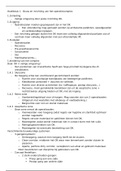
- When food enters the mouth, the mouth chews the food and mixes it with saliva to form
a bolus
- Then food goes down the esophagus, where through muscle contractions it push the
food down to the stomach
- When the food reaches the stomach, through muscle contractions, it mixes the food
with gastric juices and acid to help breakdown the food into smaller pieces
- Then food moves into the small intestine, where the liver sends bile and the pancreas
sends pancreatic juices into the small intestine through the glands to help breakdown the
food, surface area increases to help with the absorption of nutrients through the villi
- the undigested material moves into the large intestine
- The large intestine absorbs water and compacts the undigested material, now called
feces and moves it into the rectum
- The feces stays in the rectum temporarily and leaves through the anus
● Above the stomach is the liver that sends bile into the small intestine
● Below the stomach is the pancreas that sends pancreatic juices into the small intestine
Physical digestion
- The mechanical breakdown of food into smaller pieces
● The mouth chews the food
● The stomach grinds up the food
● The small intestine bile the food
Chemical digestion
- Enzymes help break down the food
● The mouth mixes food with saliva
● The stomach mixes food with gastric juices
● The small intestines mixes food with bile and pancreatic juices
4 differences ways animals feed themselves
- Filter feeding
- Substrate feeding
- Bulk feeding
- Fluid feeding
,Chapter 11
The Respiratory System
Overview of the Respiratory system
Breathing: Involves inhalation and exhalation of air from outside into the lungs
External respiration: the exchange of gasses between the lungs and the blood
internal respiration: the exchange of gasses between the blood and body tissues
Cellular respiration: a series of chemical reactions that takes oxygen for energy and releases
carbon dioxide as waste.
Every respiratory system requires
- A surface area large enough so that the rate of gas exchange can meet the individual
metabolic needs
- A moist environment so gasses can dissolve
Larger Organisms
- They require more energy as it needs to travel further to reach cells
- Circulatory system is the main transport system
● Gas exchange occurs in the alveoli
- The greater the surface area the more gas exchange occurs
- The alveoli expands as oxygen enters the capillaries so gas exchange occur to meet the
metabolic needs of the individual
Chapter 12
The circulatory system
Heartbeat
- The heart beats regularly because it has its own pacemaker called the Sinoatrial (SA).
The impulse triggers both atria to contract.
- The impulse triggers the atrioventricular (AV) in which triggers both ventricles to contract
and pump blood
,Arteries
- They are protected from injuries y being located the bones
- They bulge as blood is flowing and returns to normal shape
Veins
- Veins have valves that help pump blood to flow uphill against gravity and to prevent
backflow
Capillaries
- They are tiny and narrow vessels
Correlative system
Open system
- open system do not have vessels and are more primitive
- Eg grasshoppers
Closed system
- Closed system have blood vessels and the entire system is contained separately from
the rest of the body
Chambers of the heart
- 2 chambered heart has one loop
- 3 and 4 chambered heart has a double loop
- Our 4 chambered hearts keeps the oxygenated and deoxygenated oxygen separate, this
allows efficient transport of oxygen to tissues
The composition of blood
The solid portion 44%
- Red and white blood cells
- Platelets
The fluid portion 55%
- Water
- Dissolves gasses
- Proteins
- Sugar
- Vitamins
- Minerals
- Waste
, 3 basic functions of the circulatory system
● Transportation of materials
● Regulation of internal temperature
● Protection against blood loss
Test review
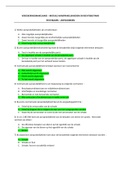
● The main function of the large intestine is to absorb water
● Plasma carries dissolved nutrients and waste
● During inhalation, muscle contracts and pulls the diaphragm downward
● What causes blood to move in the veins against gravity is contraction of skeletal
muscles
Chapter 10
The digestive system
Overview of the Digestive system
- When food enters the mouth, the mouth chews the food and mixes it with saliva to form
a bolus
- Then food goes down the esophagus, where through muscle contractions it push the
food down to the stomach
- When the food reaches the stomach, through muscle contractions, it mixes the food
with gastric juices and acid to help breakdown the food into smaller pieces
- Then food moves into the small intestine, where the liver sends bile and the pancreas
sends pancreatic juices into the small intestine through the glands to help breakdown the
food, surface area increases to help with the absorption of nutrients through the villi
- the undigested material moves into the large intestine
- The large intestine absorbs water and compacts the undigested material, now called
feces and moves it into the rectum
- The feces stays in the rectum temporarily and leaves through the anus
● Above the stomach is the liver that sends bile into the small intestine
● Below the stomach is the pancreas that sends pancreatic juices into the small intestine
Physical digestion
- The mechanical breakdown of food into smaller pieces
● The mouth chews the food
● The stomach grinds up the food
● The small intestine bile the food
Chemical digestion
- Enzymes help break down the food
● The mouth mixes food with saliva
● The stomach mixes food with gastric juices
● The small intestines mixes food with bile and pancreatic juices
4 differences ways animals feed themselves
- Filter feeding
- Substrate feeding
- Bulk feeding
- Fluid feeding
,Chapter 11
The Respiratory System
Overview of the Respiratory system
Breathing: Involves inhalation and exhalation of air from outside into the lungs
External respiration: the exchange of gasses between the lungs and the blood
internal respiration: the exchange of gasses between the blood and body tissues
Cellular respiration: a series of chemical reactions that takes oxygen for energy and releases
carbon dioxide as waste.
Every respiratory system requires
- A surface area large enough so that the rate of gas exchange can meet the individual
metabolic needs
- A moist environment so gasses can dissolve
Larger Organisms
- They require more energy as it needs to travel further to reach cells
- Circulatory system is the main transport system
● Gas exchange occurs in the alveoli
- The greater the surface area the more gas exchange occurs
- The alveoli expands as oxygen enters the capillaries so gas exchange occur to meet the
metabolic needs of the individual
Chapter 12
The circulatory system
Heartbeat
- The heart beats regularly because it has its own pacemaker called the Sinoatrial (SA).
The impulse triggers both atria to contract.
- The impulse triggers the atrioventricular (AV) in which triggers both ventricles to contract
and pump blood
,Arteries
- They are protected from injuries y being located the bones
- They bulge as blood is flowing and returns to normal shape
Veins
- Veins have valves that help pump blood to flow uphill against gravity and to prevent
backflow
Capillaries
- They are tiny and narrow vessels
Correlative system
Open system
- open system do not have vessels and are more primitive
- Eg grasshoppers
Closed system
- Closed system have blood vessels and the entire system is contained separately from
the rest of the body
Chambers of the heart
- 2 chambered heart has one loop
- 3 and 4 chambered heart has a double loop
- Our 4 chambered hearts keeps the oxygenated and deoxygenated oxygen separate, this
allows efficient transport of oxygen to tissues
The composition of blood
The solid portion 44%
- Red and white blood cells
- Platelets
The fluid portion 55%
- Water
- Dissolves gasses
- Proteins
- Sugar
- Vitamins
- Minerals
- Waste
, 3 basic functions of the circulatory system
● Transportation of materials
● Regulation of internal temperature
● Protection against blood loss
Test review
● The main function of the large intestine is to absorb water
● Plasma carries dissolved nutrients and waste
● During inhalation, muscle contracts and pulls the diaphragm downward
● What causes blood to move in the veins against gravity is contraction of skeletal
muscles