BTEC Level 3 National Diploma in Applied Science
Unit 6 – Investigative Project
Assignment 2 – Project Planning
Title: The effect of stimulants on the rate of reaction within humans
Introduction:
Reflexes:
A reflex is an automatic, involuntary response to a specific stimulus that occurs without
conscious thought. It is a rapid action mediated by the nervous system, typically designed to
protect the body from harm or to maintain homeostasis. Reflexes are initiated by sensory
receptors, which detect changes in the environment (such as heat, pressure, or light) and
send signals through sensory neurons to the spinal cord or brainstem. From there, the
response is processed and transmitted via motor neurons to the appropriate muscles or
glands, triggering a reaction, like pulling your hand away from a hot surface. Reflexes are
essential for quick, protective actions that don’t require deliberate decision-making.
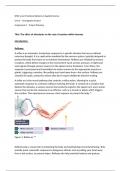
A reflex arc is the neural pathway that controls a reflex action, allowing for a quick,
automatic response to a stimulus without involving the brain. It consists of a receptor that
detects the stimulus, a sensory neuron that sends the signal to the spinal cord, and a motor
neuron that carries the response to an effector, such as a muscle or gland, which triggers
the reaction. This rapid process ensures a fast response to protect the body [4].
Figure 1: Reflex arc [4]
Reflexes play a crucial role in protecting the body and maintaining normal functioning. They
provide quick, automatic responses to dangerous stimuli, such as pulling your hand away
from a hot surface, to prevent injury. Reflexes also help maintain balance and posture,
,automatically adjusting your body to avoid falling. In addition, they regulate involuntary
body functions like heart rate, breathing, and digestion, ensuring the body maintains
homeostasis. Reflexes are essential for survival, as they protect vital organs through actions
like blinking or coughing to remove foreign objects [4].
How electrical impulses pass along nerves:
The transmission of electrical impulses along nerves begins with the neuron’s resting
potential, typically around -70 mV, which is maintained by the sodium-potassium pump.
This pump actively moves three sodium ions out of the cell and two potassium ions into the
cell, creating a negative charge inside the neuron relative to the outside.
When a neuron is activated, sodium channels that are controlled by voltage open,
permitting sodium ions to enter the cell. This influx of positive ions depolarize the
membrane. If the depolarisation reaches a certain threshold, an action potential is
generated. The action potential then propagates down the axon, with the depolarisation
triggering adjacent sodium channels to open. In myelinated axons, this process is faster
because the myelin sheath insulates the axon, allowing impulses to jump between nodes of
Ranvier in a process known as saltatory conduction.
Following the peak of the action potential, voltage-gated potassium channels open,
permitting potassium ions to exit the cell. This movement helps return the membrane
potential to its resting state. As the potassium channels close, the sodium channels also
inactivate, leading to repolarisation.
During the refractory period, the neuron cannot generate another action potential
immediately. This period allows the membrane potential to return to its resting state and
involves temporary hyperpolarization, where the membrane potential becomes more
negative than its usual resting level. The sodium-potassium pump continues to restore the
original distribution of ions, ensuring the neuron is ready for subsequent impulses.
This coordinated sequence of events enables rapid and efficient communication between
neurons and other cells throughout the nervous system [5].
Factors affecting the rate of nervous transmission/speed of reflexes:
The rate of nervous transmission and the speed of reflexes are influenced by several key
factors.
, 1. Myelination: Myelin is a fatty substance that insulates axons and speeds up nerve
impulse transmission. In myelinated axons, action potentials jump between nodes of
Ranvier, a process known as saltatory conduction, which is much faster than the
continuous conduction seen in unmyelinated axons. The presence of myelin
significantly enhances the speed of nervous transmission.
2. Axon Diameter: The diameter of the axon affects the speed of impulse conduction.
Larger-diameter axons offer less resistance to the flow of ions and thus conduct
impulses more quickly. This is because a greater diameter allows for more rapid
movement of electrical charges along the axon.
3. Temperature: Temperature can influence the speed of nerve impulses. Higher
temperatures generally increase the rate of nerve impulses by accelerating the
movement of ions across the membrane and enhancing enzyme activity involved in
neurotransmitter release. Conversely, lower temperatures slow down nerve impulse
transmission.
4. Neurotransmitter Levels: The amount and type of neurotransmitters released at
synapses affect how quickly signals are transmitted between neurons. Higher
concentrations of neurotransmitters can lead to faster signal transmission by
increasing the likelihood of receptor activation on the postsynaptic neuron.
Variations in neurotransmitter types and receptor sensitivity also play a role in the
efficiency of synaptic transmission.
5. Synaptic Delay: The time it takes for a signal to cross a synapse can affect the overall
speed of reflexes. This synaptic delay is influenced by the type of synapse (chemical
vs. electrical) and the efficiency of neurotransmitter release and receptor binding.
Chemical synapses, which use neurotransmitters, generally have a slight delay
compared to electrical synapses that allow direct ionic flow between neurons.
6. Health of the Nervous System: The overall health of the nervous system can impact
the speed of nerve impulses. Factors such as damage to myelin (as seen in multiple
sclerosis), neurodegenerative diseases, or peripheral nerve injuries can impair the
speed of transmission and reflexes.
Each of these factors plays a crucial role in determining how quickly and efficiently nervous
signals are transmitted throughout the nervous system, ultimately influencing the speed of
reflexes and overall neural communication [6].
Unit 6 – Investigative Project
Assignment 2 – Project Planning
Title: The effect of stimulants on the rate of reaction within humans
Introduction:
Reflexes:
A reflex is an automatic, involuntary response to a specific stimulus that occurs without
conscious thought. It is a rapid action mediated by the nervous system, typically designed to
protect the body from harm or to maintain homeostasis. Reflexes are initiated by sensory
receptors, which detect changes in the environment (such as heat, pressure, or light) and
send signals through sensory neurons to the spinal cord or brainstem. From there, the
response is processed and transmitted via motor neurons to the appropriate muscles or
glands, triggering a reaction, like pulling your hand away from a hot surface. Reflexes are
essential for quick, protective actions that don’t require deliberate decision-making.
A reflex arc is the neural pathway that controls a reflex action, allowing for a quick,
automatic response to a stimulus without involving the brain. It consists of a receptor that
detects the stimulus, a sensory neuron that sends the signal to the spinal cord, and a motor
neuron that carries the response to an effector, such as a muscle or gland, which triggers
the reaction. This rapid process ensures a fast response to protect the body [4].
Figure 1: Reflex arc [4]
Reflexes play a crucial role in protecting the body and maintaining normal functioning. They
provide quick, automatic responses to dangerous stimuli, such as pulling your hand away
from a hot surface, to prevent injury. Reflexes also help maintain balance and posture,
,automatically adjusting your body to avoid falling. In addition, they regulate involuntary
body functions like heart rate, breathing, and digestion, ensuring the body maintains
homeostasis. Reflexes are essential for survival, as they protect vital organs through actions
like blinking or coughing to remove foreign objects [4].
How electrical impulses pass along nerves:
The transmission of electrical impulses along nerves begins with the neuron’s resting
potential, typically around -70 mV, which is maintained by the sodium-potassium pump.
This pump actively moves three sodium ions out of the cell and two potassium ions into the
cell, creating a negative charge inside the neuron relative to the outside.
When a neuron is activated, sodium channels that are controlled by voltage open,
permitting sodium ions to enter the cell. This influx of positive ions depolarize the
membrane. If the depolarisation reaches a certain threshold, an action potential is
generated. The action potential then propagates down the axon, with the depolarisation
triggering adjacent sodium channels to open. In myelinated axons, this process is faster
because the myelin sheath insulates the axon, allowing impulses to jump between nodes of
Ranvier in a process known as saltatory conduction.
Following the peak of the action potential, voltage-gated potassium channels open,
permitting potassium ions to exit the cell. This movement helps return the membrane
potential to its resting state. As the potassium channels close, the sodium channels also
inactivate, leading to repolarisation.
During the refractory period, the neuron cannot generate another action potential
immediately. This period allows the membrane potential to return to its resting state and
involves temporary hyperpolarization, where the membrane potential becomes more
negative than its usual resting level. The sodium-potassium pump continues to restore the
original distribution of ions, ensuring the neuron is ready for subsequent impulses.
This coordinated sequence of events enables rapid and efficient communication between
neurons and other cells throughout the nervous system [5].
Factors affecting the rate of nervous transmission/speed of reflexes:
The rate of nervous transmission and the speed of reflexes are influenced by several key
factors.
, 1. Myelination: Myelin is a fatty substance that insulates axons and speeds up nerve
impulse transmission. In myelinated axons, action potentials jump between nodes of
Ranvier, a process known as saltatory conduction, which is much faster than the
continuous conduction seen in unmyelinated axons. The presence of myelin
significantly enhances the speed of nervous transmission.
2. Axon Diameter: The diameter of the axon affects the speed of impulse conduction.
Larger-diameter axons offer less resistance to the flow of ions and thus conduct
impulses more quickly. This is because a greater diameter allows for more rapid
movement of electrical charges along the axon.
3. Temperature: Temperature can influence the speed of nerve impulses. Higher
temperatures generally increase the rate of nerve impulses by accelerating the
movement of ions across the membrane and enhancing enzyme activity involved in
neurotransmitter release. Conversely, lower temperatures slow down nerve impulse
transmission.
4. Neurotransmitter Levels: The amount and type of neurotransmitters released at
synapses affect how quickly signals are transmitted between neurons. Higher
concentrations of neurotransmitters can lead to faster signal transmission by
increasing the likelihood of receptor activation on the postsynaptic neuron.
Variations in neurotransmitter types and receptor sensitivity also play a role in the
efficiency of synaptic transmission.
5. Synaptic Delay: The time it takes for a signal to cross a synapse can affect the overall
speed of reflexes. This synaptic delay is influenced by the type of synapse (chemical
vs. electrical) and the efficiency of neurotransmitter release and receptor binding.
Chemical synapses, which use neurotransmitters, generally have a slight delay
compared to electrical synapses that allow direct ionic flow between neurons.
6. Health of the Nervous System: The overall health of the nervous system can impact
the speed of nerve impulses. Factors such as damage to myelin (as seen in multiple
sclerosis), neurodegenerative diseases, or peripheral nerve injuries can impair the
speed of transmission and reflexes.
Each of these factors plays a crucial role in determining how quickly and efficiently nervous
signals are transmitted throughout the nervous system, ultimately influencing the speed of
reflexes and overall neural communication [6].