Chapter Four- Choices and Actions
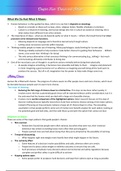
What We Do And What It Means
➢ Human behaviour is often guided by ideas, which is to say that it depends on meanings.
o Based on concepts or ideas such as laws, plans, religious duties, flexible schedules or promises.
o Culture is a network of meaning, and human beings who live in culture act based on meaning; this is
what makes them different from other animals.
➢ The importance of ideas – what you do depends partly on what it means – reflects the broad theme that inner
processes serve interpersonal functions.
o Meaning depends on language and is therefore learned only through culture.
o Letting social conscience override selfish impulses.
➢ Thinking enables people to make use of meaning. Many psychologists study thinking for its own sake.
o Thinking probably evolved to help creatures make better choices for guiding their behaviour. - William
James, once wrote that ‘thinking is for doing’.
o The only serious alternative is that conscious thinking is for communicating (e.g., talking) – but much
communicating ultimately contributes to doing also.
➢ One of the most basic uses of thought is to perform actions mentally before doing them physically
o As people imagine something, it becomes more plausible and likely to them. - Imagine and placement
in mind. Imagining a good outcome isn’t as effective as imagining yourself doing all the hard work to
produce the success. But all in all, imagination has the power to help make things come true.
Making Choices
Human life is filled with choices. The progress of culture seems to offer people more and more choices, which must
be desirable because people seem to want more choices.
Two steps of choosing:
1. Reducing the full range of choices down to a limited few. This step can be done rather quickly. It
involves some risk that a potentially good choice will be rejected without careful consideration, but it is
the only way that the human mind can deal with a large set of possible choices.
2. Involves more careful comparison of the highlighted options. Most research focuses on this step of
decision making because typically researchers study how someone chooses among a few major options,
instead of focusing on how someone reduces a large set of choices down to a few. The prevailing
assumption is that people perform some sort of mental cost–benefit analysis for each option, looking at
the potential good and bad sides, and then add these up and pick the option that comes out best.
Influences on Choice:
These are some of the major patterns that guide people’s choices:
• Risk aversion.
o Researchers found that people were often rational, but when they were not, their irrational
behaviour was aimed at avoiding losses more often than pursuing gains.
o People seemed more worried about losing than they were attracted by the possibility of winning.
• Temporal discounting.
o What happens right now weighs more heavily than what might happen in the future.
• The certainty effect.
o Some features of a decision involve possibilities and odds, whereas others are certain.
o People tend to place undue weight on definite outcomes to ensure they are safe .
o Such processes complicate many decisions about environmental and safety regulations because
complete and perfect safety is quite difficult to achieve
• Keeping options open.
o Some people prefer to postpone hard decisions and keep their options open as long as possible.
, Why People don’t choose
Postponing decisions may be part of a broader pattern called decision avoidance.
STATUS QUO BIAS a simple preference to keep things the way they are instead of
changing.
The new one is unknown and might have unforeseen problems.
People often stick with what they have, even when the alternatives
might be better.
OMISSION BIAS taking whatever course of action does not require you to do
anything (also called the default option). The omission bias means
that many people will do nothing – they will do whatever is the
default option.
ANTICIPATED REGRET People avoid making choices and taking actions that they fear they
will regret later on.
Apparently people anticipate less regret over doing nothing than
over doing something.
They also know the status quo better than the alternatives, so
there is a greater risk of regret if you decide to change than if you
stand put.
DECISIONS ARE TOO DIFFICULT Some theorists have proposed that modern life offers too many
choices.
Subsequent work has not found that people always pull back from
too many choices.
People like to have many options.
Across many different circumstances, there is no general pattern
that having more options leads to more avoidance of decisions.
Sometimes having too few choices makes people reluctant to
choose
As the number of options increases, it is less and less plausible that
none is good enough – but it gets harder and harder to be sure
you’ve chosen the best one.
Reactance
The interest in preserving options is the core of an important psychological theory that has held up well over several
decades.
Reactance theory was first proposed by social psychologist Jack Brehm. It has much in common with the common
notion of ‘reverse psychology’. The central point of reactance theory is that people desire to have freedom of choice
and therefore have a negative, aversive reaction to having some of their choices or options taken away by other
people or by external forces.
• The term reactance refers specifically to the negative feelings people have when their freedom is reduced.
• Reactance produces three main consequences:
1. It makes you want the forbidden 2. Reactance may make you take steps 3. You may feel or act
option more and/or makes it seem to try to reclaim the lost option, aggressively toward the
more attractive. (if you weren’t sure often described as ‘reasserting your person who has restricted
you wanted to see the concert, being freedom’. (you may try to sneak into your freedom.
told that you can’t see it may the concert after all.)
increase your desire to see it and
make you think it is likely to be a
really good one.)
• The findings on reactance bring up the broader issues of free will and freedom of action. Regardless of whether
someone believes in free will as a genuine phenomenon, one cannot dispute the fact that people are sensitive to how
much freedom of choice they have.
• Reactance theory emphasises that people are motivated to gain and preserve choices. Having some of their
choices taken away by someone else or some external event produces a very negative reaction in most people
What We Do And What It Means
➢ Human behaviour is often guided by ideas, which is to say that it depends on meanings.
o Based on concepts or ideas such as laws, plans, religious duties, flexible schedules or promises.
o Culture is a network of meaning, and human beings who live in culture act based on meaning; this is
what makes them different from other animals.
➢ The importance of ideas – what you do depends partly on what it means – reflects the broad theme that inner
processes serve interpersonal functions.
o Meaning depends on language and is therefore learned only through culture.
o Letting social conscience override selfish impulses.
➢ Thinking enables people to make use of meaning. Many psychologists study thinking for its own sake.
o Thinking probably evolved to help creatures make better choices for guiding their behaviour. - William
James, once wrote that ‘thinking is for doing’.
o The only serious alternative is that conscious thinking is for communicating (e.g., talking) – but much
communicating ultimately contributes to doing also.
➢ One of the most basic uses of thought is to perform actions mentally before doing them physically
o As people imagine something, it becomes more plausible and likely to them. - Imagine and placement
in mind. Imagining a good outcome isn’t as effective as imagining yourself doing all the hard work to
produce the success. But all in all, imagination has the power to help make things come true.
Making Choices
Human life is filled with choices. The progress of culture seems to offer people more and more choices, which must
be desirable because people seem to want more choices.
Two steps of choosing:
1. Reducing the full range of choices down to a limited few. This step can be done rather quickly. It
involves some risk that a potentially good choice will be rejected without careful consideration, but it is
the only way that the human mind can deal with a large set of possible choices.
2. Involves more careful comparison of the highlighted options. Most research focuses on this step of
decision making because typically researchers study how someone chooses among a few major options,
instead of focusing on how someone reduces a large set of choices down to a few. The prevailing
assumption is that people perform some sort of mental cost–benefit analysis for each option, looking at
the potential good and bad sides, and then add these up and pick the option that comes out best.
Influences on Choice:
These are some of the major patterns that guide people’s choices:
• Risk aversion.
o Researchers found that people were often rational, but when they were not, their irrational
behaviour was aimed at avoiding losses more often than pursuing gains.
o People seemed more worried about losing than they were attracted by the possibility of winning.
• Temporal discounting.
o What happens right now weighs more heavily than what might happen in the future.
• The certainty effect.
o Some features of a decision involve possibilities and odds, whereas others are certain.
o People tend to place undue weight on definite outcomes to ensure they are safe .
o Such processes complicate many decisions about environmental and safety regulations because
complete and perfect safety is quite difficult to achieve
• Keeping options open.
o Some people prefer to postpone hard decisions and keep their options open as long as possible.
, Why People don’t choose
Postponing decisions may be part of a broader pattern called decision avoidance.
STATUS QUO BIAS a simple preference to keep things the way they are instead of
changing.
The new one is unknown and might have unforeseen problems.
People often stick with what they have, even when the alternatives
might be better.
OMISSION BIAS taking whatever course of action does not require you to do
anything (also called the default option). The omission bias means
that many people will do nothing – they will do whatever is the
default option.
ANTICIPATED REGRET People avoid making choices and taking actions that they fear they
will regret later on.
Apparently people anticipate less regret over doing nothing than
over doing something.
They also know the status quo better than the alternatives, so
there is a greater risk of regret if you decide to change than if you
stand put.
DECISIONS ARE TOO DIFFICULT Some theorists have proposed that modern life offers too many
choices.
Subsequent work has not found that people always pull back from
too many choices.
People like to have many options.
Across many different circumstances, there is no general pattern
that having more options leads to more avoidance of decisions.
Sometimes having too few choices makes people reluctant to
choose
As the number of options increases, it is less and less plausible that
none is good enough – but it gets harder and harder to be sure
you’ve chosen the best one.
Reactance
The interest in preserving options is the core of an important psychological theory that has held up well over several
decades.
Reactance theory was first proposed by social psychologist Jack Brehm. It has much in common with the common
notion of ‘reverse psychology’. The central point of reactance theory is that people desire to have freedom of choice
and therefore have a negative, aversive reaction to having some of their choices or options taken away by other
people or by external forces.
• The term reactance refers specifically to the negative feelings people have when their freedom is reduced.
• Reactance produces three main consequences:
1. It makes you want the forbidden 2. Reactance may make you take steps 3. You may feel or act
option more and/or makes it seem to try to reclaim the lost option, aggressively toward the
more attractive. (if you weren’t sure often described as ‘reasserting your person who has restricted
you wanted to see the concert, being freedom’. (you may try to sneak into your freedom.
told that you can’t see it may the concert after all.)
increase your desire to see it and
make you think it is likely to be a
really good one.)
• The findings on reactance bring up the broader issues of free will and freedom of action. Regardless of whether
someone believes in free will as a genuine phenomenon, one cannot dispute the fact that people are sensitive to how
much freedom of choice they have.
• Reactance theory emphasises that people are motivated to gain and preserve choices. Having some of their
choices taken away by someone else or some external event produces a very negative reaction in most people