

📍
chapter 11: Pricing Strategy
Type Lecture
Reviewed
NEW PRODUCT PRICING STRATEGIES
Pricing for the introductory stage
pricing strategies usually change as the product passes through its life stage
the introductory stage is especially challenging
two strategies for pricing innovative new products
Marketing-skimming pricing
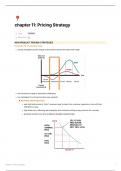
sets high initial prices to “skim” revenues layer by layer from customer segments in line with their
willingness to pay
high initial price, attracting early adopters and customers willing to pay premium for a novelty
gradually lowered over time to attract a broader customer base
chapter 11: Pricing Strategy 1
, often seen in technology markets (smartphones, TVs, gaming consoles) → high initial price, over time
lowered to make the technology more accessible and to reach a wider audience
conditions for market-skimming to make sense:
product quality and image must support the higher price
enough buyers must want the product at that price
budget-conscious consumers will wait for lowered price rather than buying competing product
differentiated product - competitors should not be able to enter the market easily
brand image is strong
the production cost of the small volume at high price cannot be too high
Penetration pricing
involved a low (initial) price for a new product in order to attract a large number of buyers and (quickly
& deeply) win market share
turn consumers into loyal long-term customers
low prices = more demand and boost the customer base
once the company is established, it can increase the prices or try to up-sell and cross-sell
only when a significant market share is reached, prices go up
e-books, streaming services, software
Conditions
high price sensitive market (elastic demand)
production and distribution costs must decrease when sales volume increases
low prices should help keep out competition
more profitable revenue stream in the long-run
chapter 11: Pricing Strategy 2
chapter 11: Pricing Strategy
Type Lecture
Reviewed
NEW PRODUCT PRICING STRATEGIES
Pricing for the introductory stage
pricing strategies usually change as the product passes through its life stage
the introductory stage is especially challenging
two strategies for pricing innovative new products
Marketing-skimming pricing
sets high initial prices to “skim” revenues layer by layer from customer segments in line with their
willingness to pay
high initial price, attracting early adopters and customers willing to pay premium for a novelty
gradually lowered over time to attract a broader customer base
chapter 11: Pricing Strategy 1
, often seen in technology markets (smartphones, TVs, gaming consoles) → high initial price, over time
lowered to make the technology more accessible and to reach a wider audience
conditions for market-skimming to make sense:
product quality and image must support the higher price
enough buyers must want the product at that price
budget-conscious consumers will wait for lowered price rather than buying competing product
differentiated product - competitors should not be able to enter the market easily
brand image is strong
the production cost of the small volume at high price cannot be too high
Penetration pricing
involved a low (initial) price for a new product in order to attract a large number of buyers and (quickly
& deeply) win market share
turn consumers into loyal long-term customers
low prices = more demand and boost the customer base
once the company is established, it can increase the prices or try to up-sell and cross-sell
only when a significant market share is reached, prices go up
e-books, streaming services, software
Conditions
high price sensitive market (elastic demand)
production and distribution costs must decrease when sales volume increases
low prices should help keep out competition
more profitable revenue stream in the long-run
chapter 11: Pricing Strategy 2


