

1. Introductory session & the project, theory
FROM IMPROVISED TO PROJECT-BASED TO ROUTINE
Improvised activities, project-based activities and routine work can be part of the same work
sequence. There is likely to be a lot of initial improvisation when an organization takes on a
new task. As soon as it becomes obvious that the task will have to be repeated, a greater
degree of organization will become necessary. A project that aims at putting things on the
rails properly could then be undertaken. By the end of the project, standard working
procedures will have been developed. Improvisation will be a thing of the past: the activities
can now be carried out as the standard routine.
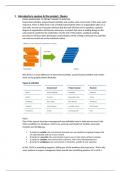
Still, there is a clear difference in improvised activities, project-based activities and routine
work, as the graphic below illustrates.
Types of activities
VUCA
One of the aspects of project management you definitely have to take into account is the
VUCA conditions or situations. VUCA is an acronym and stands for Volatile, Uncertain,
Complex and Ambiguous :
V stands for volatile: the environment demands you react quickly to ongoing changes that
are unpredictable and out of your control.
U stands for uncertain: the environment requires you to take action without certainty.
C stands for complex: the environment is dynamic, with many interdependencies.
A stands for ambiguous: the environment is unfamiliar, outside of your expertise.
In fact, VUCA is something negative, telling you all the problems that may occur. That's why
some authors in project management have turned into something positive: let's call it a
,Positive VUCA:
V stands for vision: focus on activities that will bring you closer to your goal.
U stands for understanding: work with up-to-date data coming from all stakeholders.
C stands for clarity: simplify communication to make sure messages are understood clearly.
A stands for agility: provide flexibility to adjust to changes more quickly.
WHAT’S A PROJECT ?
Building a new shopping centre, bridge, housing estate, nursing home or factory
Relocating a large company to a new location
Organizing a major event (exhibition, sports event or music festival)
(Only the first time it’s a project, from then if it’s the same way done overall then it
is a routine. But if it’s totally differently done every time then it are all projects.)
Implementing software at a company
Introducing a new electronic learning environment
Developing a new product
Setting up a website
Merging two businesses
Creating a new corporate identity for a company
Improving internal communication
Developing a marketing plan for international recruitment
Reducing waiting lists in the field of health care
Doing a theater production or film
Even rearranging your own study room
…
PROJECT FEATURES (nooit specifiek vragen op examen)
1. Temporary
- Clear starting point (start-up or kick-off)
- Finishing date
2. Unique and clearly defined goal
3. Sponsor who has commissioned the project
4. A project has a budget
5. Project members with different expertise
6. Own organizational set-up
7. A project must be initiated
TYPES OF PROJECTS
According to their character, projects fall into one of several different categories: technical
projects, social projects, commercial projects, mixed projects and events.
Technical projects
Effect change in technology or come up with a new product
E.g. construction of a bridge, railway line or computer network
Social projects
Change the corporate culture or organizational structure of a company
E.g. adapting working procedures, reorganization of a company
Also known as ‘soft’ projects
Commercial projects
, Ultimate goal is to earn money
E.g. conducting market research or introducing a new product on the market
Mixed projects
Combine some of the aspects of both technical and social projects
E.g. the design, programming and installation of an extensive computer program
“They do not speak each other’s language”
Events
The end result only appears at a certain point in time
E.g. computer fair, pop festival, quiz, car show
1.1. Phasing and products
Why phasing ?
Phasing minimizes the risks associated with the project
A number of opportunities for decision making are built into the project
At the end of each phase the sponsor had an opportunity to alter the project
Continue as planned
Continue with some alterations to the project
Termination of the project
Termination ? Requires a great deal of courage. After all, a lot of time and effort had already
been invested in it.
In general : benefits <> the costs, during each phase of the project
1) CONCEPT
, The concept phase of a project often results in a project proposal. If the proposal is
approved by management (the sponsor), the next phase may commence.
At this stage, the project exists only as a problem or an idea in the minds of those who have
thought it up (= opportunity).
A number of activities may be carried out:
An investigation into the current state of affairs
A rough estimation of the extent of the problem
A determination of the aims or the desired results of the project
A determination of the feasibility of the project. If desired, a feasibility study or preliminary
investigation could be carried out.
2) DEFINITION
Defining the end result of the project and what needs to be done to achieve it. The result of
the definition is a project plan. With complicated projects, it is common to carry out various
subprojects, all with their own project plan.
The project has been given a go.
Formal objectives: necessary need-to-have
Wishes of those involved: desirable nice-to-have
Question by the end of the definition phase :
“What will have been achieved when the project has been completed?”
3) DESIGN
Deciding what the project result will be, i.e. “how to go about it”.
What will the sponsor be getting for his money? This phase results
in a preliminary design.
Brainstorming sessions with all the participants.
Prototype : simplified (partially or even not working) version of
the real thing.
At the end of this phase, there should be a design that does the following:
Show the sponsor exactly what he will be getting
Show those who will be actively involved in the next phase exactly what has to be produced.
4) PREPARATION
Detailed how to do it. This phase results in a detailed design, such
as a building plan.
The design that was prepared during the previous phase is made
ready for production.
E.g. a detailed construction drawing or assembly instructions
The product itself is not produced during this phase.
Aim : create conditions to allow the production phase to take place without a hitch /
without disturbances.
5) REALIZATION
FROM IMPROVISED TO PROJECT-BASED TO ROUTINE
Improvised activities, project-based activities and routine work can be part of the same work
sequence. There is likely to be a lot of initial improvisation when an organization takes on a
new task. As soon as it becomes obvious that the task will have to be repeated, a greater
degree of organization will become necessary. A project that aims at putting things on the
rails properly could then be undertaken. By the end of the project, standard working
procedures will have been developed. Improvisation will be a thing of the past: the activities
can now be carried out as the standard routine.
Still, there is a clear difference in improvised activities, project-based activities and routine
work, as the graphic below illustrates.
Types of activities
VUCA
One of the aspects of project management you definitely have to take into account is the
VUCA conditions or situations. VUCA is an acronym and stands for Volatile, Uncertain,
Complex and Ambiguous :
V stands for volatile: the environment demands you react quickly to ongoing changes that
are unpredictable and out of your control.
U stands for uncertain: the environment requires you to take action without certainty.
C stands for complex: the environment is dynamic, with many interdependencies.
A stands for ambiguous: the environment is unfamiliar, outside of your expertise.
In fact, VUCA is something negative, telling you all the problems that may occur. That's why
some authors in project management have turned into something positive: let's call it a
,Positive VUCA:
V stands for vision: focus on activities that will bring you closer to your goal.
U stands for understanding: work with up-to-date data coming from all stakeholders.
C stands for clarity: simplify communication to make sure messages are understood clearly.
A stands for agility: provide flexibility to adjust to changes more quickly.
WHAT’S A PROJECT ?
Building a new shopping centre, bridge, housing estate, nursing home or factory
Relocating a large company to a new location
Organizing a major event (exhibition, sports event or music festival)
(Only the first time it’s a project, from then if it’s the same way done overall then it
is a routine. But if it’s totally differently done every time then it are all projects.)
Implementing software at a company
Introducing a new electronic learning environment
Developing a new product
Setting up a website
Merging two businesses
Creating a new corporate identity for a company
Improving internal communication
Developing a marketing plan for international recruitment
Reducing waiting lists in the field of health care
Doing a theater production or film
Even rearranging your own study room
…
PROJECT FEATURES (nooit specifiek vragen op examen)
1. Temporary
- Clear starting point (start-up or kick-off)
- Finishing date
2. Unique and clearly defined goal
3. Sponsor who has commissioned the project
4. A project has a budget
5. Project members with different expertise
6. Own organizational set-up
7. A project must be initiated
TYPES OF PROJECTS
According to their character, projects fall into one of several different categories: technical
projects, social projects, commercial projects, mixed projects and events.
Technical projects
Effect change in technology or come up with a new product
E.g. construction of a bridge, railway line or computer network
Social projects
Change the corporate culture or organizational structure of a company
E.g. adapting working procedures, reorganization of a company
Also known as ‘soft’ projects
Commercial projects
, Ultimate goal is to earn money
E.g. conducting market research or introducing a new product on the market
Mixed projects
Combine some of the aspects of both technical and social projects
E.g. the design, programming and installation of an extensive computer program
“They do not speak each other’s language”
Events
The end result only appears at a certain point in time
E.g. computer fair, pop festival, quiz, car show
1.1. Phasing and products
Why phasing ?
Phasing minimizes the risks associated with the project
A number of opportunities for decision making are built into the project
At the end of each phase the sponsor had an opportunity to alter the project
Continue as planned
Continue with some alterations to the project
Termination of the project
Termination ? Requires a great deal of courage. After all, a lot of time and effort had already
been invested in it.
In general : benefits <> the costs, during each phase of the project
1) CONCEPT
, The concept phase of a project often results in a project proposal. If the proposal is
approved by management (the sponsor), the next phase may commence.
At this stage, the project exists only as a problem or an idea in the minds of those who have
thought it up (= opportunity).
A number of activities may be carried out:
An investigation into the current state of affairs
A rough estimation of the extent of the problem
A determination of the aims or the desired results of the project
A determination of the feasibility of the project. If desired, a feasibility study or preliminary
investigation could be carried out.
2) DEFINITION
Defining the end result of the project and what needs to be done to achieve it. The result of
the definition is a project plan. With complicated projects, it is common to carry out various
subprojects, all with their own project plan.
The project has been given a go.
Formal objectives: necessary need-to-have
Wishes of those involved: desirable nice-to-have
Question by the end of the definition phase :
“What will have been achieved when the project has been completed?”
3) DESIGN
Deciding what the project result will be, i.e. “how to go about it”.
What will the sponsor be getting for his money? This phase results
in a preliminary design.
Brainstorming sessions with all the participants.
Prototype : simplified (partially or even not working) version of
the real thing.
At the end of this phase, there should be a design that does the following:
Show the sponsor exactly what he will be getting
Show those who will be actively involved in the next phase exactly what has to be produced.
4) PREPARATION
Detailed how to do it. This phase results in a detailed design, such
as a building plan.
The design that was prepared during the previous phase is made
ready for production.
E.g. a detailed construction drawing or assembly instructions
The product itself is not produced during this phase.
Aim : create conditions to allow the production phase to take place without a hitch /
without disturbances.
5) REALIZATION


