100% tevredenheidsgarantie Direct beschikbaar na je betaling Lees online óf als PDF Geen vaste maandelijkse kosten 4,6 TrustPilot
logo-home
Tentamen (uitwerkingen)

Test Bank for Prescott's Microbiology complete chapters with well elaborated questions with answers

Beoordeling
-
Verkocht
-
Pagina's
994
Cijfer
A+
Geüpload op
26-06-2023
Geschreven in
2024/2025

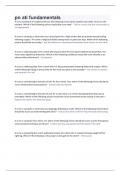
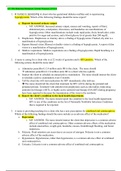
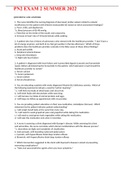
The Test Bank for Prescott's Microbiology provides a comprehensive set of questions and answers designed to support students in mastering the content from the textbook Microbiology by Joanne Willey, Linda Sherwood, and Christopher J. Woolverton. This test bank is ideal for students in microbiology courses, offering an effective study tool that reinforces concepts, enhances understanding, and prepares them for exams. Key Features of the Test Bank Comprehensive Coverage of Microbiology Topics: Aligned with the latest edition of Prescott’s Microbiology, the test bank covers a wide range of microbiology concepts, from the fundamentals of microbial life to advanced topics in immunology and microbial genetics. Key topics include: Introduction to Microbiology: Basic principles of microbiology, history of microbiology, and important microbiologists who have shaped the field. Microbial Structure: Study of bacterial, viral, fungal, and parasitic structures, including cell walls, membranes, and organelles. Microbial Metabolism: Detailed explanations of microbial energy production, fermentation, respiration, and enzyme activities. Genetics and Biotechnology: Concepts of microbial genetics, gene transfer, recombinant DNA technology, and biotechnology applications. Microbial Growth: Environmental factors affecting microbial growth, population dynamics, and methods to control microbial growth. Microbial Pathogenesis: Study of how microorganisms cause disease, virulence factors, and host-pathogen interactions. Immunology: Overview of the immune system, innate and adaptive immunity, and the role of antibodies and antigens. Medical Microbiology: Understanding the relationship between microorganisms and human health, including infectious diseases, diagnosis, and treatment. Epidemiology: Study of disease transmission, outbreak investigations, and public health. Multiple-Choice Questions (MCQs): The test bank contains numerous multiple-choice questions that cover every major section of the textbook, including the introduction, microbial structure, metabolism, genetics, and more. Example topics include: Pathogenesis of specific microbes (e.g., bacteria, viruses). Mechanisms of microbial drug resistance. The processes of viral replication and bacterial conjugation. Diagnostic methods for various microbial infections. Scenario-Based Questions: Some questions are scenario-based, allowing students to apply their theoretical knowledge to real-life laboratory and clinical situations. For example, students may be asked to interpret the results of a laboratory test, diagnose an infection based on symptoms, or decide on appropriate treatment options. Answer Key with Detailed Rationales: Every question is followed by an answer key with detailed explanations of why the correct answer is correct and why the other options are not. Rationales help students better understand the underlying concepts, reinforcing learning and providing clarity on complex microbiological processes. Variety of Question Formats: In addition to multiple-choice questions, the test bank includes true/false, fill-in-the-blank, and matching questions. This variety encourages critical thinking and helps students engage with the material in diverse ways. Sample Practice Questions from the Test Bank Question 1: Microbial Genetics Which of the following is an example of a mutation caused by a change in a single nucleotide? A) Frame-shift mutation B) Nonsense mutation C) Point mutation D) Inversion mutation Answer: C) Point mutation Rationale: A point mutation is a genetic mutation where a single nucleotide base pair is changed. This can result in a silent, missense, or nonsense mutation depending on the nature of the nucleotide change. Question 2: Microbial Structure Which of the following is true regarding the structure of bacterial cell walls? A) All bacteria have cell walls made of peptidoglycan. B) Gram-negative bacteria have a thicker peptidoglycan layer than Gram-positive bacteria. C) The cell wall is responsible for bacterial motility. D) Mycoplasmas lack a cell wall altogether. Answer: D) Mycoplasmas lack a cell wall altogether Rationale: Mycoplasmas are a type of bacteria that do not have a cell wall. This makes them unique among bacteria, and they are often resistant to antibiotics that target cell wall synthesis. Question 3: Microbial Pathogenesis Which of the following is a key virulence factor of Staphylococcus aureus? A) Lipopolysaccharide (LPS) B) Hyaluronidase C) Endotoxins D) Streptokinase Answer: B) Hyaluronidase Rationale: Hyaluronidase is an enzyme that breaks down hyaluronic acid, a component of the extracellular matrix in connective tissue. This virulence factor helps Staphylococcus aureus spread through host tissues. Question 4: Microbial Metabolism During aerobic respiration, what is the final electron acceptor? A) Oxygen B) Nitrate C) Sulfate D) Carbon dioxide Answer: A) Oxygen Rationale: In aerobic respiration, oxygen serves as the final electron acceptor in the electron transport chain, allowing for the production of water and the generation of ATP. Question 5: Medical Microbiology Which of the following is the most common method used to identify bacterial species in clinical microbiology? A) Gram staining B) Enzyme-linked immunosorbent assay (ELISA) C) Polymerase chain reaction (PCR) D) Blood agar culture Answer: A) Gram staining Rationale: Gram staining is the most common and basic method used to classify bacteria as Gram-positive or Gram-negative. It helps identify the structure of the bacterial cell wall and aids in the identification of bacterial species. Why Students Should Use the Test Bank Comprehensive Study Aid: The test bank covers all major topics from Prescott’s Microbiology, ensuring students have a solid understanding of microbiological concepts, from microbial genetics to diagnostic methods. Real-World Application: Scenario-based questions and case studies allow students to apply theoretical knowledge to practical clinical situations, preparing them for laboratory work or medical practice. Variety of Question Formats: The test bank offers a range of question formats, helping students to approach their study from multiple angles and reinforcing important information. Answer Key with Detailed Explanations: The answer key with rationales helps clarify complex concepts and ensures students understand the reasoning behind the correct answers, fostering deeper learning. Preparation for Exams: By regularly practicing with the test bank, students can effectively prepare for quizzes, exams, and certification tests, improving both knowledge retention and exam performance. How to Use the Test Bank Effectively Review Each Chapter: Use the test bank in conjunction with the textbook. After studying each chapter, practice the related questions to reinforce your understanding of the material. Understand the Rationales: After answering each question, make sure to review the rationale. This will help clarify any misunderstandings and solidify your knowledge. Practice Consistently: Regular practice with the test bank will help familiarize you with the types of questions you may encounter on exams and ensure you are well-prepared for all aspects of microbiology. Group Study: Collaborating with peers in a study group can help deepen your understanding of complex topics and allow for valuable discussion on difficult questions. Conclusion The Test Bank for Prescott’s Microbiology is an essential study resource for microbiology students. With its comprehensive coverage of the textbook’s material, a wide variety of practice questions, and detailed rationales, it provides the perfect tool to help students master key microbiological concepts and perform well in their exams. Whether you're studying for a class test, certification exam, or preparing for a career in medical microbiology, this test bank will support your academic and professional success.

Meer zien Lees minder
Instelling
Registered Nurse Educator
Vak
Registered Nurse Educator

Voorbeeld van de inhoud

test bank for
Prescott's
Principles of
Microbiology

,Prescott's Principles of Microbiology


Chapter 1
Student: ___________________________________________________________________________


1. Which of the following distinguish the field of microbiology from other fields of biology?


A. The size of the organism studied


B. The techniques used to study organisms regardless of their size


C. Both the size of the organism studied and the techniques employed in the study of organisms


D. Neither the size of the organism studied nor the techniques employed in the study of organisms
regardless of their size


2. Who of the following developed a set of criteria that could be used to establish a causative link
between a particular microorganism and a particular disease?


A. Fracastoro


B. Koch


C. Pasteur


D. Lister


3. Who of the following was the first to observe and accurately describe microorganisms?

, A. Pasteur


B. Lister


C. Van Leeuwenhoek


D. Tyndall


4. Who of the following provided the evidence needed to discredit the concept of spontaneous
generation?


A. Pasteur


B. Koch


C. Semmelweiss


D. Lister


5. The ribosomal RNA studies that led to the division of procaryotic organisms into the Bacteria and
the Archea were begun by


A. Pasteur


B. Woese


C. Needham


D. Watson

, 6. The concept that living organisms arise from nonliving material is called


A. Biogenesis


B. Cell theory


C. Spontaneous generation


D. Germ theory


7. Cells with a relatively simple cell morphology that do not have a true membrane-delimited nucleus
are called


A. Procaryotes


B. Eucaryotes


C. Urcaryotes


D. Nocaryotes


8. The concept that human and animal diseases are caused by microorganisms is called the


A. Cell theory


B. Germ theory


C. Causative theory

Gekoppeld boek

Geschreven voor

Instelling
Registered Nurse Educator
Vak
Registered Nurse Educator

Documentinformatie

Geüpload op
26 juni 2023
Aantal pagina's
994
Geschreven in
2024/2025
Type
Tentamen (uitwerkingen)
Bevat
Vragen en antwoorden

Onderwerpen

Maak kennis met de verkoper

Seller avatar
De reputatie van een verkoper is gebaseerd op het aantal documenten dat iemand tegen betaling verkocht heeft en de beoordelingen die voor die items ontvangen zijn. Er zijn drie niveau’s te onderscheiden: brons, zilver en goud. Hoe beter de reputatie, hoe meer de kwaliteit van zijn of haar werk te vertrouwen is.
examsolutions6 George Mason University
Volgen Je moet ingelogd zijn om studenten of vakken te kunnen volgen
Verkocht
12
Lid sinds
3 jaar
Aantal volgers
10
Documenten
567
Laatst verkocht
6 maanden geleden
EXAM CORNER SHOP

A STOP SHOP CONTAINING READILY AVAILABLE EXAMINATION MATERIALS TO HELP YOU PASS EASILY WELL SUMMARIZED,ORGANIZED TEST BANKS

3,8

6 beoordelingen

5
3
4
0
3
2
2
1
1
0

Populaire documenten

Recent door jou bekeken

Waarom studenten kiezen voor Stuvia

Gemaakt door medestudenten, geverifieerd door reviews

Kwaliteit die je kunt vertrouwen: geschreven door studenten die slaagden en beoordeeld door anderen die dit document gebruikten.

Niet tevreden? Kies een ander document

Geen zorgen! Je kunt voor hetzelfde geld direct een ander document kiezen dat beter past bij wat je zoekt.

Betaal zoals je wilt, start meteen met leren

Geen abonnement, geen verplichtingen. Betaal zoals je gewend bent via Bancontact, iDeal of creditcard en download je PDF-document meteen.

Student with book image

“Gekocht, gedownload en geslaagd. Zo eenvoudig kan het zijn.”

Alisha Student

Veelgestelde vragen