Criminal Law Revision Notes
THEFT: PROPERTY OFFENCES
________________________________________________________________________________________________________
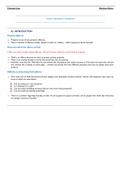
A) INTRODUCTION
Property Offences
→ Property is one of two property offences.
→ There a number of offences closely related to theft (i.e. robbery – theft using force/ threat thereof).
Rationale behind the offence of theft
! There are other closely related offences. This set of notes will focus on the theft of property.
→ Theft is an offence because we want to protect private property.
→ There is an overlap between criminal law and private law of property.
→ However, note that the Theft Acts do not rewrite law of property, but rather assumes it. That does not mean that civil law
and criminal law is always on same page – criminal and private law have different purposes and may not always have same
answers.
Difficulty in determining theft offences
→ Over time, law of theft has become broad, slippery and somewhat counter-intuitive. Certain odd questions may come up,
some of which are seen below:
Can you steal your own property?
Is it stealing if it is a gift?
Can you steal something someone did not even know they possessed?
Can you steal by breaking something?
→ There is a problem regarding morality as well. No all accused are typical criminals, can be people who think that what they
are doing is innocent/ harmless.
______________________________________________________________________________________________
,Criminal Law Revision Notes
______________________________________________________________________________________________
B) THEFT: AN OVERVIEW
! Theft, like sexual offences, is codified, which does not make it easy, but makes it difficult to side track.
s.1(1) Theft Act 1968
→ A person is guilty of theft if he dishonestly appropriates property belonging to another with the intention of permanently
depriving the other of it; and “thief” and “steal” shall be construed accordingly.
! This is very straightforward in the pickpocketing scenarios, but you will come to realise that there are more nuances involved.
→ s.2-6: Further clarification of each of these elements; though they are not thorough and definitive.
→ s.7: Maximum 7 years in prison
______________________________________________________________________________________________
, Criminal Law Revision Notes
______________________________________________________________________________________________
C) ELEMENTS OF THEFT
Actus Reus
1. Appropriation (What does that mean?)
2. Property (What qualifies as property? What does it mean to own?)
3. Belonging to another
Mens Rea
1. Dishonestly
2. Intent to Permanently Deprive
______________________________________________________________________________________________
THEFT: PROPERTY OFFENCES
________________________________________________________________________________________________________
A) INTRODUCTION
Property Offences
→ Property is one of two property offences.
→ There a number of offences closely related to theft (i.e. robbery – theft using force/ threat thereof).
Rationale behind the offence of theft
! There are other closely related offences. This set of notes will focus on the theft of property.
→ Theft is an offence because we want to protect private property.
→ There is an overlap between criminal law and private law of property.
→ However, note that the Theft Acts do not rewrite law of property, but rather assumes it. That does not mean that civil law
and criminal law is always on same page – criminal and private law have different purposes and may not always have same
answers.
Difficulty in determining theft offences
→ Over time, law of theft has become broad, slippery and somewhat counter-intuitive. Certain odd questions may come up,
some of which are seen below:
Can you steal your own property?
Is it stealing if it is a gift?
Can you steal something someone did not even know they possessed?
Can you steal by breaking something?
→ There is a problem regarding morality as well. No all accused are typical criminals, can be people who think that what they
are doing is innocent/ harmless.
______________________________________________________________________________________________
,Criminal Law Revision Notes
______________________________________________________________________________________________
B) THEFT: AN OVERVIEW
! Theft, like sexual offences, is codified, which does not make it easy, but makes it difficult to side track.
s.1(1) Theft Act 1968
→ A person is guilty of theft if he dishonestly appropriates property belonging to another with the intention of permanently
depriving the other of it; and “thief” and “steal” shall be construed accordingly.
! This is very straightforward in the pickpocketing scenarios, but you will come to realise that there are more nuances involved.
→ s.2-6: Further clarification of each of these elements; though they are not thorough and definitive.
→ s.7: Maximum 7 years in prison
______________________________________________________________________________________________
, Criminal Law Revision Notes
______________________________________________________________________________________________
C) ELEMENTS OF THEFT
Actus Reus
1. Appropriation (What does that mean?)
2. Property (What qualifies as property? What does it mean to own?)
3. Belonging to another
Mens Rea
1. Dishonestly
2. Intent to Permanently Deprive
______________________________________________________________________________________________