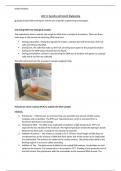
1a+b) water and carbon systems
Carbon
• Most important of all elements
• Necessary for photo synthesis and therefore all plant life
• Ability to bond with other atoms (+ carbon) to form complex molecules
forming the basis of all living matter
Importance of carbon
• An economic resource - used for manufacturing -
• Large molecules of proteins
Carbon cycle - consists of stores and sinks connected by processes moving
carbon around the earth in an unending cycle
Global carbon cycle
stores Carbon stored (billion tonnes)
atmosphere 600
ocean 38,700
soils 2,300
Land plants 560
Sedimentary rocks 60,000 - 100,000
Fossils fuels 4,130
Sea floor sediment 6,000
Slow carbon cycle
• Deep oceans - 1250 yrs
• Sediments - +1000 yrs
• Sedimentary rocks - 150mil yrs
• Fossil fuels - +1mil yrs
• 100mil tonnes of carbon circulated a year
• CO2 diffuses from atmosphere to oceans where microorganisms make
shells by fixing carbon and calcium. When they die remains drop to the
bottom where over millions of years heat and pressure compress them
into sedimentary rocks
• Some sedimentary rocks get subducted into upper mantle at tectonic
plate boundaries and released via volcanic eruptions
• Other sedimentary rocks exposed at the surface are weathered down by
carbonation where CO2 charge rainfall forms a weak acid attacking
carbon minerals in rock and releasing them into atmosphere
• On land, partly decomposed organic matter gets buried beneath younger
sediments to form carbonaceous rocks - fossil fuels
Fast carbon cycle
• Atmosphere - 6yrs
• Ocean surfaces - 25yrs
• Vegetation - 18yrs
• Soils - 10yra
• Transfers are 10-1000 times faster than slow cycle
• Photosynthesis absorbs carbon from atmosphere and produce
carbohydrates with water (glucose) - fundamental in the food chain
, • Respiration and decomposition od dead organic matter by microbial
activity releases CO2
• Atmospheric CO2 dissolves in oceans surface whilst oceans ventilate CO2
back into atmosphere - individual carbon atoms are stored in the oceans
by natural sequestration
Importance of water
• Oceans regulate temps - absorbing, storing and slowly releasing solar
radiation
• Creates habitats - 71% of the earth is oceans
• Clouds reflect solar radiation - keep it cooler - better for farming
• Water vapour (GHG) absorbs heat - keeps it 15ºC warmer - habitable
Needs of water
• Need water for photosynthesis, respiration, transpiration
• Plants require water to maintains rigidity and to be able to transport
nutrients from the soil
• In animals/humans water is the medium used in all chemical reactions in
the body (circulation of oxygen/sweating)
system - group pf factors working together as part of a mechanism
Open system - where mass cam travel in and out of system
Closed system - where mass cant move in and out of the system
Hydrological cycle
inputs stores outputs processes
• Precipitation • Ocean • Evaporation • Evapotranspiration
• ablation • Clouds • Rivers • Condensation
• Soil • Human • Infiltration
• Streamflow uses • Interception
• Aquifers • Percolation
• Ice sheets • Surface run-off
Precipitation = evapotranspiration + streamflow +/- storage
Water balance - balance between inputs and outputs in a drainage basin
, 1c) processes of water cycle
Saturated overland flow - water moving on the surface when soil is too
saturated
Infiltration excess overland flow - too much precipitation being inputted than
able to infiltrate
Precipitation (how it impacts water cycle)
• Ice/water that falls from the sky
• Forms when water vapour in the atmosphere cools to its dew point (8ºC)
and condenses
• Eventually water droplets aggregate, reach a certain size and leave the
cloud as precipitation
• As it reaches the ground, it flows into streams
• In high latitude/altitude areas it falls as snow and has a time lag between
snowfall and run-off (melting)
• Intensity = amount of precipitation in a given time (high intensity moves
rapidly overland)
• Duration = length of time a precipitation event lasts (prolonged events
linked to depressions, and frontal systems may deposit high precipitation
causing flooding)
• Some parts of the world, precipitation is concentrated in rainy seasons
during which river discharge is high and flooding is common
Transpiration
• Diffusion of water vapour from leaf pores (stomata) of plants into
atmosphere
• Responsible for 10% of moisture in atmosphere
Higher temps = more transpiration
More wind = less transpiration
More water availability = higher transpiration
(some plants have adapted, rainforest -waxy leaf. Desert - small leaves)
Carbon
• Most important of all elements
• Necessary for photo synthesis and therefore all plant life
• Ability to bond with other atoms (+ carbon) to form complex molecules
forming the basis of all living matter
Importance of carbon
• An economic resource - used for manufacturing -
• Large molecules of proteins
Carbon cycle - consists of stores and sinks connected by processes moving
carbon around the earth in an unending cycle
Global carbon cycle
stores Carbon stored (billion tonnes)
atmosphere 600
ocean 38,700
soils 2,300
Land plants 560
Sedimentary rocks 60,000 - 100,000
Fossils fuels 4,130
Sea floor sediment 6,000
Slow carbon cycle
• Deep oceans - 1250 yrs
• Sediments - +1000 yrs
• Sedimentary rocks - 150mil yrs
• Fossil fuels - +1mil yrs
• 100mil tonnes of carbon circulated a year
• CO2 diffuses from atmosphere to oceans where microorganisms make
shells by fixing carbon and calcium. When they die remains drop to the
bottom where over millions of years heat and pressure compress them
into sedimentary rocks
• Some sedimentary rocks get subducted into upper mantle at tectonic
plate boundaries and released via volcanic eruptions
• Other sedimentary rocks exposed at the surface are weathered down by
carbonation where CO2 charge rainfall forms a weak acid attacking
carbon minerals in rock and releasing them into atmosphere
• On land, partly decomposed organic matter gets buried beneath younger
sediments to form carbonaceous rocks - fossil fuels
Fast carbon cycle
• Atmosphere - 6yrs
• Ocean surfaces - 25yrs
• Vegetation - 18yrs
• Soils - 10yra
• Transfers are 10-1000 times faster than slow cycle
• Photosynthesis absorbs carbon from atmosphere and produce
carbohydrates with water (glucose) - fundamental in the food chain
, • Respiration and decomposition od dead organic matter by microbial
activity releases CO2
• Atmospheric CO2 dissolves in oceans surface whilst oceans ventilate CO2
back into atmosphere - individual carbon atoms are stored in the oceans
by natural sequestration
Importance of water
• Oceans regulate temps - absorbing, storing and slowly releasing solar
radiation
• Creates habitats - 71% of the earth is oceans
• Clouds reflect solar radiation - keep it cooler - better for farming
• Water vapour (GHG) absorbs heat - keeps it 15ºC warmer - habitable
Needs of water
• Need water for photosynthesis, respiration, transpiration
• Plants require water to maintains rigidity and to be able to transport
nutrients from the soil
• In animals/humans water is the medium used in all chemical reactions in
the body (circulation of oxygen/sweating)
system - group pf factors working together as part of a mechanism
Open system - where mass cam travel in and out of system
Closed system - where mass cant move in and out of the system
Hydrological cycle
inputs stores outputs processes
• Precipitation • Ocean • Evaporation • Evapotranspiration
• ablation • Clouds • Rivers • Condensation
• Soil • Human • Infiltration
• Streamflow uses • Interception
• Aquifers • Percolation
• Ice sheets • Surface run-off
Precipitation = evapotranspiration + streamflow +/- storage
Water balance - balance between inputs and outputs in a drainage basin
, 1c) processes of water cycle
Saturated overland flow - water moving on the surface when soil is too
saturated
Infiltration excess overland flow - too much precipitation being inputted than
able to infiltrate
Precipitation (how it impacts water cycle)
• Ice/water that falls from the sky
• Forms when water vapour in the atmosphere cools to its dew point (8ºC)
and condenses
• Eventually water droplets aggregate, reach a certain size and leave the
cloud as precipitation
• As it reaches the ground, it flows into streams
• In high latitude/altitude areas it falls as snow and has a time lag between
snowfall and run-off (melting)
• Intensity = amount of precipitation in a given time (high intensity moves
rapidly overland)
• Duration = length of time a precipitation event lasts (prolonged events
linked to depressions, and frontal systems may deposit high precipitation
causing flooding)
• Some parts of the world, precipitation is concentrated in rainy seasons
during which river discharge is high and flooding is common
Transpiration
• Diffusion of water vapour from leaf pores (stomata) of plants into
atmosphere
• Responsible for 10% of moisture in atmosphere
Higher temps = more transpiration
More wind = less transpiration
More water availability = higher transpiration
(some plants have adapted, rainforest -waxy leaf. Desert - small leaves)