Samenvatting nudging
Lecture 1
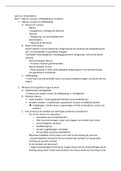
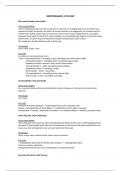
Automatic System Reflective System
Thaler, Chapter 1 Biases and Blunders Uncontrolled Controlled
Two kinds of thinking Effortles Effortful
- Intuitive and automatic: Automatic System. Mostly Associative Deductive
not associated with thinking; gut reaction Fast Slow
- Reflective and rational: Reflective System. Conscious Unconscious Self-aware
thought. Skilled Rule-following
Example: native language is Automatic System, other language is Reflective System.
We can’t spend all our time thinking and analyzing, so we use “rules of thumb” or heuristics:
- Anchoring: you start with an anchor, for example a number you know and adjust in the direction
you think is appropriate (Ede heeft 110.000 inwoners, dus Amsterdam zal er ongeveer 5x meer
hebben). People with a high anchor, mostly have a high guess (bias). Bias: irrelevant anchor. The
order of questions can also influence your answers (first question is the anchor for the second, dating
– happiness)
- Availability: helps to explain much risk-related behavior, for example: whether people buy
insurance for natural disasters is greatly affected by recent experiences.
- Representativeness: stereotypes. How likely is it that A belongs to category B people asking
themselves how similar A is to their stereotype of B. We are surprised when we toss three times
head when we only toss the coin three times. When we toss 25 times, it’s not that weird when we
have three times head in a row (randomness).
- Optimism and overconfidence: most people are (too) positive about themselves. They think they
are above average in driving, humor or their job. Unrealistic optimism van explain a lot of individual
risk taking overestimating yourself, planning fallacy
- Gains and losses: losing something makes you twice as miserable as gaining the same thing makes
you happy. Loss aversion operates a kind of cognitive nudge.
- Status quo bias: for lots of reasons, people have a more general tendency to stick with their current
situation. One of the causes is lack of attention (don’t cancel subscriptions of magazines, not
switching programs on television).
- Framing: Choosing words influence your decision. 90% of patients are alive after five years / 10% of
patients have died after five years.
Thaler, Chapter 2: Resisting temptation
Behavior that is dynamically inconsistent: people prefer A to B, but they later choose B over A.
Temptation is easier to recognize than to define (I know it when I see it). We consume more when
we see it (food, but also media). In a “cold state” we can say that we will not do it, but when the
moment is there we just do (self-control).
Mindless choosing: putting on the automatic pilot. When we have food, we eat it automatically.
,We can help each other with finishing stuff. For example: your friend has to hand in their thesis (part
of it) each month, otherwise you will get 100 dollars and you give a party where your friend isn’t
invited. Doer and planner can help each other (Christmas saving clubs vs creditcard).
Mental accounting
Alarm clocks and Christmas clubs are external devices people use to solve their self-control
problems, you can also adopt internal control systems (mental accounting). Mental accounting is the
system that households use to evaluate, regulate, and process their home budget. You divide your
loan in parts: food, rent, retirement, vacation etc.
Thaler, Chapter 3 Following the herd
Nudges have much to do with social influence. We like to conform.
You are in a group and you’ve got simple tasks. All people give wrong answers, you are tended to also
give a wrong answer, even though you know the answer. Especially when you have to answer loud,
when you can answer anonymously you are less influenced by others.
The Spotlight Effect
You think that people are paying attention to you, because of that you are aware of your doing. In
fact people aren’t paying that much attention
When we see how many other people have downloaded a song before, we are more willing to listen
the song (Spotify ratings).
We use this in policy, for example they have told taxpayers that 90% have already paid. A positive,
injunctive norm would be more effective than the negative, informational one.
Priming
Priming is the phenomenon that a stimulus evokes a faster or stronger response in the brain if that
stimulus has been previously perceived.
Asking if someone is intended to vote, make them vote. When you have to go for a tetanus
inoculation, people are going more often when they have received a map with the location of the
health center circled and asked to think about when they will go.
When you think about something before you are more willing to actually do it.
Three social influences
- information
- peer pressure
- priming
Thaler, Chapter 4 When do we need a nudge?
Offer nudges that are most likely to help and least likely to inflict harm. People will need nudges for
decisions that are difficult and rare, for which they do not get prompt feedback, and when they have
trouble translating aspect of the situation into terms that they can easily understand.
What do you need to know to design the best possible choice environment?
- Benefits now – costs later. Most self control issues arise when choices and their consequences are
separated in time.
- Degree of difficulty
- Frequency: even hard problems become easier with practice. Decisions are more difficult when you
, only choose once (choose university)
- Feedback: Decisions without feedback are more difficult
- Knowing what you like: in unfamiliar circumstances it is fine when someone else decides for you.
You need nudges when the relation between choice and experience is ambiguous
Thaler, Chapter 5 Choice Architecture
You want the signal you receive (the stimulus) to be consistent with the desired action (door handle
pulling)
Many people will take whatever option requires the least effort, or the path of least resistance
Example: one of the boxes is already checked, indicating it is the default, for example with
installation of a program on your pc.
A well-designed systems expects its users to err and is as forgiving as possible.
Example: symmetric entry cards Metro Paris, beep when you don’t buckle your seat belt, first ATM
card out then you will get your cash
An action has to be implemented in the automatic system; birth control pills have 7 placebos, so that
you have to take one each day (no stop week)
The best way to help humans improve their performance is to provide feedback. Well-designed
systems tell people when they are doing well and when they are making mistakes. Exmple: you can
see your photo on your camera
Mapping: a good system of choice architecture helps people to improve their ability to map and
hence to select options that will make them better off. On way to do thi is to make the information
about various options more comprehensible.
A good system structure complex choices. Maybe gives the opportunity to eliminate by aspects
Sensible architects will put the right incentives (stimulans) on the right people. Salience
(opvallendheid) is important, for example: a thermostat which tell you the costs have more effect on
your behavior than quietly raising the price of electricity.
Six principles of good choice architecture
- iNcentives (stimulans)
- Understand mappings
- Defaults (standaardisering)
- Give feedback
- Expect error
- Structure complex choices
Lecture 1 – 26th of November
Nudging is a behavior change program. In the already existing behavior change programs people are
consciously aware of the changing in process. When using nudging, they aren’t aware of this process.
Lecture 1
Automatic System Reflective System
Thaler, Chapter 1 Biases and Blunders Uncontrolled Controlled
Two kinds of thinking Effortles Effortful
- Intuitive and automatic: Automatic System. Mostly Associative Deductive
not associated with thinking; gut reaction Fast Slow
- Reflective and rational: Reflective System. Conscious Unconscious Self-aware
thought. Skilled Rule-following
Example: native language is Automatic System, other language is Reflective System.
We can’t spend all our time thinking and analyzing, so we use “rules of thumb” or heuristics:
- Anchoring: you start with an anchor, for example a number you know and adjust in the direction
you think is appropriate (Ede heeft 110.000 inwoners, dus Amsterdam zal er ongeveer 5x meer
hebben). People with a high anchor, mostly have a high guess (bias). Bias: irrelevant anchor. The
order of questions can also influence your answers (first question is the anchor for the second, dating
– happiness)
- Availability: helps to explain much risk-related behavior, for example: whether people buy
insurance for natural disasters is greatly affected by recent experiences.
- Representativeness: stereotypes. How likely is it that A belongs to category B people asking
themselves how similar A is to their stereotype of B. We are surprised when we toss three times
head when we only toss the coin three times. When we toss 25 times, it’s not that weird when we
have three times head in a row (randomness).
- Optimism and overconfidence: most people are (too) positive about themselves. They think they
are above average in driving, humor or their job. Unrealistic optimism van explain a lot of individual
risk taking overestimating yourself, planning fallacy
- Gains and losses: losing something makes you twice as miserable as gaining the same thing makes
you happy. Loss aversion operates a kind of cognitive nudge.
- Status quo bias: for lots of reasons, people have a more general tendency to stick with their current
situation. One of the causes is lack of attention (don’t cancel subscriptions of magazines, not
switching programs on television).
- Framing: Choosing words influence your decision. 90% of patients are alive after five years / 10% of
patients have died after five years.
Thaler, Chapter 2: Resisting temptation
Behavior that is dynamically inconsistent: people prefer A to B, but they later choose B over A.
Temptation is easier to recognize than to define (I know it when I see it). We consume more when
we see it (food, but also media). In a “cold state” we can say that we will not do it, but when the
moment is there we just do (self-control).
Mindless choosing: putting on the automatic pilot. When we have food, we eat it automatically.
,We can help each other with finishing stuff. For example: your friend has to hand in their thesis (part
of it) each month, otherwise you will get 100 dollars and you give a party where your friend isn’t
invited. Doer and planner can help each other (Christmas saving clubs vs creditcard).
Mental accounting
Alarm clocks and Christmas clubs are external devices people use to solve their self-control
problems, you can also adopt internal control systems (mental accounting). Mental accounting is the
system that households use to evaluate, regulate, and process their home budget. You divide your
loan in parts: food, rent, retirement, vacation etc.
Thaler, Chapter 3 Following the herd
Nudges have much to do with social influence. We like to conform.
You are in a group and you’ve got simple tasks. All people give wrong answers, you are tended to also
give a wrong answer, even though you know the answer. Especially when you have to answer loud,
when you can answer anonymously you are less influenced by others.
The Spotlight Effect
You think that people are paying attention to you, because of that you are aware of your doing. In
fact people aren’t paying that much attention
When we see how many other people have downloaded a song before, we are more willing to listen
the song (Spotify ratings).
We use this in policy, for example they have told taxpayers that 90% have already paid. A positive,
injunctive norm would be more effective than the negative, informational one.
Priming
Priming is the phenomenon that a stimulus evokes a faster or stronger response in the brain if that
stimulus has been previously perceived.
Asking if someone is intended to vote, make them vote. When you have to go for a tetanus
inoculation, people are going more often when they have received a map with the location of the
health center circled and asked to think about when they will go.
When you think about something before you are more willing to actually do it.
Three social influences
- information
- peer pressure
- priming
Thaler, Chapter 4 When do we need a nudge?
Offer nudges that are most likely to help and least likely to inflict harm. People will need nudges for
decisions that are difficult and rare, for which they do not get prompt feedback, and when they have
trouble translating aspect of the situation into terms that they can easily understand.
What do you need to know to design the best possible choice environment?
- Benefits now – costs later. Most self control issues arise when choices and their consequences are
separated in time.
- Degree of difficulty
- Frequency: even hard problems become easier with practice. Decisions are more difficult when you
, only choose once (choose university)
- Feedback: Decisions without feedback are more difficult
- Knowing what you like: in unfamiliar circumstances it is fine when someone else decides for you.
You need nudges when the relation between choice and experience is ambiguous
Thaler, Chapter 5 Choice Architecture
You want the signal you receive (the stimulus) to be consistent with the desired action (door handle
pulling)
Many people will take whatever option requires the least effort, or the path of least resistance
Example: one of the boxes is already checked, indicating it is the default, for example with
installation of a program on your pc.
A well-designed systems expects its users to err and is as forgiving as possible.
Example: symmetric entry cards Metro Paris, beep when you don’t buckle your seat belt, first ATM
card out then you will get your cash
An action has to be implemented in the automatic system; birth control pills have 7 placebos, so that
you have to take one each day (no stop week)
The best way to help humans improve their performance is to provide feedback. Well-designed
systems tell people when they are doing well and when they are making mistakes. Exmple: you can
see your photo on your camera
Mapping: a good system of choice architecture helps people to improve their ability to map and
hence to select options that will make them better off. On way to do thi is to make the information
about various options more comprehensible.
A good system structure complex choices. Maybe gives the opportunity to eliminate by aspects
Sensible architects will put the right incentives (stimulans) on the right people. Salience
(opvallendheid) is important, for example: a thermostat which tell you the costs have more effect on
your behavior than quietly raising the price of electricity.
Six principles of good choice architecture
- iNcentives (stimulans)
- Understand mappings
- Defaults (standaardisering)
- Give feedback
- Expect error
- Structure complex choices
Lecture 1 – 26th of November
Nudging is a behavior change program. In the already existing behavior change programs people are
consciously aware of the changing in process. When using nudging, they aren’t aware of this process.