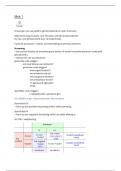
2 How do we understand place? Word bank:
• Place: any physical space with
meaning
Defining place • Sense of place: subjective
• Space: something abstract, a
• One persons 'space' can be another person's 'place' place without meaning
• Factors affecting perceptions: • Gentrification: revival of an
○ Socio-psychological factors urban area that has been
▪ Gender subject to environmental, and
□ Females may feel uncomfy at possibly socio-economic
night in places they are comfy in decline
in the morning • Time-space compression:
▪ Sexuality referring to how space is no
□ 'Gay Village' in Manchester longer the barrier it once was
▪ Religion for communication and
□ Churches.. movement of people
▪ Ethnicity
▪ Role in society Emotional attachment
□ Teacher, PM, student etc
○ Demographic factors • Personal experiences
▪ Place of birth ○ If it's positive then they have
▪ Residence strong emotional
▪ Age attachments to it
• Social experiences
○ Memories and feelings can
be received as part of a
group
▪ Sport fans to their
Globalisation home grounds
• People often have similar
• 'Global Village' attachments to nat5ions especially
○ World has become smaller not in a physical sense though if they've been exiled from their
○ Communications and the flow of goods are quicker and homeland
more reliable
○ Capital (money) moves around the globe
○ People travel further and more frequently
• Mainly from increased migration
○ More immigration
○ More diversity
○ More need for international shops
○ More shops
○ Better economy
○ More trade -> globalisation
• Migrants may be downgraded/ not good lifestyle
○ Not being paid for the skills they've trained for
○ Cramped houses Formal ways of representing places
○ Undocumented work (illegal)
• How it can influence our sense of place: • Census
○ No longer 'feel at home' in a location ○ Ethnicity
○ Some may be more controlled by globalisation more ○ Age
than control it ○ Occupation
○ It can benefit some ○ Household
○ Income
○ Every ten years
• Geospatial data
○ May not be representative of a rural
Informal ways of representing area
places
, Word Bank:
3 Social Inequality
• Social inequality : The unequal
distribution of factors such as income,
2.1.3
education etc
How does economic change influence patterns of
• Quality of life: Needs and desires are
social inequality in places?
met
• Standard of living: Ability to access basic
Case studies needed: services (water, food etc)
• Spatial Inequality: Unequal distribution
• Jembatan Besi, Jakarta, Indonesia of factors like income across a
• Northwood, Irvine, Southern California geographic space at any scale
• Deprivation: General lack of resources
• Poverty: Not enough money for an
adequate standard of living
Index of Multiple Deprivation: • HDI: income, life expectancy, education
• Global Shift: Relocation of manufacturing
• Used to see different levels of deprivation if
production on a global scale
different areas
• Global Supply change: flows of materials
• 7 factors
around the world
○ Income
• Global Value chain: Different stages of
▪ Gini Coefficient production located in different countries
□ Used to measure levels of • De-industrialisation: Absolute, relative
income within countries decline of manufacturing
□ Ratio between 0 and 1.0 • Recession: Fall in the level of national
□ 0 = everyone is equal output (for two quarters)
□ 1 = Lots of inequality in • Economic boom: output rises (for two
income quarters)
○ Housing and services • Stagnation: Prolonged period of slow
▪ Housing tenure economic growth
□ Legal status of someone's
house that they're living in
(rent, mortgage…)
○ Education How and why spatial patterns vary:
▪ Literacy rates
○ Health care • Wealth
▪ Doctors per 1000 people ○ Ill health, low skills, poor access to
▪ Access to clean water and other services
sanitary stuff ○ Disposable income
○ Employment ○ IF income rises so does expenses
▪ Unemployment rate • Housing
□ Not representative mainly in ○ Less income = less choice of
LIDCs as they have a lot of housing
informal jobs which aren't ○ Rapid urbanisation = less housing=
counted here people going into slums
○ Living environment ○ In Acs the house prices keep rising
▪ Air quality but not as much as their income
○ Crime rates keeping them out of the housing
market
• Health
Core-Periphery model: ○ Access to services is limited
▪ Or can't travel due to a
• Core: highly developed disability
• Periphery: not very developed ○ Risk of premature death in LIDCs
• Education
○ Basic education access is a major
issue in most rural LIDCs
○ Illiteracy puts people behind in life
• Access to services
○ Urban-rural divide
○ Access to internet
, □ Rising oil prices • Healthcare
• Silicon Valley ○ Free healthcare - tax
○ San Francisco Bay, California ○ May not be well-served in rural
places
• Place: any physical space with
meaning
Defining place • Sense of place: subjective
• Space: something abstract, a
• One persons 'space' can be another person's 'place' place without meaning
• Factors affecting perceptions: • Gentrification: revival of an
○ Socio-psychological factors urban area that has been
▪ Gender subject to environmental, and
□ Females may feel uncomfy at possibly socio-economic
night in places they are comfy in decline
in the morning • Time-space compression:
▪ Sexuality referring to how space is no
□ 'Gay Village' in Manchester longer the barrier it once was
▪ Religion for communication and
□ Churches.. movement of people
▪ Ethnicity
▪ Role in society Emotional attachment
□ Teacher, PM, student etc
○ Demographic factors • Personal experiences
▪ Place of birth ○ If it's positive then they have
▪ Residence strong emotional
▪ Age attachments to it
• Social experiences
○ Memories and feelings can
be received as part of a
group
▪ Sport fans to their
Globalisation home grounds
• People often have similar
• 'Global Village' attachments to nat5ions especially
○ World has become smaller not in a physical sense though if they've been exiled from their
○ Communications and the flow of goods are quicker and homeland
more reliable
○ Capital (money) moves around the globe
○ People travel further and more frequently
• Mainly from increased migration
○ More immigration
○ More diversity
○ More need for international shops
○ More shops
○ Better economy
○ More trade -> globalisation
• Migrants may be downgraded/ not good lifestyle
○ Not being paid for the skills they've trained for
○ Cramped houses Formal ways of representing places
○ Undocumented work (illegal)
• How it can influence our sense of place: • Census
○ No longer 'feel at home' in a location ○ Ethnicity
○ Some may be more controlled by globalisation more ○ Age
than control it ○ Occupation
○ It can benefit some ○ Household
○ Income
○ Every ten years
• Geospatial data
○ May not be representative of a rural
Informal ways of representing area
places
, Word Bank:
3 Social Inequality
• Social inequality : The unequal
distribution of factors such as income,
2.1.3
education etc
How does economic change influence patterns of
• Quality of life: Needs and desires are
social inequality in places?
met
• Standard of living: Ability to access basic
Case studies needed: services (water, food etc)
• Spatial Inequality: Unequal distribution
• Jembatan Besi, Jakarta, Indonesia of factors like income across a
• Northwood, Irvine, Southern California geographic space at any scale
• Deprivation: General lack of resources
• Poverty: Not enough money for an
adequate standard of living
Index of Multiple Deprivation: • HDI: income, life expectancy, education
• Global Shift: Relocation of manufacturing
• Used to see different levels of deprivation if
production on a global scale
different areas
• Global Supply change: flows of materials
• 7 factors
around the world
○ Income
• Global Value chain: Different stages of
▪ Gini Coefficient production located in different countries
□ Used to measure levels of • De-industrialisation: Absolute, relative
income within countries decline of manufacturing
□ Ratio between 0 and 1.0 • Recession: Fall in the level of national
□ 0 = everyone is equal output (for two quarters)
□ 1 = Lots of inequality in • Economic boom: output rises (for two
income quarters)
○ Housing and services • Stagnation: Prolonged period of slow
▪ Housing tenure economic growth
□ Legal status of someone's
house that they're living in
(rent, mortgage…)
○ Education How and why spatial patterns vary:
▪ Literacy rates
○ Health care • Wealth
▪ Doctors per 1000 people ○ Ill health, low skills, poor access to
▪ Access to clean water and other services
sanitary stuff ○ Disposable income
○ Employment ○ IF income rises so does expenses
▪ Unemployment rate • Housing
□ Not representative mainly in ○ Less income = less choice of
LIDCs as they have a lot of housing
informal jobs which aren't ○ Rapid urbanisation = less housing=
counted here people going into slums
○ Living environment ○ In Acs the house prices keep rising
▪ Air quality but not as much as their income
○ Crime rates keeping them out of the housing
market
• Health
Core-Periphery model: ○ Access to services is limited
▪ Or can't travel due to a
• Core: highly developed disability
• Periphery: not very developed ○ Risk of premature death in LIDCs
• Education
○ Basic education access is a major
issue in most rural LIDCs
○ Illiteracy puts people behind in life
• Access to services
○ Urban-rural divide
○ Access to internet
, □ Rising oil prices • Healthcare
• Silicon Valley ○ Free healthcare - tax
○ San Francisco Bay, California ○ May not be well-served in rural
places