Week 5 – Treating Groups
12th February 2022
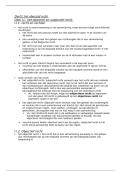
How Social Identity approach can inform design and implementation of group based interventions.
Content:
1. A need for group-based healthcare?
2. A problem of translation?
3. Understanding existing group-based interventions
4. Bridging the gap between understanding and action (using the SI approach to design new
group based interventions).
A Need For Group-Based Healthcare?
The UK healthcare system has a lot of pressure now that wasn’t seen in the past due to increases in
life expectancy:
- In NHS, 2/3 of people admitted to hospital are 65 years + and older people are more likely to
stay longer in hospital and be re-admitted
- Health expenditure on 75+ year olds is greater than the rest of the population
It isn’t just treatment costs that are increasing, the healthcare budget is shrinking too:
- There was a planned 3.9% cut per year to public health funding from 2016 until 2020/21
(Kings Fund, 2016).
- The budget is also used for preventative interventions: reducing obesity / smoking / alcohol,
and this budget has reduced also.
This squeeze on monetary facilities brings to question how the NHS is able to maintain this equitable
treatment for all people. It turns out that across certain groups / contexts, treatment is not so
equitable, and an explanation may bet he cost pressures on the NHS.
At the same time, we are seeing an increase in the use of group based care, for example:
obesity/weight management, cardia rehab, NCT, stop smoking groups, alcoholics anonymous. There
is the general assumption now that groups are efficient and therefore cheaper than treating on a
one-to-one basis. However there is a lack of conclusive data on this (Ebhohimhen & Avenell, 2009).
A problem of translation
We looked at detail at the social identity approach to health and we have seen a huge increase in
number of studies drawing upon social identity approach and social cure hypothesis. Whilst we have
this large growing literature showing importance of social identity processes, it is rare that you will
see in healthcare interventions that are explicitly informed by the social identity approach. So
arguably, our group interventions are not as effective as they may be if we could translate lessons
from social identity approach into the design, implementation and evaluation of interventions.
, We know from the ‘social cure’ research that memberships of groups can bring a range of health
benefits (Steffens et al., 2019). This idea that groups can support health to the extent that they have
positive social identity has not made its way into group-based interventions in healthcare settings.
Generally, there is a failure to consider the psychological reality of social groups, and this translation
problem isn’t limited to group treatments only.
Consequences of translation failure
- Group based treatment design is largely individually focussed. Failure to acknowledge that
when people are in a group, they have a psychological reality as a group, as well as at an
individual level.
- Group interventions tend ot have been developed largely independent of one another, even
though these interventions often target the same behaviours and the same behaviour
change processes.
- Group interventions tend to be pretty poorly reported (Borek et al., 2015, 2018). This causes
impossible replication. We then see heterogeneity across programmes (as they couldn’t
replicate), which causes variability in effectiveness.
Heterogeneity in programme design
Found considerable variability in how programmes are organised, despite the fact that there is some
clear literature which indicates the kinds of processes that we need to work with in order to support
people with weight management. Despite that evidence, the way it is applied in practice varies
considerably across the sector.
Understanding Existing Group-Based Interventions
There is considerable variability in the effectiveness of groups sometimes and they seem to work
other times less. So we are going to look at the evidence around effectiveness.
Booth et al., (2016) – Looking at group programmes in primary care environemnts. Systematic
review looking at effectiveness, appropriateness and feasibility of these group programmes for
people with chronic conditions.
- Population: adults / children receiving health care services fro >1 conditions
- Intervention: delivery of >1 services to a group of patients by HCP
- Comparison: any other method of treatment organisation
- Outcomes: patient outcomes, health service outcomes, patient / carer satisfaction, resource
use
Most studies focussed on diabetes groups and booth reported that overall, these group
interventions were effective along a range of measures:
- Patient outcomes (health)
- Patient satisfaction
- But mixed evidence for cost-effectiveness (link to assumption that group based is cheaper),
as there is additional cost of training in group facilitation.
12th February 2022
How Social Identity approach can inform design and implementation of group based interventions.
Content:
1. A need for group-based healthcare?
2. A problem of translation?
3. Understanding existing group-based interventions
4. Bridging the gap between understanding and action (using the SI approach to design new
group based interventions).
A Need For Group-Based Healthcare?
The UK healthcare system has a lot of pressure now that wasn’t seen in the past due to increases in
life expectancy:
- In NHS, 2/3 of people admitted to hospital are 65 years + and older people are more likely to
stay longer in hospital and be re-admitted
- Health expenditure on 75+ year olds is greater than the rest of the population
It isn’t just treatment costs that are increasing, the healthcare budget is shrinking too:
- There was a planned 3.9% cut per year to public health funding from 2016 until 2020/21
(Kings Fund, 2016).
- The budget is also used for preventative interventions: reducing obesity / smoking / alcohol,
and this budget has reduced also.
This squeeze on monetary facilities brings to question how the NHS is able to maintain this equitable
treatment for all people. It turns out that across certain groups / contexts, treatment is not so
equitable, and an explanation may bet he cost pressures on the NHS.
At the same time, we are seeing an increase in the use of group based care, for example:
obesity/weight management, cardia rehab, NCT, stop smoking groups, alcoholics anonymous. There
is the general assumption now that groups are efficient and therefore cheaper than treating on a
one-to-one basis. However there is a lack of conclusive data on this (Ebhohimhen & Avenell, 2009).
A problem of translation
We looked at detail at the social identity approach to health and we have seen a huge increase in
number of studies drawing upon social identity approach and social cure hypothesis. Whilst we have
this large growing literature showing importance of social identity processes, it is rare that you will
see in healthcare interventions that are explicitly informed by the social identity approach. So
arguably, our group interventions are not as effective as they may be if we could translate lessons
from social identity approach into the design, implementation and evaluation of interventions.
, We know from the ‘social cure’ research that memberships of groups can bring a range of health
benefits (Steffens et al., 2019). This idea that groups can support health to the extent that they have
positive social identity has not made its way into group-based interventions in healthcare settings.
Generally, there is a failure to consider the psychological reality of social groups, and this translation
problem isn’t limited to group treatments only.
Consequences of translation failure
- Group based treatment design is largely individually focussed. Failure to acknowledge that
when people are in a group, they have a psychological reality as a group, as well as at an
individual level.
- Group interventions tend ot have been developed largely independent of one another, even
though these interventions often target the same behaviours and the same behaviour
change processes.
- Group interventions tend to be pretty poorly reported (Borek et al., 2015, 2018). This causes
impossible replication. We then see heterogeneity across programmes (as they couldn’t
replicate), which causes variability in effectiveness.
Heterogeneity in programme design
Found considerable variability in how programmes are organised, despite the fact that there is some
clear literature which indicates the kinds of processes that we need to work with in order to support
people with weight management. Despite that evidence, the way it is applied in practice varies
considerably across the sector.
Understanding Existing Group-Based Interventions
There is considerable variability in the effectiveness of groups sometimes and they seem to work
other times less. So we are going to look at the evidence around effectiveness.
Booth et al., (2016) – Looking at group programmes in primary care environemnts. Systematic
review looking at effectiveness, appropriateness and feasibility of these group programmes for
people with chronic conditions.
- Population: adults / children receiving health care services fro >1 conditions
- Intervention: delivery of >1 services to a group of patients by HCP
- Comparison: any other method of treatment organisation
- Outcomes: patient outcomes, health service outcomes, patient / carer satisfaction, resource
use
Most studies focussed on diabetes groups and booth reported that overall, these group
interventions were effective along a range of measures:
- Patient outcomes (health)
- Patient satisfaction
- But mixed evidence for cost-effectiveness (link to assumption that group based is cheaper),
as there is additional cost of training in group facilitation.