

Media in Belgium
Media planning and analysis
1. Media planning and research
- Framework and definitions
- Media planning process and efficiency
- Players in the field of media planning and their positions
- Key concepts and glossary
- CIM: media survey and analysis
2. Media planning
1. DUAL CORE BUSINESS
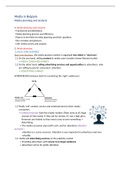
Duel core business: the media product market is organized two-sided or ‘dual core’.
1.1 On the one hand, selling content to media users (reader/viewer/listener/surfer)
> MEDIA CONSUMER MARKET
1.2 On the other hand, selling advertising services and opportunities to advertisers, who
are willing to pay for consumers’ attention.
> ADVERTISING MARKET
INTERFERENCE between both (in contacting the ‘right’ audiences)
1.3 Media ‘sell’ content, service and entertainment to their media
consumers.
-> Limited revenues from the reader market. Often none at all: huge
amount of free media. If they ask for money, it’s not a high price.
Revenues are limited so they need a way to earn something ->
Advertising
-> The media consumer pays (with cash, and/or attention) attention
economy –
attention is a scarce resource. Attention is very important to advertisers and very
valuable.
1.4 Media sell advertising services on the publicity market
-> Providing advertisers with access to (a large) audience;
-> Advertisers strive for public attention
, 3. Media planning within a business plan
On a company level
1. A business plan sets out the (qualitative and
quantitative) objectives for the entire
business organization
2. A marketing plan contains marketing goals (4 P’s)
and
the strategies to achieve these goals
3. A (marketing) communication plan contains
communication targets, budgets and tools to obtain
marketig goals
4. A campaign plan describes all communication with
stakeholders and groups to create awareness,
interest and demand.
-> Costumers aren’t going to buy products they don’t
know, you need to bring awareness to your brand
5. A mediaplan defines the (usage and mix of) media
which are best suited to carry out the
company’s campaign plan
Example: Coca Cola
1. Business plan: being nr 1 beverage company in the world, producing and selling quality
carbonated beverages; respect towards employees, customers, communities; financial
rewards towards shareholders and business partners; being a trustworthy, honest, loyal
and innovative enterprise.
2. Marketing plan: (P.ex.) expand market share compared to (local) competitors on the
European market by launching new product flavours.
3. Marketing communication plan: defines the deployment of people, tools and resources
(budget) to manage the launch of new coca cola products in Europe.
4. Campaign plan: setting up a communication strategy to create awareness amongst
stakeholders (retailers, client groups…) about the new product launch.
- Strategic planning…
- Tactical planning…
in order to create the best possible MIX of media to obtain the
campaign goals, using:
1. Owned media: channels that you create and control
2. Paid media: third-party channels you pay for to reach audience
3. Earned media: channels that provide free publicity
Media planning and analysis
1. Media planning and research
- Framework and definitions
- Media planning process and efficiency
- Players in the field of media planning and their positions
- Key concepts and glossary
- CIM: media survey and analysis
2. Media planning
1. DUAL CORE BUSINESS
Duel core business: the media product market is organized two-sided or ‘dual core’.
1.1 On the one hand, selling content to media users (reader/viewer/listener/surfer)
> MEDIA CONSUMER MARKET
1.2 On the other hand, selling advertising services and opportunities to advertisers, who
are willing to pay for consumers’ attention.
> ADVERTISING MARKET
INTERFERENCE between both (in contacting the ‘right’ audiences)
1.3 Media ‘sell’ content, service and entertainment to their media
consumers.
-> Limited revenues from the reader market. Often none at all: huge
amount of free media. If they ask for money, it’s not a high price.
Revenues are limited so they need a way to earn something ->
Advertising
-> The media consumer pays (with cash, and/or attention) attention
economy –
attention is a scarce resource. Attention is very important to advertisers and very
valuable.
1.4 Media sell advertising services on the publicity market
-> Providing advertisers with access to (a large) audience;
-> Advertisers strive for public attention
, 3. Media planning within a business plan
On a company level
1. A business plan sets out the (qualitative and
quantitative) objectives for the entire
business organization
2. A marketing plan contains marketing goals (4 P’s)
and
the strategies to achieve these goals
3. A (marketing) communication plan contains
communication targets, budgets and tools to obtain
marketig goals
4. A campaign plan describes all communication with
stakeholders and groups to create awareness,
interest and demand.
-> Costumers aren’t going to buy products they don’t
know, you need to bring awareness to your brand
5. A mediaplan defines the (usage and mix of) media
which are best suited to carry out the
company’s campaign plan
Example: Coca Cola
1. Business plan: being nr 1 beverage company in the world, producing and selling quality
carbonated beverages; respect towards employees, customers, communities; financial
rewards towards shareholders and business partners; being a trustworthy, honest, loyal
and innovative enterprise.
2. Marketing plan: (P.ex.) expand market share compared to (local) competitors on the
European market by launching new product flavours.
3. Marketing communication plan: defines the deployment of people, tools and resources
(budget) to manage the launch of new coca cola products in Europe.
4. Campaign plan: setting up a communication strategy to create awareness amongst
stakeholders (retailers, client groups…) about the new product launch.
- Strategic planning…
- Tactical planning…
in order to create the best possible MIX of media to obtain the
campaign goals, using:
1. Owned media: channels that you create and control
2. Paid media: third-party channels you pay for to reach audience
3. Earned media: channels that provide free publicity


