Examen: geen jaartallen en namen vanbuiten leren, wel concepten bergrijpen en kunnen uitleggen
Open vragen + enkele meerkeuzevragen
Mag in nederlands of engels antwoorden
Concepten kunnen toepassen op actuele cases
LES 1: GOVERNMENT AND POLICY
• WHAT IS PUBLIC POLICY
= anything ONLY a government chooses to do or not to do about a problem.
→ Ignoring a problem is thus also a policy decision
→ = policymaking
= the collection of political decisions for implementing programs to achieve societal goals
= making laws, and is defined in terms of a common goal or purpose
→ policy in our daily life: mobility & transport, education, health, housing, sports, …
• TYPES OF PUBLIC POLICY
1) Regulatory policies
= Policies that impose rules or standards on behavior of individuals/organizations, to protect public
interests. They limit or define what can or cannot be done
→ Policies: policing power, government interventions.
→ Examples: Public health rules, industrial safety, traffic laws, antitrust, …
2) Distributive policies / pork barrel policies
= Policies that allocate resources or services to sectors without taking from others in a direct
redistributive sense.
→ Policies: grants, subsidies, infrastructure spending for regions
→ Examples: Public works, agricultural extension, land grants, public housing, etc.
3) Redistributive policies
= Policies that transfer resources, benefits, or burdens from one group to another, often aiming to
reduce inequality (income, wealth, social opportunity).
→ Policies: fiscal and monetary policy, overall budget policies
→ Examples: income tax, progressive taxation, federal reserve discount rates, social security.
4) Constituent policies
= Rules about rules and authority. Concerned with the very structure, organization, or
institutional base of government.
→ Policies: Overhead auxiliary, government organization.
→ Examples: Agencies for budgetary and personnel policy, laws establishing judicial jurisdiction.
→ other types: -- competitief beleid = beperkt voorziening van goederen/diensten adhv voorwaarden
-- protectief beleid = voorwaarden voor activiteiten om burgers te beschermen
-- zelfregulerend beleid = competitief beleid maar door de voorzieners zelf
• PROBLEMS
= a gap between desirable situation and perceived condition
→ bv België: housing problem, inflation, climate change, …
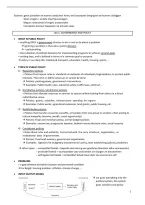
• INPUT OUTPUT MODEL
→ we push everything into the
political system, the system
gives solutions and policy
1
,• POLICY ACTORS
= an individual (a minister, member of parliament, a specialist journalist etc.) /
several individuals (e.g., an office or a section of an administration) /
a legal entity (e.g., a private company, association, trade union) /
a social group (e.g., farmers, drug users, the homeless etc.),
that have the same objective and understanding and priorities
→ bv: group of people thinking we should drive less cars on diesel and more electric, this by giving
subsidiaries to electric car manufacturers, but some of them want it sooner done than others
= actor group = they have the same idea of the problem/same values/same solution
EXAMENVRAAG: breng zelf een overheidsprobleem mee (in je hoofd) naar het examen, hierop pas je alle
concepten toe die we zien in de les. (history, actors involved, current and other solutions, …)
• TRIANGLE OF POLICY ACTORS (AND POLICY INTERVENTIONS) (op examen!)
a) bovenaan= official government agencies making policies/decisions: ministry of health, government,…
=> bv: making no rules about dog shit
b) linksonder = target groups = they can solve the problem, and are often the cause of the problem
=> bv: People walking their dog, do not pick up the shit
c) rechtsonder = people experiencing the negative effect of the problem
=> A person walking by steps in the dog shit
→ intervention hypothesis = a guess on how to solve the problem
→ casual hypothesis = what causes the issue
→ political definition of the problem to be solved = could be different than the real problem
• POLICY CYCLE
1) Agenda-setting → problem recognition → bv: je verveelt je
2) policy formulation → proposal of a solution → bv: opties bedenken
3) Decision-making → choice of solution → bv: besluit op reis naar Spanje
4) Policy implementation → converting solution into effect
→ bv: met boot naar Spanje gaan
5) Policy evaluation → monitoring of results → bv: achteraf evalueren hoe het was
6) Potential policy evolution → bv: besluit om hetzelfde/iets anders
te doen volgend jaar
• A LAYERED POLICY SETTING (GOVERNMENT): supranational <-> central <-> regional <-> local
• THE COMPLEXITY OF POLICY: WICKEDNESS
→ solutions can not be true or false, only good or bad
→ Every wicked problem can be a symptom of another problem
→ Every (attempted) solution is a ‘one-shot operation’; results cannot be undone, no opportunity to
learn by trial-and error
→ wicked problems are driven by: 1) Multiple stakeholder interests and values
2) Institutional complexity
3) Scientific uncertainty (Fragmentation and gaps in knowledge)
2
, LES 2 : POLICY SCIENCES
• POLICY SCIENCES AN INTRODUCTION: WHY, WHAT AND HOW?
= the study and analysis of the decision-making of government with regards to public issues
→ understanding social issues demands a structured, multidisciplinary, interdisciplinary and applied
approach
→ policy sciences help us:
a) Understand and analyze goals and values of policymaking
b) Identify and describe trends in policy decisions
c) Identify and analyze the terms and conditions of policymaking
d) analyze alternatives and make policy decisions
e) project future scenarios
→ examples:
− Every year, thousands of people die 1-7 days after the consumption of Tuna sandwiches
=> but tuna sandwiches do not kill people
− All couples who get divorced were at some point in time married
=> but marriage is not the cause of divorcing
− Trump said injecting yourself with disinfectant helps solving Covid
→ so use policy sciences to make better conclusion, to know why things happen
o logical fallacies = errors in reasoning that weaken arguments, 3 kinds:
1) Post hoc ergo propter hoc (false cause)
→ because one thing follows another, it was caused by it (see example tuna sandwiches)
2) Straw man
→ misrepresenting an opponent’s position to make it easier to attack
3) Ad hominem
→ attacking the person instead of the argument
o Evolution
1) Mid-20th century Postwar Era
= growing awareness that traditional political science or public administration alone couldn’t
fully address the practical problems of policymaking and governance.
2) 50-60s: Herbert Simon and Harold Lasswell
= introducing a practical, interdisciplinary approach to policymaking.
3) 60-70s: institutionalization
= academic programs and journals
4) 70s-now: expansion and broadening
= Formalization and a range of interdisciplinary and multidisciplinary approaches as well focus
on multiple processes (evaluation, analysis, evidence, etc.)
→ best approach depends on the problem you try to solve
3
, o Two key branches
a) Pure social scientists with an interest in:
focus on developing and refining theoretical frameworks that explain social phenomena, to
build coherent and systematic models of how societies function. investigate how different
social factors influence one another, seeking to identify cause-and-effect linkages
b) Applied social scientist with focus on:
They build on established theories and empirical findings to extend knowledge into new
contexts or applications. They actively use scientific insights to design, implement, or influence
policies and practices with the goal of improving real-world social conditions
o How is public policy being studied? (EXAMEN)
→ we often switch between data and theories
→ deductive research = start from an idea
→ inductive research = start from an observation
→ research methods:
4