
Business Analysis and Valuation — Open-Book Exam Summary
Business Analysis and Valuation
Open-Book Exam Summary — 2025/2026
Dr. Wouter Creemers, Chartered Financial Analyst (CFA) — KU Leuven, Antwerp / Brussels Campus
Bullet-point format · worked examples throughout · per-chapter cheat-cards · [EXAM] flags
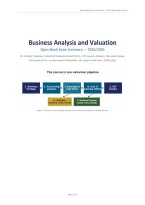
Figure 1. The course is one valuation pipeline, cross-checked by multiples and residual income.
Page 1 of 33
, Business Analysis and Valuation — Open-Book Exam Summary
Contents
How to use this summary ................................................................................................................................. 3
Chapter 1 — Introduction (framing the course) ................................................................................................... 4
1.1 A philosophical basis for valuation ............................................................................................................. 4
1.2 The information gap and the lemons problem ........................................................................................... 4
1.3 Three valuation myths and the six deadly sins ........................................................................................... 5
1.4 Framework for business analysis (Palepu et al.) ......................................................................................... 5
Chapter 2 — Accounting Analysis ......................................................................................................................... 7
2.1 From business activities to financial statements ........................................................................................ 7
2.2 Four features of the accounting system ..................................................................................................... 7
2.3 Revenue recognition ................................................................................................................................... 8
2.4 Expense recognition & non-recurring items ............................................................................................... 9
2.5 Earnings per share (EPS) ............................................................................................................................. 9
2.6 Analysing balance sheets .......................................................................................................................... 10
2.7 Accounting adjustments — undoing distortions ...................................................................................... 12
2.8 Extraordinary items, the bootstrap game & buybacks ............................................................................. 14
2.9 Ratio analysis ............................................................................................................................................ 15
Chapter 3 — From Earnings to Cash Flows (+ Growth, + Terminal Value) ......................................................... 16
3.1 Two free-cash-flow concepts .................................................................................................................... 16
3.2 Cash-flow statements & tax issues ........................................................................................................... 16
3.3 Reinvestment needs & current free cash flow to the firm ....................................................................... 17
3.4 Estimating growth ..................................................................................................................................... 18
3.5 Terminal value .......................................................................................................................................... 19
Chapter 4 — Estimating Cost of Financing ......................................................................................................... 20
4.1 Cost of equity — CAPM............................................................................................................................. 20
4.2 Cost of debt............................................................................................................................................... 20
4.3 weighted average cost of capital .............................................................................................................. 21
Chapter 5 — discounted cash flow Models ........................................................................................................ 22
5.1 Dividend discount models (dividend discount model (DDM)) .................................................................. 22
5.2 free cash flow to equity models................................................................................................................ 23
5.3 FCFF models (most used) .......................................................................................................................... 23
Chapter 6 — Multiples (Relative Valuation) ....................................................................................................... 25
6.1 Price-earnings (price-to-earnings) ............................................................................................................ 25
6.2 Price-to-book (price-to-book) ................................................................................................................... 26
6.3 Enterprise-value multiples ........................................................................................................................ 26
Chapter 7 — Residual Income Valuation ............................................................................................................ 28
Page 2 of 33
, Business Analysis and Valuation — Open-Book Exam Summary
7.1 EVA™ and the moat link ............................................................................................................................ 29
Appendix — Exam quick-reference .................................................................................................................... 30
A.1 Exam structure & what is flagged ............................................................................................................. 30
A.2 Master formula sheet ............................................................................................................................... 31
A.3 Worked specimen — capitalising research and development (5-year life) ............................................. 32
A.4 Worked specimen — capitalising operating leases .................................................................................. 32
A.5 Worked specimen — two-stage free cash flow to the firm (the closed-book discounted cash flow) ..... 33
How to use this summary
• Structure: one chapter per slide deck, in course order — strategy (1) → accounting (2) → earnings-to-
cash-flows (3) → cost of financing (4) → discounted cash flow (DCF) (5) → multiples (6) → residual
income (7).
• Format: short bullets and labelled blocks instead of long paragraphs; a ▸ Example block for nearly
every concept; comparison tables where they help.
• Each chapter ends with a ★ cheat-card — its key formulas and exam triggers in one box. This summary
doubles as study material for the closed-book part, so it keeps the conceptual depth, not just formulas.
• Running cases: Ferrari (EUR, International Financial Reporting Standards (IFRS)) and Amgen (USD, US
Generally Accepted Accounting Principles (GAAP)) recur throughout — tracing one end-to-end is the
fastest revision and is exactly what the exam rewards.
Exam structure (see appendix A.1 for the full breakdown)
Open-book — 30 min, /10: 7 MC (−1/3 for a wrong answer) + 2 conceptual questions. Will contain at
least a question on capitalising operating leases and/or research and development (R&D) (life given as
4–6 years; Amgen/Ferrari are the key cases — worked specimens in A.3–A.4).
Closed-book — 150 min, /20: 6 conceptual questions + a small exercise (3 pts) + the two-stage free cash
flow to the firm (FCFF) discounted cash flow (6 pts) using the stated sales-to-capital ratio, valued 1 Jan
2026 (worked specimen in A.5).
Out of scope (kept brief): BCG-matrix detail, Modified Jones accruals model, the algebraic residual
income (RI) derivation.
Page 3 of 33
, Business Analysis and Valuation — Open-Book Exam Summary
Chapter 1 — Introduction (framing the course)
Few or no direct exam questions (per the lecturer) — useful background for the big-picture essay questions.
1.1 A philosophical basis for valuation
• Two camps: prices reflect perceptions of buyers/sellers, vs. prices reflect fundamentals (cash flows,
earnings).
• Graham’s reconciliation (anchor quote): “In the short run the market is a voting machine, but in the
long run it is a weighing machine.”
• Efficiently inefficient: beating the market is hard, but bargain-hunters’ effort is what keeps prices
efficient — if everyone indexed, no one would.
• Sharpe (1991), arithmetic of active management: before costs the average active dollar = the average
passive dollar; after costs it must underperform.
Why not just run a quant factor model? — Two reasons it fails:
◦ Reported numbers are distorted — R&D is expensed though it is really an investment; buybacks
can drive equity negative, making market-to-book meaningless (“veiled value stocks”, Fairchild
2018).
◦ No quant model lasts — markets adapt (the August 2007 “quant meltdown”). The framing is
Darwinian: survival of the most adaptable.
1.2 The information gap and the lemons problem
• Matching savers to entrepreneurs is hard for three reasons: information asymmetry, conflicting
interests/credibility (founders inflate ideas to sell them), and expertise asymmetry.
Akerlof’s lemons problem — unable to tell good from bad, investors expect hidden flaws → pay less →
demand higher returns → good projects exit → only “lemons” remain (adverse selection).
• Used-car analogy: a car that looks good but is bad = a “lemon”; one that looks good and is good = a
“peach” — indistinguishable at purchase.
Figure 2. The lemons problem as a vicious circle ending in adverse selection.
• Two bridges: financial intermediaries (banks, VC, funds, insurers) aggregate and reinvest funds;
information intermediaries (auditors, analysts, rating agencies, press) signal quality.
• Why analysis matters more than ever: Securities and Exchange Commission (SEC) filings are barely
downloaded right after release (Loughran & McDonald 2017 — reading them is an edge); GPT-4 on
anonymised financials beat human analysts at predicting earnings direction (Kim et al. 2024).
Page 4 of 33
Business Analysis and Valuation
Open-Book Exam Summary — 2025/2026
Dr. Wouter Creemers, Chartered Financial Analyst (CFA) — KU Leuven, Antwerp / Brussels Campus
Bullet-point format · worked examples throughout · per-chapter cheat-cards · [EXAM] flags
Figure 1. The course is one valuation pipeline, cross-checked by multiples and residual income.
Page 1 of 33
, Business Analysis and Valuation — Open-Book Exam Summary
Contents
How to use this summary ................................................................................................................................. 3
Chapter 1 — Introduction (framing the course) ................................................................................................... 4
1.1 A philosophical basis for valuation ............................................................................................................. 4
1.2 The information gap and the lemons problem ........................................................................................... 4
1.3 Three valuation myths and the six deadly sins ........................................................................................... 5
1.4 Framework for business analysis (Palepu et al.) ......................................................................................... 5
Chapter 2 — Accounting Analysis ......................................................................................................................... 7
2.1 From business activities to financial statements ........................................................................................ 7
2.2 Four features of the accounting system ..................................................................................................... 7
2.3 Revenue recognition ................................................................................................................................... 8
2.4 Expense recognition & non-recurring items ............................................................................................... 9
2.5 Earnings per share (EPS) ............................................................................................................................. 9
2.6 Analysing balance sheets .......................................................................................................................... 10
2.7 Accounting adjustments — undoing distortions ...................................................................................... 12
2.8 Extraordinary items, the bootstrap game & buybacks ............................................................................. 14
2.9 Ratio analysis ............................................................................................................................................ 15
Chapter 3 — From Earnings to Cash Flows (+ Growth, + Terminal Value) ......................................................... 16
3.1 Two free-cash-flow concepts .................................................................................................................... 16
3.2 Cash-flow statements & tax issues ........................................................................................................... 16
3.3 Reinvestment needs & current free cash flow to the firm ....................................................................... 17
3.4 Estimating growth ..................................................................................................................................... 18
3.5 Terminal value .......................................................................................................................................... 19
Chapter 4 — Estimating Cost of Financing ......................................................................................................... 20
4.1 Cost of equity — CAPM............................................................................................................................. 20
4.2 Cost of debt............................................................................................................................................... 20
4.3 weighted average cost of capital .............................................................................................................. 21
Chapter 5 — discounted cash flow Models ........................................................................................................ 22
5.1 Dividend discount models (dividend discount model (DDM)) .................................................................. 22
5.2 free cash flow to equity models................................................................................................................ 23
5.3 FCFF models (most used) .......................................................................................................................... 23
Chapter 6 — Multiples (Relative Valuation) ....................................................................................................... 25
6.1 Price-earnings (price-to-earnings) ............................................................................................................ 25
6.2 Price-to-book (price-to-book) ................................................................................................................... 26
6.3 Enterprise-value multiples ........................................................................................................................ 26
Chapter 7 — Residual Income Valuation ............................................................................................................ 28
Page 2 of 33
, Business Analysis and Valuation — Open-Book Exam Summary
7.1 EVA™ and the moat link ............................................................................................................................ 29
Appendix — Exam quick-reference .................................................................................................................... 30
A.1 Exam structure & what is flagged ............................................................................................................. 30
A.2 Master formula sheet ............................................................................................................................... 31
A.3 Worked specimen — capitalising research and development (5-year life) ............................................. 32
A.4 Worked specimen — capitalising operating leases .................................................................................. 32
A.5 Worked specimen — two-stage free cash flow to the firm (the closed-book discounted cash flow) ..... 33
How to use this summary
• Structure: one chapter per slide deck, in course order — strategy (1) → accounting (2) → earnings-to-
cash-flows (3) → cost of financing (4) → discounted cash flow (DCF) (5) → multiples (6) → residual
income (7).
• Format: short bullets and labelled blocks instead of long paragraphs; a ▸ Example block for nearly
every concept; comparison tables where they help.
• Each chapter ends with a ★ cheat-card — its key formulas and exam triggers in one box. This summary
doubles as study material for the closed-book part, so it keeps the conceptual depth, not just formulas.
• Running cases: Ferrari (EUR, International Financial Reporting Standards (IFRS)) and Amgen (USD, US
Generally Accepted Accounting Principles (GAAP)) recur throughout — tracing one end-to-end is the
fastest revision and is exactly what the exam rewards.
Exam structure (see appendix A.1 for the full breakdown)
Open-book — 30 min, /10: 7 MC (−1/3 for a wrong answer) + 2 conceptual questions. Will contain at
least a question on capitalising operating leases and/or research and development (R&D) (life given as
4–6 years; Amgen/Ferrari are the key cases — worked specimens in A.3–A.4).
Closed-book — 150 min, /20: 6 conceptual questions + a small exercise (3 pts) + the two-stage free cash
flow to the firm (FCFF) discounted cash flow (6 pts) using the stated sales-to-capital ratio, valued 1 Jan
2026 (worked specimen in A.5).
Out of scope (kept brief): BCG-matrix detail, Modified Jones accruals model, the algebraic residual
income (RI) derivation.
Page 3 of 33
, Business Analysis and Valuation — Open-Book Exam Summary
Chapter 1 — Introduction (framing the course)
Few or no direct exam questions (per the lecturer) — useful background for the big-picture essay questions.
1.1 A philosophical basis for valuation
• Two camps: prices reflect perceptions of buyers/sellers, vs. prices reflect fundamentals (cash flows,
earnings).
• Graham’s reconciliation (anchor quote): “In the short run the market is a voting machine, but in the
long run it is a weighing machine.”
• Efficiently inefficient: beating the market is hard, but bargain-hunters’ effort is what keeps prices
efficient — if everyone indexed, no one would.
• Sharpe (1991), arithmetic of active management: before costs the average active dollar = the average
passive dollar; after costs it must underperform.
Why not just run a quant factor model? — Two reasons it fails:
◦ Reported numbers are distorted — R&D is expensed though it is really an investment; buybacks
can drive equity negative, making market-to-book meaningless (“veiled value stocks”, Fairchild
2018).
◦ No quant model lasts — markets adapt (the August 2007 “quant meltdown”). The framing is
Darwinian: survival of the most adaptable.
1.2 The information gap and the lemons problem
• Matching savers to entrepreneurs is hard for three reasons: information asymmetry, conflicting
interests/credibility (founders inflate ideas to sell them), and expertise asymmetry.
Akerlof’s lemons problem — unable to tell good from bad, investors expect hidden flaws → pay less →
demand higher returns → good projects exit → only “lemons” remain (adverse selection).
• Used-car analogy: a car that looks good but is bad = a “lemon”; one that looks good and is good = a
“peach” — indistinguishable at purchase.
Figure 2. The lemons problem as a vicious circle ending in adverse selection.
• Two bridges: financial intermediaries (banks, VC, funds, insurers) aggregate and reinvest funds;
information intermediaries (auditors, analysts, rating agencies, press) signal quality.
• Why analysis matters more than ever: Securities and Exchange Commission (SEC) filings are barely
downloaded right after release (Loughran & McDonald 2017 — reading them is an edge); GPT-4 on
anonymised financials beat human analysts at predicting earnings direction (Kim et al. 2024).
Page 4 of 33


